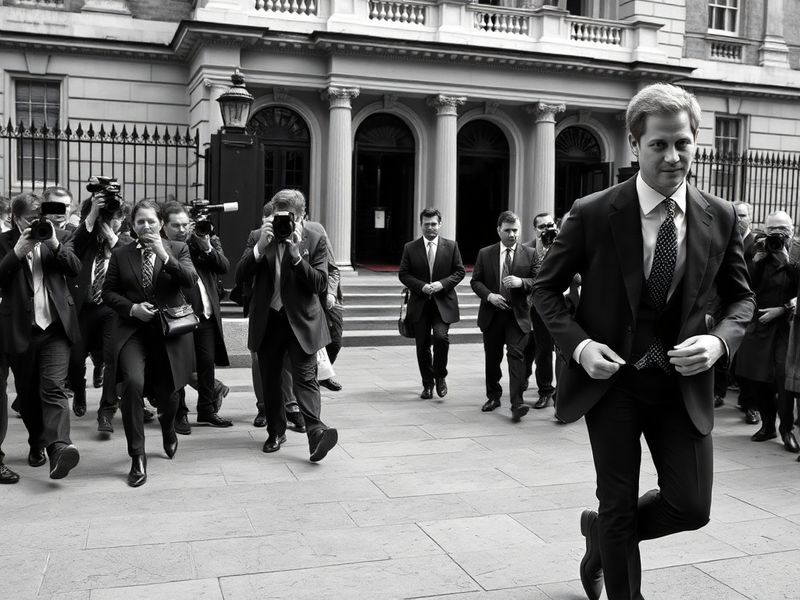
Prince Harry has found himself at the center of a legal dispute involving Sentebale, the charity he co-founded with Prince Seeiso of Lesotho in 2006. The charity, dedicated to supporting vulnerable children in Lesotho and Botswana, has filed a claim against the Duke of Sussex in London’s High Court. The legal action centers on alleged misuse of Sentebale’s intellectual property, including the charity’s name and branding, which the organization claims Harry has continued to use for personal and commercial gain after stepping back from senior royal duties.
Legal documents seen by Dave’s Locker reveal that Sentebale is seeking a court order to prevent further unauthorized use of its trademarks and branding. The charity alleges that Harry has exploited Sentebale’s reputation in ways that conflict with its original mission, including appearances at high-profile events where his personal brand—rather than the charity’s—appears to take precedence. These events often coincide with promotional activities for his and Meghan Markle’s media ventures, such as Archewell Productions, raising concerns about potential overlap between personal branding and charitable representation.
The Roots of the Dispute
Sentebale was established by Harry and Seeiso to address the plight of children orphaned by HIV/AIDS in southern Africa. The charity’s name, which means “forget-me-not” in Sesotho, reflects its commitment to vulnerable youth. Over the years, the organization has built a reputation for grassroots work, relying on fundraising and partnerships rather than high-profile endorsements. Harry’s involvement was initially seen as a positive force, drawing global attention to the charity’s cause.
However, tensions appear to have simmered beneath the surface as Harry and Meghan increasingly focused on building their own media and commercial ventures. In 2020, the couple stepped back from their roles as senior royals, citing media scrutiny and a desire for financial independence. Since then, their public engagements have often blurred the lines between personal branding and charitable work, a shift that has not gone unnoticed by Sentebale’s leadership.
According to sources familiar with the charity’s operations, Sentebale’s board grew concerned when Harry and Meghan began using Sentebale’s logo and name in promotional materials for unrelated projects. For example, in 2021, Sentebale’s branding appeared in promotional content for Harry and Meghan’s Netflix deal, despite the project having no direct connection to the charity’s mission. The charity views this as a violation of its intellectual property rights and a misuse of its hard-earned reputation.
Legal Claims and Broader Implications
The legal action filed by Sentebale is not just about protecting its name—it’s about safeguarding the integrity of charitable work in an era where personal brands often overshadow organizational missions. The charity’s solicitors argue that Harry’s continued association with Sentebale’s branding, even after his formal role in the organization has diminished, creates confusion among donors and beneficiaries. This confusion, they claim, could undermine trust in the charity and divert resources away from its core programs.
In a statement to Dave’s Locker, Sentebale emphasized its commitment to transparency and accountability. “Our mission has always been to serve the children of Lesotho and Botswana, not to serve as a vehicle for personal branding,” the statement read. “We are taking this step to ensure that Sentebale’s name and work are not exploited for purposes that do not align with our values.”
The legal dispute also raises questions about the responsibilities of high-profile individuals who co-found charitable organizations but later pursue independent paths. While celebrities and public figures often leverage their fame to support causes, there is growing scrutiny over whether their personal ventures align with the missions of the organizations they helped create. This case could set a precedent for how such conflicts are resolved in the future.
Key Points in the Legal Battle
- Intellectual Property Violation: Sentebale alleges that Harry has used the charity’s name and branding without authorization, particularly in connection with his media ventures.
- Mission Misalignment: The charity argues that Harry’s personal branding efforts conflict with Sentebale’s grassroots mission and could confuse donors.
- Financial Concerns: Sentebale’s leadership is concerned that the misuse of its branding could divert resources away from its programs in Lesotho and Botswana.
- Precedent for Celebrities and Charities: This case could influence how other high-profile individuals navigate their roles in charitable organizations after stepping back from public life.
Reactions and Future Outlook
The legal battle has sparked discussions about the responsibilities of public figures to the organizations they co-found. While some supporters argue that Harry’s use of Sentebale’s branding is incidental, others see it as a deliberate effort to leverage the charity’s reputation for personal gain. The outcome of the case could have far-reaching implications, not just for Sentebale and Harry, but for the broader relationship between celebrities, charities, and public perception.
For Sentebale, the legal action is a last resort after years of attempting to resolve the issue informally. The charity has emphasized that it does not wish to damage Harry’s reputation but is determined to protect its own integrity. “We respect Prince Harry’s contributions to Sentebale in the past,” the statement noted. “However, we must also protect the organization that has dedicated itself to serving children for nearly two decades.”
As the case moves through the courts, it will be closely watched by legal experts, charity organizations, and fans alike. The ruling could clarify the boundaries between personal branding and charitable representation, setting a standard for how similar disputes are handled in the future. For now, Sentebale remains focused on its mission, even as the legal battle unfolds.
What This Means for Charitable Organizations
This case highlights the challenges that charitable organizations face when their founders or ambassadors transition into new roles. While collaboration between celebrities and charities can bring much-needed attention to important causes, it can also create complications when personal and organizational brands overlap. Charities are increasingly adopting strict guidelines to prevent misuse of their names and logos, ensuring that their missions remain the focal point of their work.
For Sentebale, the legal battle is a reminder of the importance of protecting its identity and mission. As the charity continues its work on the ground in southern Africa, its leadership is determined to ensure that its reputation is not diluted by external controversies. The outcome of the case may serve as a cautionary tale for other organizations that rely on high-profile individuals to amplify their message.
Ultimately, the dispute between Sentebale and Prince Harry underscores the complexities of balancing personal ambition with public service. While the legal process will determine the specifics of this case, the broader conversation about accountability and transparency in charitable work is likely to continue long after the ruling is delivered.
For more insights into the intersection of media, royalties, and charitable work, explore our Entertainment and News sections on Dave’s Locker.