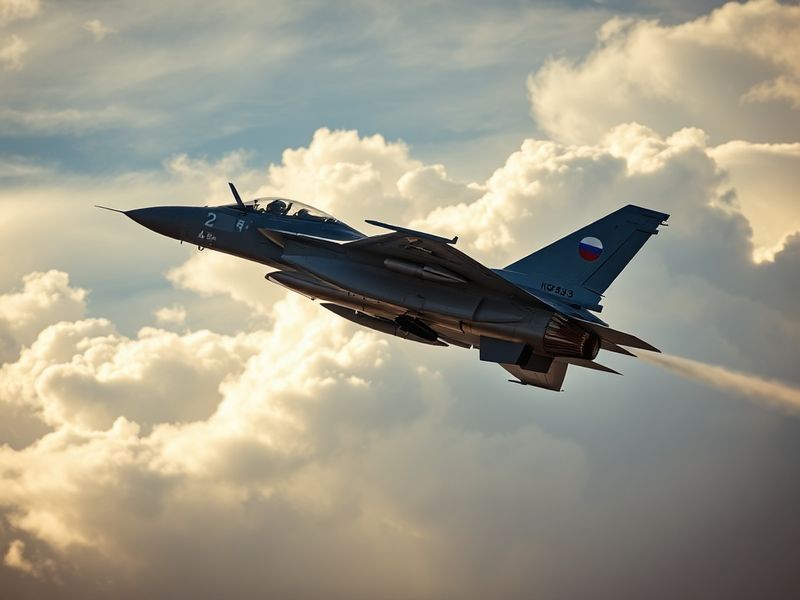
The Russian Air Force remains one of the most formidable aerial assets in the world, despite facing significant challenges in recent years. With a history stretching back to the early 20th century, it has evolved from Soviet-era dominance to modernized operations that blend legacy systems with cutting-edge technology. Its role extends beyond traditional combat roles, influencing geopolitical dynamics from Eastern Europe to the Middle East.
The Evolution of Russia’s Air Power
Founded in 1912, the Russian Air Force (Voyenno-Vozdushnye Sily, or VVS) has undergone multiple transformations. During the Cold War, it became a symbol of Soviet military might, with iconic aircraft like the MiG-25 and Su-27 defining its capabilities. The post-Soviet era brought budget cuts and reduced operational tempo, forcing the force to rely on a shrinking fleet of aging platforms.
In the 2010s, Russia launched a modernization program aimed at revitalizing its air capabilities. The introduction of fifth-generation stealth fighters like the Su-57 and upgrades to fourth-generation platforms such as the Su-35 demonstrated a renewed commitment to air superiority. However, sanctions and export restrictions have complicated procurement, particularly for advanced avionics and engines.
Key Aircraft in Russia’s Inventory
- Su-57 (Felon): Russia’s first operational stealth fighter, designed for air superiority and strike missions. While still in limited production, it represents Moscow’s push for next-generation combat aircraft.
- Su-35 (Flanker-E): A highly maneuverable multirole fighter often deployed in Syria and Ukraine, showcasing Russia’s ability to project power despite limited fleet size.
- MiG-31 (Foxhound): A long-range interceptor critical for defending Russia’s vast airspace, particularly against potential NATO incursions.
- Tu-95/160 Bombers: Strategic nuclear-capable bombers that serve as a key component of Russia’s nuclear triad, capable of long-range strikes with cruise missiles.
Russia’s Air Force in Action: Operations and Limitations
Russia’s air operations in Syria (since 2015) provided a real-world testing ground for its modernized forces. The campaign demonstrated the VVS’s ability to conduct precision strikes and sustain air operations abroad, albeit with mixed results. While Russia showcased advanced weapons like the Kh-101 cruise missile, it also faced criticism for civilian casualties and limited effectiveness against insurgent forces.
In Ukraine, the air force has played a critical—though often understated—role. Despite initial expectations of air superiority, Ukrainian air defenses and Western-supplied systems have forced Russian pilots into more cautious operations. The conflict has highlighted both the resilience of Russia’s air power and its vulnerabilities, including pilot shortages and maintenance challenges.
“Russia’s air force remains a potent tool of coercion, but its effectiveness is increasingly constrained by technological gaps, sanctions, and the adaptability of its adversaries.”
Global Implications and Strategic Considerations
The Russian Air Force is not just a military asset; it is a geopolitical instrument. Its operations in Syria reinforced Moscow’s influence in the Middle East, while its posture near NATO’s eastern flank serves as a deterrent against potential escalation. However, the force’s limitations—such as pilot training deficits and reliance on a shrinking fleet—raise questions about its long-term sustainability.
Western analysts often debate whether Russia’s air force is a paper tiger or a genuine threat. The truth lies somewhere in between. While it cannot match the technological edge of the U.S. Air Force, its ability to integrate electronic warfare, long-range missiles, and multirole flexibility ensures it remains a formidable adversary in regional conflicts.
Challenges Facing the Russian Air Force
- Sanctions and Supply Chain Issues: Restrictions on critical components, such as engines and avionics, have slowed modernization efforts.
- Pilot Shortages: A combination of high operational tempo and limited recruitment has strained pilot availability.
- Technological Lag: While Russia has made progress in stealth and precision weapons, it lags behind Western counterparts in networked warfare and AI integration.
- Public Perception: The air force’s performance in Ukraine has been scrutinized, raising concerns about its combat readiness.
For further insights into military aviation and global defense trends, explore our Analysis and News sections.
Conclusion: The Future of Russia’s Air Power
The Russian Air Force stands at a crossroads. On one hand, it remains a symbol of Moscow’s military ambitions, capable of projecting force across multiple theaters. On the other, it faces structural challenges that threaten its long-term viability. The Su-57 program, if successful, could redefine Russia’s air dominance, but delays and cost overruns remain obstacles.
As the conflict in Ukraine continues and global tensions rise, the VVS will play a pivotal role in shaping Russia’s strategic posture. Whether it can overcome its limitations and adapt to modern warfare will determine its place in the 21st century’s military landscape.