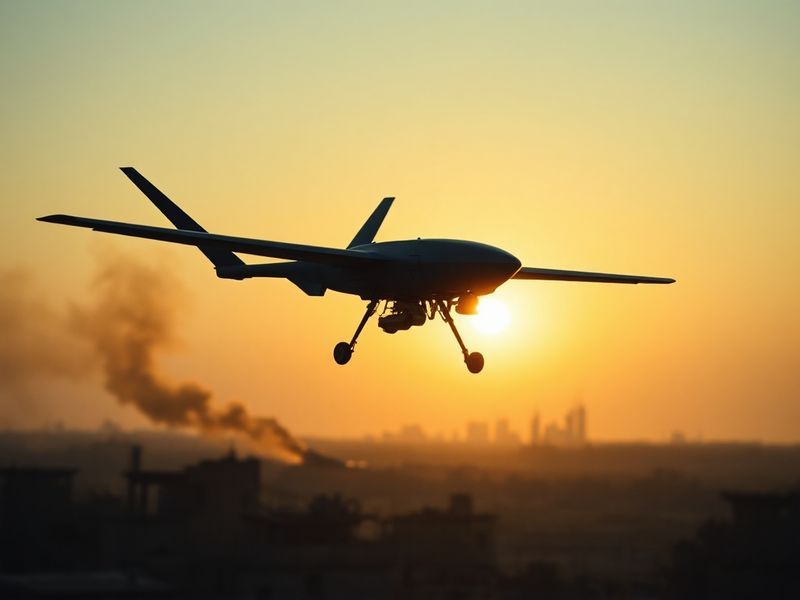
Understanding the Shahed Drone Phenomenon
The Shahed drone has emerged as one of the most discussed aerial systems in recent military conflicts, particularly in Ukraine. These unmanned aerial vehicles (UAVs) have redefined asymmetric warfare, offering low-cost yet highly effective alternatives to traditional munitions. Their ability to conduct surveillance, precision strikes, and even psychological operations has made them a critical tool for modern militaries and non-state actors alike.
Developed by Iran, the Shahed family of drones includes several variants, with the Shahed-131 and Shahed-136 being the most widely deployed. These drones are characterized by their delta-wing design, piston engines, and relatively simple construction. Their affordability and ease of production have allowed them to proliferate across conflict zones, from the Middle East to Eastern Europe.
The Technical Breakdown of Shahed Drones
The Shahed-131 and Shahed-136 share a similar design philosophy: maximize payload capacity while minimizing cost. The Shahed-131, a smaller and shorter-range variant, is often used for reconnaissance and kamikaze-style attacks. The Shahed-136, on the other hand, is a larger, longer-range drone designed for precision strikes against high-value targets.
Key features of these drones include:
- Delta-wing design: Optimized for stability and fuel efficiency during long flights.
- Piston engine propulsion: Uses commercially available engines, reducing production costs.
- Modular payloads: Capable of carrying explosives, electronic warfare equipment, or surveillance gear.
- GPS-guided navigation: Allows for precision strikes with minimal operator input.
The simplicity of these drones is both their strength and their weakness. While they are easy to produce in large quantities, their lack of advanced stealth technology makes them vulnerable to modern air defense systems. However, their sheer numbers and low cost often allow them to overwhelm defenses through sheer volume.
Global Implications of Shahed Drone Proliferation
The deployment of Shahed drones has had far-reaching consequences beyond the battlefields where they were first used. Their effectiveness has inspired other nations to develop similar systems, leading to a new arms race in drone warfare. Countries such as Russia, Turkey, and even non-state groups like the Houthis in Yemen have adopted or adapted similar technologies.
In Europe, the use of Shahed drones in Ukraine has forced NATO members to reconsider their air defense strategies. The sheer volume of drones launched in recent conflicts has demonstrated the need for more robust counter-drone measures, including electronic warfare, kinetic interceptors, and AI-driven tracking systems.
Meanwhile, in the Middle East, the transfer of Shahed drones to allied forces has altered the balance of power in regional conflicts. Their use in Yemen and Syria has shown how drones can level the playing field for smaller militaries against more technologically advanced adversaries.
Cultural and Ethical Considerations
The rise of Shahed drones has also sparked debates about the ethical implications of drone warfare. Unlike traditional aircraft, drones can be operated remotely, reducing the risk to pilots but increasing the psychological distance between attackers and targets. This detachment raises questions about accountability and the dehumanization of warfare.
Culturally, the Shahed drone has become a symbol of asymmetric warfare. Its low cost and high impact have made it a model for insurgent groups and smaller nations looking to challenge global military powers. This shift has forced policymakers to reconsider the traditional hierarchies of military strength.
In Western media, the Shahed drone is often portrayed as a tool of destabilization, particularly in conflicts involving Russia. However, in other regions, it is seen as a necessary equalizer against more powerful adversaries. This duality reflects broader geopolitical tensions and the evolving nature of modern warfare.
The Future of Shahed Drones and Drone Warfare
As drone technology continues to advance, the Shahed family of drones is likely to evolve as well. Future variants may incorporate AI-driven autonomy, swarm tactics, or even hypersonic capabilities. These developments could further disrupt global military strategies, making it increasingly difficult for traditional forces to maintain air superiority.
For defense analysts and policymakers, the Shahed drone serves as a cautionary tale. It highlights the need for adaptive strategies that account for the proliferation of low-cost, high-impact technologies. Nations must invest in counter-drone systems, cyber warfare capabilities, and international regulations to mitigate the risks posed by these systems.
Meanwhile, for the public, the Shahed drone represents a new era of warfare—one where technology is democratized and the battlefield is no longer confined to traditional domains. As these drones become more prevalent, their impact on global security and ethics will only grow more pronounced.
To learn more about the evolving landscape of drone technology and its implications, visit our Technology section. For deeper analysis on global conflicts and military trends, explore our News category.
Conclusion
The Shahed drone has undeniably reshaped modern warfare, offering a glimpse into the future of conflict. Its low cost, high impact, and adaptability have made it a game-changer on battlefields worldwide. As nations and non-state actors continue to adopt similar technologies, the need for robust defense strategies and ethical frameworks becomes ever more urgent.
The Shahed drone is more than just a weapon; it is a symbol of the shifting dynamics of power in the 21st century. Its legacy will be defined not only by its military applications but also by the debates it has sparked about the future of warfare, ethics, and global security.