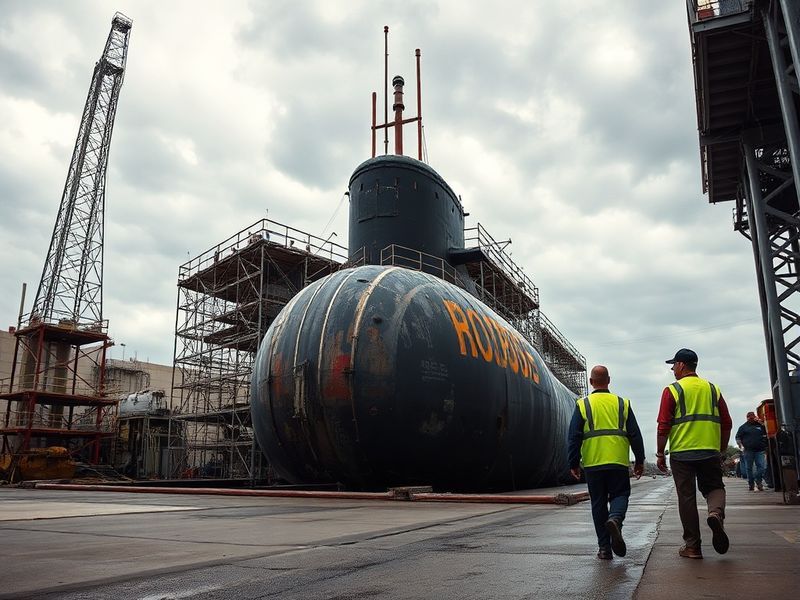
The U.S. Navy has announced the cancellation of the mid-life overhaul for the USS Boise, a Los Angeles-class nuclear-powered attack submarine. The decision comes as part of a broader strategic recalibration amid shifting global priorities and budget constraints. While the move may raise eyebrows among defense analysts, it reflects a calculated response to evolving maritime security challenges.
USS Boise, commissioned in 1992, has been a stalwart of the submarine fleet for decades. However, the Navy’s decision to halt its overhaul signals a pivot toward newer, more advanced vessels. This shift aligns with a global trend where aging platforms are being phased out in favor of next-generation capabilities. The move also underscores the financial pressures facing military modernization programs worldwide.
The Strategic Implications of the Cancellation
The cancellation of the USS Boise overhaul is not an isolated incident but part of a larger pattern in naval strategy. The U.S. Navy has faced criticism in recent years over delays in submarine maintenance and construction, particularly as China rapidly expands its own submarine fleet. The decision to prioritize newer submarines like the Virginia-class reflects a long-term vision to maintain dominance in undersea warfare.
Analysts point to several factors influencing this decision:
- Budgetary constraints: The cost of maintaining and upgrading older submarines has risen sharply, diverting funds from newer projects.
- Technological obsolescence: The USS Boise’s systems, while once cutting-edge, now lag behind modern advancements in sonar, stealth, and weaponry.
- Geopolitical shifts: The rise of China’s navy and Russia’s aggressive submarine operations in the Atlantic have forced the U.S. to rethink its fleet composition.
In Europe, similar trends are playing out. The Royal Navy’s decision to decommission the HMS Astute-class submarines early underscores a global struggle to balance legacy systems with emerging threats. Meanwhile, nations like Japan and Australia are investing heavily in their submarine fleets, recognizing the critical role of undersea dominance in regional security.
The Broader Impact on Naval Readiness
The cancellation raises questions about the immediate readiness of the U.S. submarine force. With fewer operational submarines available, the Navy may face gaps in its ability to conduct surveillance, intelligence gathering, and deterrence operations. This could have ripple effects on global maritime security, particularly in hotspots like the South China Sea and the Arctic.
Submarine overhauls are not just about maintenance—they are opportunities to integrate new technologies. The USS Boise’s cancellation means the Navy will lose out on potential upgrades that could enhance its stealth and combat effectiveness. This decision may force the Navy to accelerate the deployment of newer submarines, but the transition period could leave critical gaps in capability.
In the Pacific, where tensions with China continue to escalate, the absence of a fully operational USS Boise could be felt acutely. The submarine’s primary role in tracking Chinese naval movements and protecting U.S. carrier groups is now in question. This highlights a broader challenge: how to maintain operational readiness while transitioning to a new generation of vessels.
The Human and Economic Costs
Beyond the strategic implications, the cancellation carries significant human and economic consequences. The USS Boise’s crew, many of whom have spent years serving aboard the vessel, will now face uncertain futures. The Navy has not yet announced reassignment plans, leaving sailors in limbo as they await further guidance.
Economically, the decision impacts shipyards and contractors responsible for submarine maintenance. Facilities like the Portsmouth Naval Shipyard in Maine, which specializes in submarine overhauls, stand to lose revenue. This could lead to workforce reductions or delays in other critical projects, further straining the industrial base supporting naval operations.
Globally, the trend of canceling or delaying submarine overhauls is reshaping the defense industry. Companies that once relied on steady contracts for legacy systems are now pivoting to support next-generation platforms. This transition is not without risk, as the defense sector grapples with the dual challenges of innovation and cost control.
What’s Next for the U.S. Submarine Fleet?
The cancellation of the USS Boise overhaul is a symptom of deeper challenges facing the U.S. Navy. To address these issues, the Navy must take several steps:
- Accelerate the deployment of new submarines: The Virginia-class and Columbia-class submarines must enter service faster to fill the gap left by aging vessels like the USS Boise.
- Invest in modular upgrades: Retrofitting older submarines with new technology could extend their service lives without requiring full overhauls.
- Enhance workforce training: Ensuring that sailors and engineers are prepared for next-generation submarines is critical to maintaining operational readiness.
- Strengthen international partnerships: Collaborating with allies like the UK, Australia, and Japan can help distribute the burden of maintaining global maritime security.
The decision to cancel the USS Boise overhaul is a stark reminder of the trade-offs involved in modernizing a military force. As the U.S. Navy navigates these challenges, the world watches closely. The outcome will not only shape the future of undersea warfare but also influence the broader balance of power on the global stage.
For now, the USS Boise’s fate remains uncertain. Will it be decommissioned entirely, or could it find a second life in a different role? One thing is clear: the era of relying on legacy submarines is coming to an end, and the transition will not be easy.