What “Lluvia” Reveals About Human Connection to Water
Water has always been humanity’s most intimate companion—a silent witness to civilizations, a muse for artists, and a force that shapes both landscapes and lives. The Spanish word lluvia, meaning “rain,” carries layers of meaning that extend far beyond meteorology. It embodies rhythm, memory, and survival, appearing in poetry from Federico García Lorca to the verses of Latin American troubadours. Yet lluvia is not just a poetic device; it is a daily reality for millions whose existence is dictated by its presence or absence.
Globally, rain is more than a weather pattern. It is a cultural cornerstone, a seasonal event around which entire communities organize their calendars, rituals, and even diets. In India, the monsoon season transforms parched earth into vibrant fields, while in the Sahel, its unpredictability can mean the difference between feast and famine. The way societies perceive and interact with rain offers a window into their values, fears, and aspirations. Understanding lluvia is not just about studying climate science—it is about decoding human resilience, adaptation, and creativity in the face of nature’s most capricious gift.
The Cultural Symbolism of Rain Across Continents
Rain carries distinct symbolic weight depending on where and how it falls. In Japan, ame (rain) is celebrated in art forms like ukiyo-e prints, where soft spring showers evoke melancholy and renewal. The tea ceremony, a ritual of mindfulness, often incorporates the sound of rain as a meditative backdrop. Meanwhile, in West African traditions, rain dances performed by the Dagara people are not merely celebratory but serve as a spiritual invocation to restore balance between the earth and the divine. These practices reveal rain as a bridge between the material and spiritual worlds.
In the Americas, rain’s symbolism is equally profound. The Maya of Mesoamerica viewed rain as the domain of Chaac, the god of thunder and fertility, whose favor determined agricultural success. Today, in the Andean highlands, farmers still plant according to lunar cycles and cloud formations, blending pre-Columbian wisdom with modern meteorology. Even in urban settings, rain is mythologized—whether through the jazz ballads of New Orleans that romanticize storms or the hip-hop anthems of São Paulo that lament flooding in favelas. These cultural interpretations show that lluvia is never just water falling from the sky; it is a narrative device, a historical marker, and a source of collective identity.
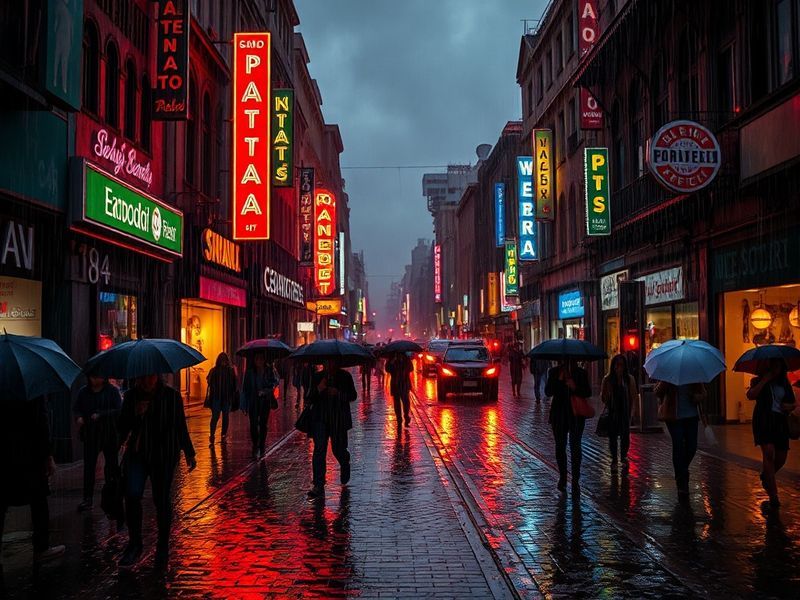
Interestingly, the emotional response to rain varies by climate. In temperate regions like Northern Europe, rain is often associated with coziness and introspection, a backdrop for hygge or gemütlichkeit. In contrast, arid regions such as the Middle East or the Australian Outback view rain with near-religious reverence, as its arrival can revive dormant ecosystems and restore hope. This dichotomy highlights how human psychology adapts to environmental conditions, proving that lluvia is as much a psychological phenomenon as it is a physical one.
Rain in the Age of Climate Change: A Double-Edged Resource
The 21st century has intensified the relationship between humanity and lluvia. As global temperatures rise, precipitation patterns are shifting, creating paradoxes that challenge traditional ways of life. In parts of East Africa, prolonged droughts have forced nomadic pastoralists like the Maasai to abandon ancestral migration routes, while in South Asia, erratic monsoons have disrupted rice cultivation, a staple crop for billions. These changes are not merely environmental—they are economic and social earthquakes.
On the other hand, some regions are experiencing the opposite problem. In South America, the Amazon rainforest, often called the “lungs of the Earth,” is now facing increased flooding that displaces Indigenous communities and accelerates deforestation. In Europe, once-rare summer storms have become torrential downpours, overwhelming drainage systems in cities like Berlin and Milan. These extremes underscore a critical truth: rain, once a predictable ally, has become an unpredictable adversary.
Governments and scientists are scrambling to adapt. In the Netherlands, engineers are revisiting ancient water management techniques, such as polders and storm surge barriers, to combat rising sea levels. Meanwhile, in India, farmers are turning to drought-resistant crops and precision irrigation, a shift that blends indigenous knowledge with satellite data. These innovations reveal a global trend: the resurgence of traditional ecological practices in response to modern crises. Lluvia, it seems, is forcing humanity to remember what it once knew instinctively—how to live in harmony with water.
From Folklore to Forecasting: The Evolution of Rain Rituals
Long before Doppler radar, humans relied on folklore to predict rain. In medieval Europe, the behavior of ants, the color of the sky at dawn, and the flight patterns of birds were all scrutinized for clues. In the Caribbean, the saying “Red sky at night, shepherd’s delight; red sky in the morning, shepherd’s warning” reflects a maritime tradition passed down through generations. These methods, though often poetic, were surprisingly accurate when grounded in local observation.
Today, technology has transformed rain prediction, yet superstition persists. In Brazil, some farmers still consult a rezador—a rainmaker—before planting, combining faith with meteorological forecasts. In the Philippines, the palayok (clay pot) method involves placing a pot outside and interpreting cracks in drying mud as signs of impending rain. These practices highlight a fascinating duality: while science provides data, culture provides meaning. The persistence of rain rituals in the digital age suggests that humans still seek a personal connection to nature’s rhythms.
Interestingly, some modern rain rituals have emerged in unexpected places. In drought-prone California, communities have adopted “rain dances” not as spiritual acts but as communal gatherings to raise awareness about water conservation. Social media campaigns, such as #ItWillRain, encourage users to share local rainfall updates, creating a crowdsourced weather network. These contemporary adaptations prove that lluvia remains a unifying force, even in an era of hyper-connectivity.
The Artistic Legacy of Rain: A Universal Muse
Few natural phenomena have inspired as much art as rain. In literature, rain often serves as a metaphor for cleansing, renewal, or emotional release. Ernest Hemingway’s A Farewell to Arms uses rain to mirror the protagonist’s despair, while Haruki Murakami’s novels frequently feature storms as catalysts for self-discovery. Music, too, is saturated with rain’s influence—from the haunting melodies of Billie Holiday’s Gloomy Sunday to the rhythmic beats of Afrobeat songs that mimic the sound of a downpour.
Visual art has also immortalized lluvia. The Impressionists, such as Monet, captured the interplay of light and rain in works like Women with a Parasol, where figures dissolve into a misty haze. In contemporary art, installations like Olafur Eliasson’s The Weather Project at Tate Modern use water vapor and light to recreate a miniature sun, inviting viewers to confront their relationship with nature. Even fashion has embraced rain as a theme, with designers like Iris van Herpen creating garments that mimic water droplets or incorporate reflective materials to evoke a wet surface.
This artistic fascination is no coincidence. Rain is transient yet repetitive, chaotic yet rhythmic—qualities that mirror the human experience. It is a fleeting moment that leaves a lasting impression, much like the art it inspires. In this way, lluvia transcends its physical form to become a symbol of impermanence, beauty, and the passage of time.
A Call to Listen to the Sky
The story of lluvia is ultimately the story of humanity’s relationship with the natural world. It is a tale of adaptation, creativity, and interdependence, woven into the fabric of cultures across the globe. As climate change reshapes our planet, the lessons embedded in rain—resilience, respect, and resourcefulness—have never been more relevant.
Perhaps the greatest irony of our time is that while we have mastered the science of predicting rain, we have yet to master the art of living with it. Cities sprawl over wetlands, forests are cleared in the name of progress, and water is commodified as a resource rather than revered as a gift. Yet, as the world grapples with droughts, floods, and water scarcity, a return to older wisdoms may offer a path forward. Indigenous communities, for instance, have long practiced water harvesting and agroforestry, techniques that modern science is now validating as sustainable solutions.
In the end, lluvia is more than a weather event—it is a teacher. It teaches us to slow down, to observe, and to adapt. It reminds us that we are not separate from nature but a part of its intricate tapestry. As we face an uncertain environmental future, perhaps the key lies in relearning how to listen to the sky, to honor the rain not just as a resource, but as a relationship.
For those interested in exploring how technology is being used to monitor and mitigate the impacts of changing rainfall patterns, recent advancements in satellite imagery and AI-driven climate modeling are providing new tools for communities worldwide. Meanwhile, the cultural preservation of rain-related traditions offers a reminder that solutions to global challenges often lie in the wisdom of the past.