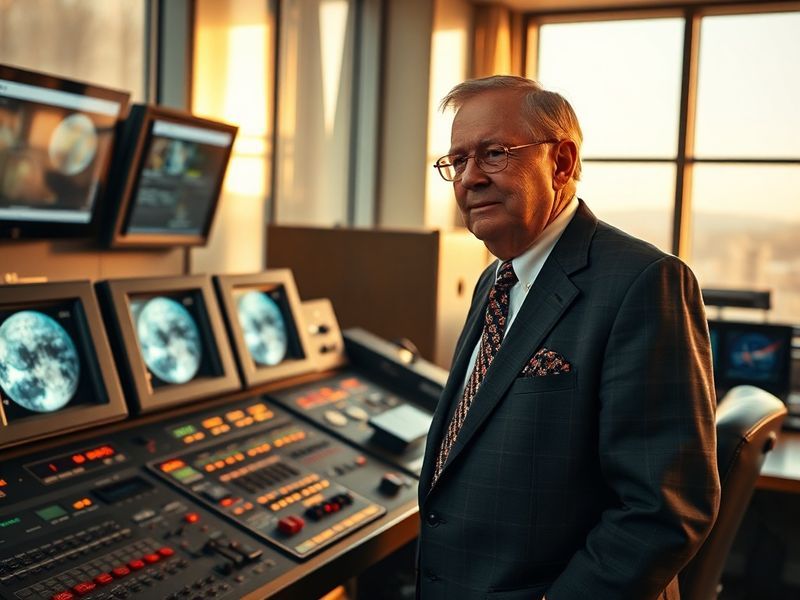
The role of NASA Administrator is one of the most consequential positions in the realm of space exploration. As the chief executive of the National Aeronautics and Space Administration, this individual shapes the trajectory of U.S. space policy, scientific discovery, and technological innovation. The Administrator reports directly to the President of the United States and oversees a $25.4 billion annual budget, a portfolio that spans human spaceflight, planetary science, astrophysics, and aeronautics research.
Unlike many federal agency heads, the NASA Administrator must balance technical expertise with political acumen. The position demands a rare blend of visionary thinking and operational precision—ensuring missions like the Artemis program to return humans to the Moon and the Mars Sample Return initiative stay on schedule while navigating congressional funding cycles and international partnerships. Recent Administrators have faced unprecedented challenges, from commercial spaceflight integration to the ethical implications of deep-space exploration.
The Evolution of NASA’s Leadership
NASA’s first Administrator, T. Keith Glennan, took office in 1958 with a mandate to establish the agency after the Soviet Union’s launch of Sputnik. Glennan’s tenure focused on building infrastructure, including the Jet Propulsion Laboratory and the Goddard Space Flight Center. Over the decades, the role has transformed alongside America’s space ambitions. Administrators like James Webb (1961–1968) oversaw the Apollo program, while Daniel Goldin (1992–2001) championed the “faster, better, cheaper” approach that led to the Mars Pathfinder and Hubble Space Telescope servicing missions.
The modern NASA Administrator operates in an era of rapid change. The rise of private companies like SpaceX and Blue Origin has redefined access to space, while international collaborations—such as the International Space Station (ISS) and the Artemis Accords—require diplomatic finesse. Administrators must now manage a hybrid ecosystem where government, commercial, and academic sectors intersect. This evolution reflects a broader shift in space exploration, where scientific discovery is increasingly intertwined with economic and geopolitical interests.
Key Responsibilities of the NASA Administrator
The NASA Administrator’s duties are as diverse as they are demanding. At the core, the role involves:
- Policy Formulation: Shaping long-term space policy that aligns with presidential directives and congressional mandates. This includes setting priorities for human exploration, scientific research, and technology development.
- Budget Oversight: Managing a multibillion-dollar budget while advocating for NASA’s funding on Capitol Hill. The Administrator must justify expenditures to lawmakers who often prioritize competing domestic needs.
- Mission Leadership: Leading flagship programs such as the James Webb Space Telescope, the Perseverance rover, and the upcoming Europa Clipper mission to Jupiter’s moon.
- International Relations: Collaborating with space agencies like ESA (European Space Agency), JAXA (Japan Aerospace Exploration Agency), and Roscosmos (Russia’s space agency) while navigating geopolitical tensions.
- Public Engagement: Communicating NASA’s achievements to the public and inspiring the next generation of scientists and engineers through outreach programs and media appearances.
The Administrator also serves as NASA’s primary liaison to the White House, often briefing the President and National Security Council on space-related threats, such as orbital debris or foreign anti-satellite tests. In 2021, Administrator Bill Nelson testified before Congress about the growing challenge of space debris, warning that collisions in low Earth orbit could jeopardize future missions.
Recent Administrators and Their Legacies
Jim Bridenstine, appointed by President Donald Trump in 2018, became one of the most polarizing figures to hold the position. A former congressman with no formal scientific background, Bridenstine faced criticism from some scientists who questioned his qualifications. However, his tenure was marked by significant achievements, including the successful launch of the Artemis I mission in 2022, which tested the Space Launch System (SLS) rocket and Orion spacecraft.
Bridenstine also prioritized the Commercial Crew Program, accelerating partnerships with SpaceX and Boeing to restore human spaceflight capabilities from U.S. soil—a capability lost after the Space Shuttle program’s retirement in 2011. His leadership during the COVID-19 pandemic demonstrated NASA’s resilience, as the agency adapted to remote operations while maintaining critical missions like the Perseverance rover’s launch to Mars.
In contrast, Bill Nelson, a former U.S. Senator, brought a wealth of political experience to the role when he was confirmed in 2021. Nelson’s tenure has focused on international collaboration, particularly with partners like India and the United Arab Emirates. Under his leadership, NASA has expanded the Artemis Accords, a set of principles for peaceful lunar exploration, to include 40+ nations. Nelson has also emphasized climate science, leveraging NASA’s satellite data to address global challenges like rising sea levels and extreme weather events.
One of Nelson’s most notable initiatives is the Earth System Observatory, a suite of advanced satellites designed to provide critical data on climate change. This program underscores the dual role of NASA as both an explorer of the cosmos and a steward of Earth’s environment.
The Future of NASA’s Leadership
As NASA sets its sights on Mars and beyond, the role of Administrator will only grow in importance. The agency’s Artemis program aims to land the first woman and the next man on the Moon by 2026, followed by sustainable lunar exploration and eventual crewed missions to Mars in the 2030s. These goals require not just technical innovation but also sustained political will and public support.
Looking ahead, the next NASA Administrator will face several critical challenges:
- Sustainability in Space: Addressing the environmental impact of space exploration, from rocket emissions to lunar surface degradation. NASA is exploring greener propulsion systems and sustainable lunar habitats.
- Ethical Considerations: Navigating the ethical dilemmas of space exploration, such as the potential contamination of other worlds (planetary protection) and the militarization of space.
- Workforce Development: Cultivating a diverse and skilled workforce capable of tackling the next generation of space challenges. This includes STEM education initiatives and partnerships with historically Black colleges and universities.
- Global Competition: Countering China’s rapid advancements in space, which include a planned lunar research station and a Mars sample return mission. The U.S. must maintain its leadership while fostering cooperation where possible.
The Administrator’s ability to inspire and unite stakeholders will be crucial in the coming years. Public engagement remains a powerful tool, as seen in the widespread enthusiasm for missions like the Ingenuity helicopter on Mars or the OSIRIS-REx asteroid sample return. These moments of wonder can galvanize support for long-term space exploration, even in the face of fiscal constraints.
For those interested in the intersection of science, policy, and exploration, the role of NASA Administrator offers a compelling case study in leadership. It is a position that demands not only technical expertise but also the ability to articulate a compelling vision for humanity’s future among the stars. As NASA continues to push the boundaries of what is possible, the Administrator stands at the helm, guiding the agency through uncharted territory.
For more insights into the intersection of space exploration and technology, explore our Technology section. To dive deeper into the political dynamics shaping modern space policy, visit our Politics category.
Conclusion: A Steward of Cosmic Ambition
The NASA Administrator is more than a bureaucrat; they are a steward of human ambition, a guardian of scientific progress, and a symbol of America’s enduring spirit of exploration. In an era defined by both unprecedented challenges and dazzling opportunities, the Administrator’s role is to ensure that NASA remains a beacon of innovation and discovery.
From the Apollo missions to the Artemis program, the leadership of NASA’s Administrators has consistently reflected the nation’s priorities and aspirations. As we stand on the cusp of a new chapter in space exploration—one that includes commercial ventures, international collaborations, and the search for extraterrestrial life—the Administrator will play a pivotal role in shaping that future.
Ultimately, the success of NASA’s missions hinges not just on engineering prowess but on the vision and resolve of its leadership. The Administrator must navigate the complexities of space policy, inspire the next generation of explorers, and ensure that humanity’s journey beyond Earth remains a shared endeavor. In doing so, they uphold the legacy of an agency that has, for over six decades, embodied the boundless potential of human curiosity and ingenuity.