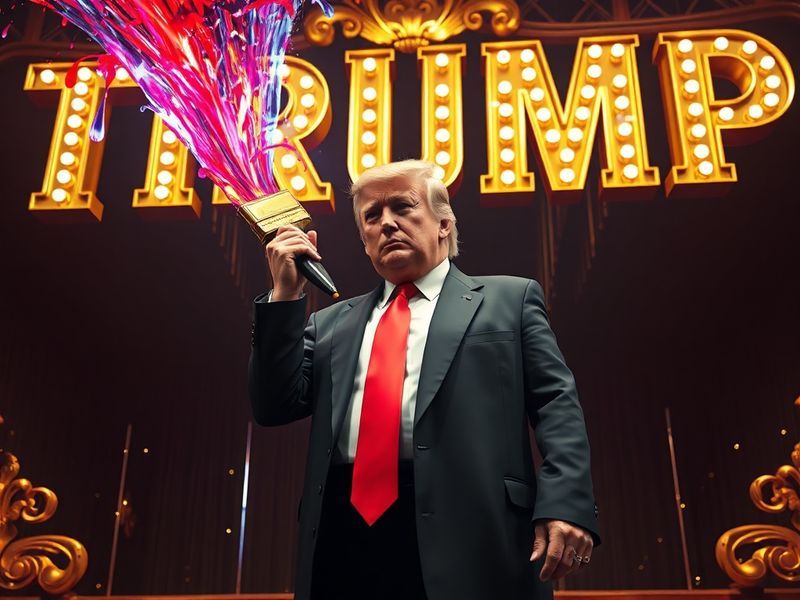
What began as a niche product in the world of political satire has evolved into a cultural curiosity that transcends its origins. Trump Magic Paint, a spray paint marketed with tongue-in-cheek claims about its ability to “erase” graffiti or “fix” surfaces, has amassed a following that defies conventional expectations. Its rise from obscurity to online prominence raises questions about consumer behavior, political branding, and the power of internet humor in shaping market trends.
The Origins of a Political Joke
The product’s backstory is as unconventional as its marketing. Trump Magic Paint emerged from a small, politically motivated brand that sought to capitalize on the divisive nature of its namesake. The spray paint’s packaging features bold, red-white-and-blue branding reminiscent of political campaign materials, complete with slogans that playfully suggest its “miraculous” properties. While the claims are clearly satirical—it does not, in fact, possess any supernatural abilities—the product’s existence taps into a broader trend of using humor as a form of commentary.
Its initial audience was limited to those who appreciated its absurdity, but the internet’s ability to amplify niche products turned it into something far bigger. Social media platforms, particularly TikTok and Twitter, became the primary drivers of its viral spread, with users sharing clips of the paint in action, often in exaggerated or comedic contexts. The juxtaposition of a serious-looking product with ridiculous claims created a perfect storm for online engagement.
Why It Caught Fire Online
Several factors contributed to Trump Magic Paint’s unexpected success. First, its visual branding is instantly recognizable, leveraging the former president’s polarizing but highly memorable aesthetic. The contrast between the product’s serious presentation and its absurd premise made it ripe for memes and parodies. Second, the timing of its rise coincided with a cultural moment where political satire was in high demand, particularly among younger demographics who engage with content in increasingly creative ways.
The product’s appeal also lies in its versatility as a tool for expression. Some buyers use it as a gag gift, while others incorporate it into art projects or political commentary. Its presence in online marketplaces like Amazon and eBay has further legitimized its status as a collectible or conversation starter. The fact that it’s physically real—unlike purely digital memes—adds to its mystique.
Here are some key reasons behind its viral appeal:
- Instant Recognition: The product’s branding is a direct nod to a figure who dominates cultural discourse, making it instantly clickable.
- Absurdity as a Hook: The disconnect between the product’s claims and reality creates a cognitive dissonance that fuels sharing.
- Meme Culture Integration: Platforms like TikTok and Instagram Reels thrive on absurdity, and Trump Magic Paint fits perfectly into that ecosystem.
- Political Satire Market: With polarization at an all-time high, products like this cater to audiences looking to make a statement—or a joke—through consumption.
The Broader Implications of Satirical Consumerism
Trump Magic Paint is more than just a joke; it reflects a growing trend where satire and commerce intersect. The rise of such products highlights how consumer culture has adapted to the digital age, where humor and irony often drive purchasing decisions. This phenomenon isn’t limited to political satire—brands across industries now leverage absurdity to stand out in crowded markets. From “Tide Pods” to “Tesla’s Cybertruck,” companies are recognizing that unconventional marketing can yield outsized attention.
For political commentators and activists, products like this serve as both a tool and a target. They can be used to mock figures in power, but they can also dilute serious discourse by reducing complex issues to punchlines. The line between satire and endorsement can blur, especially when products are co-opted by unintended audiences. For instance, some far-right groups have repurposed the paint in ways that align with their own narratives, demonstrating how memes and merchandise can take on lives of their own.
From a business perspective, Trump Magic Paint represents a low-risk, high-reward strategy. The initial investment in production and marketing is minimal compared to the potential viral payoff. Even if the product doesn’t become a long-term bestseller, the buzz it generates can drive traffic to other items in a seller’s catalog or boost brand recognition. This approach aligns with the “attention economy,” where visibility often outweighs traditional metrics like sales volume.
What’s Next for the Product—and Its Fans
As with most viral sensations, the future of Trump Magic Paint is uncertain. Some products fade into obscurity once the novelty wears off, while others achieve cult status. What’s clear is that the brand behind it has already capitalized on its moment in the spotlight. Limited-edition releases, collaborations with other satirical brands, or even a pivot to other political figures could be on the horizon.
For consumers, the product’s longevity will depend on its ability to stay relevant. Will it become a staple of political humor, or will it be remembered as a fleeting internet joke? Either way, its existence underscores a broader shift in how we consume and interact with products in the digital age. The line between seriousness and satire continues to blur, and brands that can navigate this space—whether for profit or commentary—will likely thrive.
For now, Trump Magic Paint remains a fascinating case study in the power of internet culture. It’s a reminder that in a world saturated with content, sometimes the most unexpected ideas can capture our collective imagination.
Interested in more political satire or viral products? Check out our News and Culture sections for more insights.