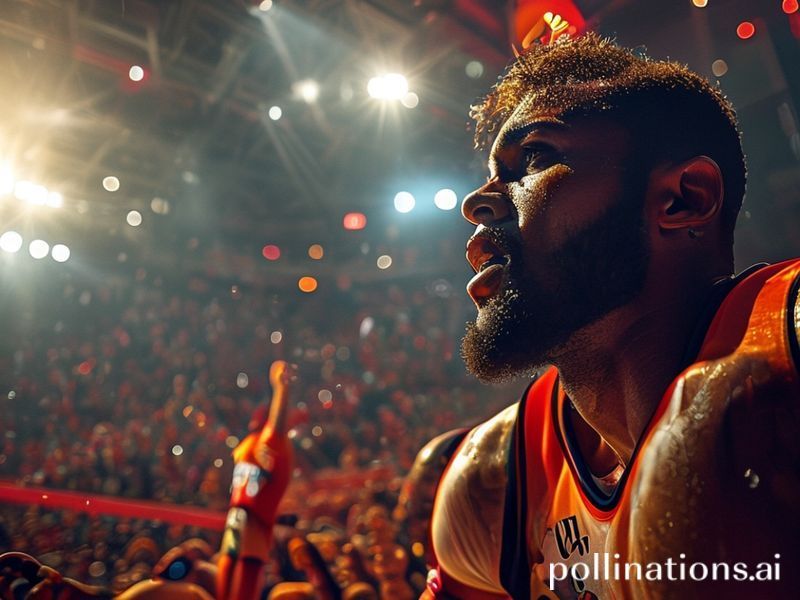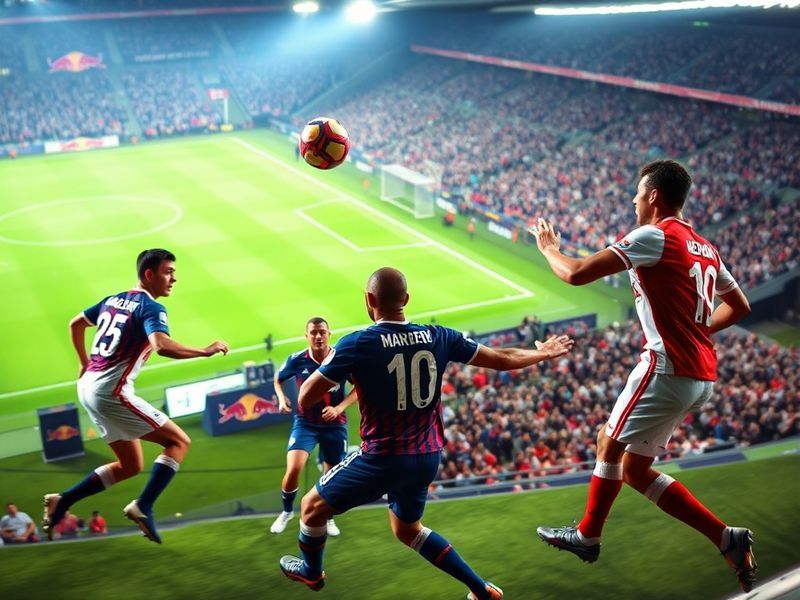
The New York Red Bulls and Inter Miami faced off in a match that highlighted the growing diversity of soccer strategies across Major League Soccer. These two teams, though separated by geography and ownership, represent distinct philosophies in how the game should be played. The encounter wasn’t just about points in the standings; it was a microcosm of soccer’s evolving identity in the United States.
New York, a city of immigrants and global influences, brought a physical, direct style rooted in European traditions. Miami, with its Latin American soul, showcased a more fluid, possession-based approach. The contrast wasn’t accidental. Both clubs reflect the cultural fabric of their cities, making this fixture more than a sporting event—it was a cultural exchange.
The Red Bulls: A Machine Built on Structure
The New York Red Bulls have long been associated with a high-intensity, pressing style under former coach Jesse Marsch. While recent seasons have seen tactical shifts, the club’s identity remains tied to physicality and organization. Players like Dru Yearwood and Elias Manoel embody this approach, combining work rate with technical ability.
Defensively, the Red Bulls prioritize compactness. Their backline, anchored by players like Aaron Long and Sean Nealis, compresses space effectively, forcing opponents into predictable patterns. This system demands relentless energy from midfielders like Kyle Duncan, who shuttle between defense and attack with machine-like precision.
Offensively, the Red Bulls rely on quick transitions. They don’t always control possession, but they excel in exploiting turnovers. The wingers—often rotating between Julianna Alonzo and Elias Manoel—stretch play vertically, while the frontline looks to pin backlines deep. It’s a formula that has brought success but also invites criticism for its predictability.
- Strengths: Physicality, defensive compactness, direct attacking
- Weaknesses: Predictable build-up, reliance on set pieces, vulnerability to possession-heavy teams
- Key Player: Aaron Long (defensive anchor)
The Miami Approach: Flamboyance Meets Tactical Discipline
Inter Miami, co-owned by David Beckham, has cultivated an identity that blends Latin flair with modern tactical nuance. Under coach Gerardo Martino, the team has embraced a possession-based system that prioritizes technical skill and positional rotation. Players like Lionel Messi and Sergio Busquets bring a level of sophistication rarely seen in MLS.
Miami’s buildup often begins in the backline, with goalkeeper Drake Callender initiating play. The center-backs, including Nicolás Figal and Tomáš Hrách, progress the ball methodically, drawing pressure before switching fields. This patient approach frustrates high-pressing teams like the Red Bulls, who thrive on quick turnovers.
In attack, Miami thrives on positional interchange. Messi drifts between midfield and forward, while Luis Suárez and Jordi Alba rotate to exploit half-spaces. The team’s creativity isn’t limited to individual brilliance—it’s a collective effort that relies on movement and timing. Even when Messi is absent, players like Facundo Farias and Diego Gómez fill the creative void with intelligent runs and passes.
The contrast between the two teams extends beyond tactics. Miami’s style mirrors the cultural melting pot of South Florida, where Latin American traditions meet North American ambition. The Red Bulls, meanwhile, reflect the no-nonsense efficiency often associated with New York’s urban landscape.
The Global Context: MLS as a Microcosm of World Soccer
This matchup isn’t just about two teams—it’s a reflection of soccer’s global evolution. MLS, once seen as a retirement league for aging stars, now attracts world-class talent and tactical innovation. The Red Bulls and Inter Miami represent two sides of this coin: one rooted in European pragmatism, the other in Latin American artistry.
European clubs, long the gold standard in soccer, are increasingly looking to hybrid models that blend pressing with possession. The Red Bulls’ style aligns with this trend, albeit with less technical refinement. Meanwhile, Miami’s approach aligns with clubs like Barcelona or River Plate, where individual skill and collective movement define success.
This global perspective matters because soccer is no longer confined to its traditional power bases. MLS, as a league, is becoming a laboratory for tactical experimentation. The Red Bulls and Inter Miami aren’t just competing for points—they’re shaping the future of the sport in North America.
Key Takeaways from the Fixture
The match between the Red Bulls and Inter Miami delivered on its promise of contrast. Miami’s possession dominance often stifled New York’s direct approach, but the Red Bulls’ physicality created chances through set pieces and second balls. Ultimately, Miami’s technical superiority prevailed, but the Red Bulls’ resilience highlighted the unpredictability of soccer.
For fans of tactical soccer, the game was a masterclass in opposites. For casual observers, it was a reminder that soccer is as much about philosophy as it is about athleticism. As MLS continues to grow, these clashes of style will become increasingly common, offering a richer, more diverse viewing experience.
The Red Bulls’ physicality and Miami’s flair aren’t just styles—they’re cultural statements. In a league that prides itself on inclusivity, this fixture was a celebration of diversity, both on and off the pitch.
As the season progresses, both teams will look to refine their identities. The Red Bulls may need to add more technical midfielders to break down stubborn defenses, while Miami could benefit from reinforcing their defensive structure to avoid costly turnovers. Regardless of the outcome, this matchup has set a benchmark for what MLS can achieve when styles collide.
For those interested in the broader trends shaping soccer, this fixture was a must-watch. It wasn’t just about goals or standings—it was about the future of the game.
To stay updated on more soccer insights and analysis, visit our Sports section.