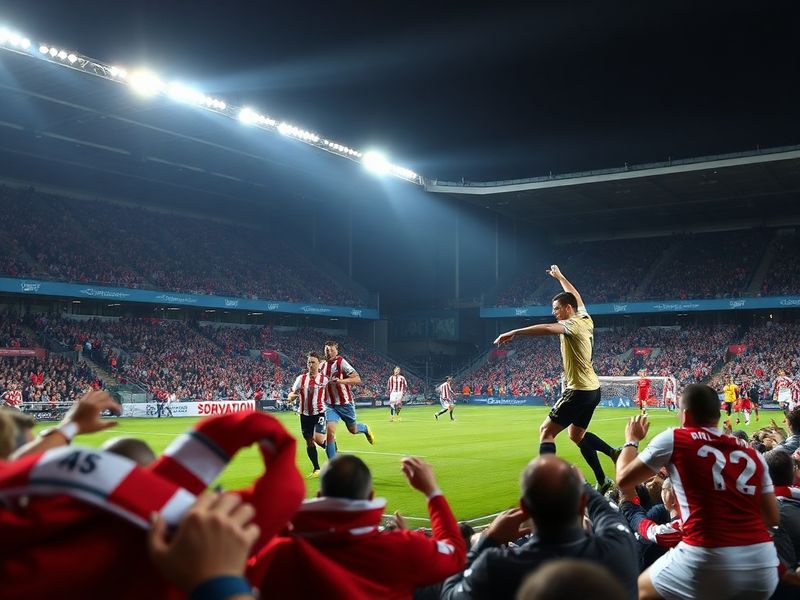
Football in Spain is more than just a sport; it’s a cultural mosaic where regional pride often trumps national narratives. Nowhere is this more evident than in the Asturian-Galician rivalry that unfolds when RC Celta Vigo and Real Oviedo face off. These matches aren’t just about three points—they’re about identity, history, and the soul of two distinct footballing traditions.
Celta Vigo, founded in 1923, represents the vibrant, seafaring culture of Galicia. With a fanbase that stretches from the rugged Rías Baixas to the urban sprawl of Vigo, the club embodies the region’s openness to Europe and its deep-rooted connection to the Atlantic. Real Oviedo, by contrast, carries the legacy of Asturias, a land of mines, mountains, and industrial grit. Founded in 1926, Oviedo’s identity is forged in the blue-collar spirit of northern Spain, where football is both escape and pride.
The Historical Roots of a Regional Rivalry
While not as storied as Spain’s El Clásico, the Celta Vigo vs Real Oviedo fixture has developed its own unique rhythm over nearly a century of competition. These teams first met in the Segunda División in 1941, but it wasn’t until the late 20th century that their clashes began to carry real significance. The rivalry intensified during the 1990s, when both clubs were regulars in La Liga and often competed for survival or European qualification.
Unlike rivalries defined by geography (e.g., Madrid vs Barcelona) or politics (Athletic Bilbao’s Basque-only policy), the Celta-Oviedo dynamic is rooted in geography and class. Galicia and Asturias share a border, but their cultural and economic landscapes have long diverged. Galicia has long been oriented toward Portugal and the Atlantic trade, while Asturias developed around coal, steel, and heavy industry. These differences are reflected in the clubs’ styles, fan cultures, and even the demographics of their supporters.
Football as Cultural Expression: Style and Identity
Celta Vigo has long been associated with a fluid, possession-based style that mirrors the region’s maritime heritage—adaptable, creative, and connected to the outside world. The club’s 2016–17 La Liga campaign, where they finished sixth and qualified for the Europa League, showcased this identity: a team that played with flair, pressed high, and embraced a cosmopolitan style.
Real Oviedo, on the other hand, has cultivated a reputation for resilience and physicality. Known as “Los Carbayones” (after the Asturian oak), Oviedo’s style is often defined by grit and determination. Their famous “Tribuna José Zorrilla” stands witness to decades of passionate, sometimes chaotic, football that reflects the region’s working-class roots.
- Celta Vigo: Fluid attacking football, technical midfielders, European ambitions
- Real Oviedo: High-energy pressing, physical defenders, underdog spirit
This stylistic contrast isn’t just tactical—it’s cultural. In Galicia, football is seen as both entertainment and art. In Asturias, it’s survival, pride, and identity. These worldviews collide on the pitch every time the teams meet, offering fans more than just a result—they get a narrative.
Global Echoes: How Spanish Football Reflects Broader Trends
While Celta Vigo vs Real Oviedo may seem like a local affair, it reflects broader trends in global football. The tension between cosmopolitan ambition and regional identity is playing out across Europe. Clubs like Celta—with their European ambitions and multicultural squads—mirror the rise of “global football,” where local roots coexist with international influences.
Real Oviedo, meanwhile, represents the enduring power of localism in football. In an era where clubs are increasingly owned by foreign billionaires and players are global nomads, Oviedo’s commitment to its Asturian identity resonates with fans tired of corporate football. Their struggles and triumphs are a reminder that football is still, at heart, a local game.
This duality is visible in fan engagement. Celta Vigo has one of Spain’s most active international fan clubs, with supporters’ groups in Argentina, Mexico, and even Japan. Real Oviedo, though smaller, boasts a fiercely loyal local following that fills the Estadio Carlos Tartiere with chants, drums, and Asturian flags.
Beyond the Pitch: The Social Fabric of Football in Northern Spain
Football in northern Spain often serves as a social glue. In Galicia, matches are family events, with parents taking children to games at Balaídos, a stadium set against the backdrop of the Atlantic. In Oviedo, football is woven into the urban fabric—from pre-match sidra (cider) tastings in La Llarina to post-match gatherings in the old town.
These rituals highlight how football functions as a cultural institution. It’s not just about winning—it’s about belonging. When Celta and Oviedo meet, they bring together two distinct ways of life, each asserting its own place in the Spanish football landscape.
What’s at Stake: Recent Form and Future Implications
The most recent meetings between Celta Vigo and Real Oviedo came during the 2022–23 Copa del Rey campaign, where Celta advanced in a tightly contested match. But the rivalry extends beyond cup ties. In the Segunda División, where both clubs have competed in recent years, every point carries weight—not just for promotion, but for regional pride.
For Celta, beating Oviedo is a statement of Galician footballing ambition. For Oviedo, it’s a chance to prove that Asturian grit can overcome technical superiority. These matches often produce high-scoring, unpredictable games—perfect for fans who crave drama.
Looking ahead, both clubs face different challenges. Celta aims to return to La Liga and reassert itself as a European contender. Oviedo, meanwhile, is fighting to stabilize in the second tier and rebuild its fanbase after years of financial instability. Their next encounter won’t just be another game—it will be a chapter in a story that’s still being written.
The Fans Speak: Voices from the Terraces
To understand the true weight of this rivalry, one must listen to the fans. A Galician supporter might say, “We play with the sea in our hearts.” An Asturian might reply, “We play with the mountains on our backs.” These aren’t just poetic phrases—they’re statements of identity.
In 2019, when Celta and Oviedo met in the Segunda División, the away end of Tartiere was packed with scarves, drums, and Asturian flags waving in unison. When Celta scored, the reaction was polite applause. When Oviedo scored, the stadium erupted like a volcano. That’s the difference between football as art and football as war.
Conclusion: More Than a Game
The Celta Vigo vs Real Oviedo rivalry is a reminder that football is more than tactics, points, or trophies. It’s a living archive of regional identity, social history, and cultural pride. In a world where football is increasingly globalized, these local clashes offer a counter-narrative—one where the soul of a place is defended on the pitch.
Whether you’re a Galician dreaming of European nights or an Asturian celebrating a hard-fought draw, this fixture is about something deeper than football. It’s about who we are, where we come from, and what we stand for.
And that’s why, when Celta Vigo and Real Oviedo take the field, the world should watch—not just for the score, but for the story.
For more on Spanish football culture and regional identity, explore our Sports and Culture sections.