Federal Home Distilling Ban Struck Down by US Appeals Court
“`html
Federal Home Distilling Ban Declared Unconstitutional by US Appeals Court
The U.S. Court of Appeals for the Sixth Circuit has delivered a landmark decision, ruling that the federal ban on home distilling is unconstitutional. The 2-1 ruling marks a significant shift in the legal landscape surrounding small-batch spirits production, challenging longstanding federal regulations that have restricted hobbyist distillers for decades.
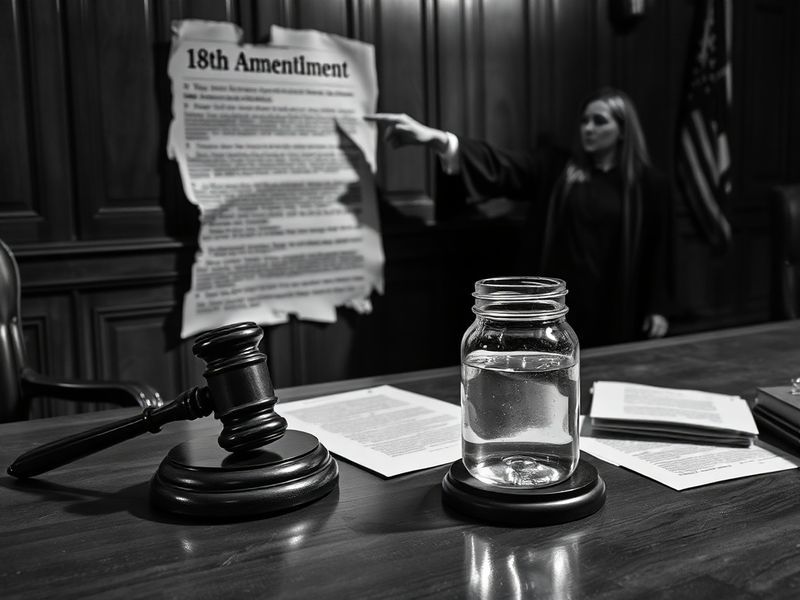
The case, Ruple v. United States, centered on the constitutionality of 26 U.S.C. § 5601(a)(7), which criminalizes the production of distilled spirits for personal or family use without a federal license. The plaintiffs, a group of home distillers from Michigan, argued that the law violated their constitutional rights under the Fourth, Fifth, and Ninth Amendments. The court’s decision to strike down the ban could pave the way for a new era of craft distillation at the household level.
The Legal Battle Behind the Ruling
The lawsuit began in 2019 when several home distillers were threatened with prosecution under the federal ban. Their legal team, led by the Institute for Justice, contended that the law exceeded Congress’s authority under the Commerce Clause and unjustly restricted personal liberties. The Sixth Circuit’s decision hinged on the argument that home distilling does not constitute interstate commerce, and therefore falls outside the scope of federal regulation.
Judge Alice Batchelder, writing for the majority, emphasized that the federal government had failed to demonstrate a compelling interest in banning home distilling. “The government has not shown that home distilling has a substantial effect on interstate commerce,” Batchelder wrote. “The mere possibility that some home-distilled spirits might enter the market does not justify a blanket prohibition.”
The dissenting opinion, authored by Judge Eric Clay, argued that the federal ban was a necessary measure to prevent tax evasion and protect public health. “The majority’s decision ignores the longstanding federal interest in regulating distilled spirits,” Clay wrote. “This ruling could undermine decades of regulatory efforts to control alcohol production and distribution.”
Implications for Home Distillers and the Craft Spirits Industry
For home distillers, the ruling is a major victory. For decades, enthusiasts have operated in a legal gray area, risking fines or even imprisonment for producing small batches of whiskey, gin, or other spirits. The Sixth Circuit’s decision could embolden others to challenge the federal ban in other circuits, potentially leading to a nationwide reconsideration of home distilling laws.
The craft spirits industry, which has seen explosive growth in recent years, could also feel the ripple effects of this decision. While commercial distilleries remain tightly regulated, the expansion of home-based production could introduce new competition and innovation in the spirits market. Some industry experts speculate that home distillers might eventually form cooperatives or small-batch brands, further diversifying the market.
- Tax Revenue Concerns: The federal government has long relied on taxes from alcohol production. The loss of potential tax revenue from home distillers could prompt calls for new regulatory frameworks.
- Public Safety Issues: Opponents of home distilling argue that unregulated production could lead to unsafe spirits, including those contaminated with methanol or other toxic substances.
- Cultural Shift: The ruling reflects a broader trend toward deregulation and individual liberty in areas like alcohol production, firearms, and cannabis.
For now, the decision applies only to the Sixth Circuit, which covers Michigan, Ohio, Kentucky, and Tennessee. However, legal experts anticipate that other circuits may soon take up similar cases, potentially leading to a Supreme Court showdown over the future of home distilling.
What’s Next? Legal and Political Reactions
The federal government has not yet indicated whether it will appeal the decision to the Supreme Court. Given the divided opinion in the Sixth Circuit, a Supreme Court ruling could provide much-needed clarity. In the meantime, home distillers in the Sixth Circuit are cautiously optimistic, though they remain aware that their newfound freedom could be short-lived if the government intervenes.
Politically, the ruling has already sparked debate. Some lawmakers see it as a victory for personal freedom, while others argue that it undermines public health and safety. The Alcohol and Tobacco Tax and Trade Bureau (TTB), which oversees alcohol regulations, has not issued a statement but is likely evaluating its next steps.
For those eager to explore home distilling, the legal landscape remains complex. While the Sixth Circuit’s decision is a step forward, it does not automatically legalize home distilling nationwide. Distillers in other states must still comply with state and local laws, many of which also prohibit or heavily restrict home production.
To stay informed, home distillers can monitor updates from organizations like the American Homebrewers Association and the Distilled Spirits Council, which are actively tracking the legal and political fallout from this ruling.
Looking Ahead: The Future of Home Distilling
The Sixth Circuit’s decision is more than just a legal victory; it’s a cultural milestone. For generations, home distilling has been shrouded in stigma, often associated with moonshiners and bootleggers. But as craft cocktail culture and artisanal food movements have flourished, so too has interest in small-batch spirits. This ruling could help legitimize home distilling as a hobby, much like home brewing has become mainstream.
However, challenges remain. The federal government may still pursue legislative or regulatory avenues to reinstate the ban. Additionally, the TTB could impose new rules on home distillers, such as mandatory licensing or testing requirements. For now, the Sixth Circuit’s decision offers a glimmer of hope to those who have long dreamed of distilling their own spirits without fear of prosecution.
The road ahead will likely be paved with legal battles, political maneuvering, and public debate. But for the first time in decades, home distillers have a powerful new argument: the law is on their side.