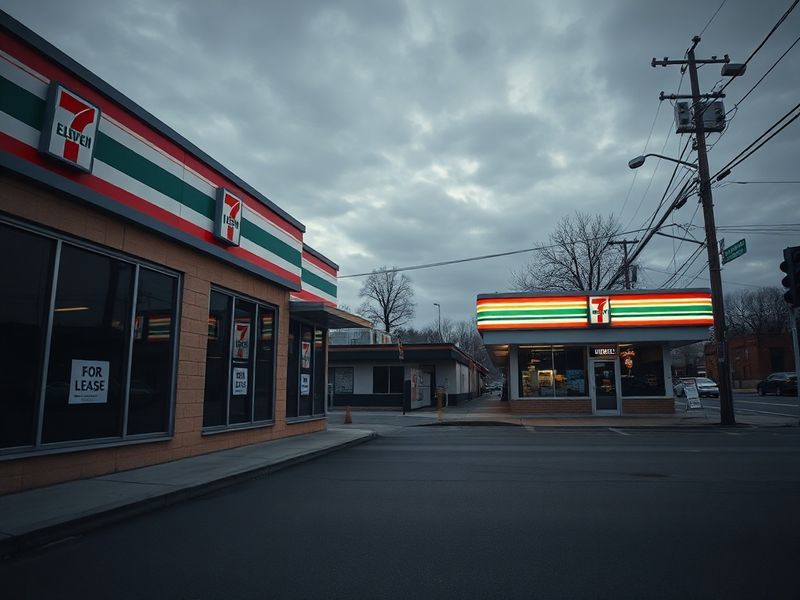
7-Eleven’s recent announcement of store closures has sent ripples through the convenience retail sector. While the company has not disclosed exact figures, reports indicate that dozens of underperforming locations will shutter in the coming months. This move reflects broader challenges facing brick-and-mortar retail, particularly in the post-pandemic economy where consumer habits and economic pressures continue to evolve.
The closures come as 7-Eleven, a subsidiary of Seven & i Holdings, faces intensifying competition from digital-first retailers and changing foot traffic patterns. Urban centers, once the backbone of convenience store sales, now see reduced commuter activity, while suburban locations grapple with rising operational costs. These factors have forced a strategic reevaluation of the company’s physical footprint.
The Strategic Rationale Behind the Closures
7-Eleven’s decision to close select locations is part of a larger cost-cutting and efficiency drive. The company has emphasized that these closures are not a sign of financial distress but rather a response to shifting market dynamics. By consolidating its presence in high-traffic areas and divesting from low-performing markets, 7-Eleven aims to optimize its supply chain and enhance profitability.
Key factors influencing this decision include:
- Declining foot traffic: Fewer commuters and remote work trends have reduced store visits, particularly in urban cores.
- Rising operational costs: Labor shortages, rent increases, and supply chain disruptions have squeezed profit margins.
- Digital competition: E-commerce platforms and grocery delivery services have eroded traditional convenience store sales.
- Store performance metrics: Locations with consistently low sales volumes are being prioritized for closure to streamline operations.
Industry analysts note that this strategy aligns with moves made by other retail giants, such as Walmart and Target, which have also shuttered underperforming stores to focus on core markets. For 7-Eleven, the goal is to ensure that remaining locations operate at peak efficiency while maintaining customer loyalty.
Broader Implications for the Convenience Retail Industry
The closures underscore a critical inflection point for convenience retail, a sector historically resistant to economic downturns. As consumer behavior continues to shift toward online and hybrid shopping models, traditional convenience stores must adapt or risk obsolescence. The closures at 7-Eleven may serve as a bellwether for similar adjustments across the industry, particularly among franchised networks that rely on high-volume, low-margin sales.
One of the most immediate consequences is the impact on franchisees. Many 7-Eleven locations operate as franchises, meaning store owners bear the financial burden of closures. This could lead to strained relationships between franchisees and corporate leadership, particularly if owners feel blindsided by the decisions. The company has stated it will work closely with affected franchisees to mitigate losses, but the process will likely be contentious in some cases.
Additionally, the closures may accelerate innovation within the sector. Competitors like Circle K and Casey’s General Stores are already investing in digital integration, such as mobile ordering and loyalty programs, to stay ahead. 7-Eleven’s retrenchment could free up market share for these rivals, particularly in regions where the company’s presence is reduced. For consumers, this could mean better service and more competitive pricing in the long run, though short-term disruptions are inevitable.
What Customers Can Expect Moving Forward
For regular 7-Eleven patrons, the closures may initially cause inconvenience, especially if locations in their daily commutes are affected. However, the company has assured customers that closures will be staggered to minimize disruption. Affected stores will reportedly honor existing rewards programs and gift cards, though some policies may vary by location.
The closures also present an opportunity for customers to explore alternative convenience options. Smaller, locally owned convenience stores may benefit from displaced foot traffic, particularly if they offer unique products or superior customer service. Additionally, apps like Dave’s Locker Gaming and local delivery services can help bridge gaps during the transition.
Looking ahead, 7-Eleven’s ability to retain customers will depend on its agility in adapting to new retail realities. This includes expanding its digital footprint, enhancing in-store experiences, and leveraging data analytics to predict consumer needs. While the closures are a setback, they also create space for reinvention—a challenge the company has historically met with resilience.
Conclusion: A Pivot Toward the Future
7-Eleven’s store closures are more than a cost-cutting measure; they represent a strategic pivot in an industry undergoing rapid transformation. By shedding underperforming locations, the company is positioning itself to thrive in a retail landscape dominated by digital convenience and shifting consumer priorities. For franchisees, customers, and competitors, the changes will bring both challenges and opportunities.
The broader takeaway is clear: the convenience retail sector must evolve or risk fading into irrelevance. 7-Eleven’s approach—while painful in the short term—could serve as a model for balancing tradition with innovation. As the dust settles, the success of this strategy will hinge on the company’s ability to deliver value in ways that transcend the traditional convenience store model.
For now, the closures serve as a reminder of how quickly retail can change. Businesses that fail to adapt will struggle to survive, while those that embrace transformation may find new avenues for growth. 7-Eleven’s next chapter will be closely watched by industry observers and competitors alike.