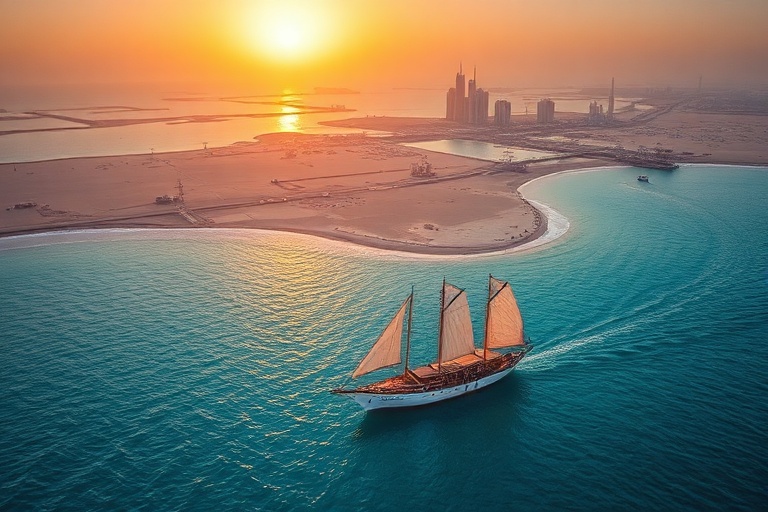
The Persian Gulf has long been one of the most consequential waterways on Earth. Stretching approximately 965 kilometers from the Shatt al-Arab delta to the Strait of Hormuz, this narrow body of water connects the oil-rich nations of the Middle East to global markets. Its significance extends beyond geography, shaping economies, fueling geopolitical tensions, and serving as a cultural bridge between East and West.
For centuries, the Persian Gulf has been a hub of maritime trade. Ancient civilizations like the Sumerians and Babylonians relied on its waters to transport goods such as spices, textiles, and precious metals. Today, the region remains a linchpin of the global economy, with over 20% of the world’s oil passing through its shipping lanes. The Strait of Hormuz alone sees an estimated 21 million barrels of oil transported daily, underscoring its unparalleled strategic importance.
Geopolitical Tensions and Military Presence
The Persian Gulf’s wealth has made it a focal point for international power struggles. The region’s geopolitical landscape is dominated by competing interests among nations like Iran, Saudi Arabia, the United Arab Emirates, and the United States. These tensions often manifest in proxy conflicts, naval standoffs, and economic sanctions.
One of the most volatile flashpoints is the Strait of Hormuz, a chokepoint through which much of the world’s oil flows. Iran has repeatedly threatened to disrupt shipping in the strait in response to sanctions and perceived threats. The U.S. and its allies maintain a strong military presence in the region, including naval bases in Bahrain and Qatar, to ensure the free flow of commerce.
Recent years have seen a series of high-stakes incidents, including drone strikes on oil tankers and the downing of a U.S. drone by Iran. These events highlight the delicate balance of power in the region and the ever-present risk of escalation. Diplomacy remains fragile, with negotiations often overshadowed by mistrust and regional rivalries.
Key Players in the Persian Gulf
The Persian Gulf is home to some of the world’s most influential nations, each with distinct economic and political agendas:
- Iran: A major regional power with vast oil reserves, Iran views itself as a counterbalance to Western influence. Its nuclear program and ballistic missile development have drawn international condemnation.
- Saudi Arabia: The largest economy in the Arab world, Saudi Arabia plays a central role in OPEC and maintains close ties with the U.S. Its rivalry with Iran shapes much of the region’s politics.
- United Arab Emirates: A global financial and trade hub, the UAE has diversified its economy beyond oil, investing heavily in technology and tourism. Its strategic location makes it a key U.S. ally.
- Qatar: A small but wealthy nation, Qatar is home to the Al Jazeera media network and hosts the largest U.S. military base in the region, Al Udeid Air Base.
- Kuwait: A critical transit point for oil shipments, Kuwait has historically balanced relations between Saudi Arabia and Iran while maintaining a strong U.S. partnership.
Economic Dependence and Diversification
The Persian Gulf’s economies remain heavily reliant on oil and gas exports. For nations like Saudi Arabia and Kuwait, hydrocarbons account for over 80% of government revenue. However, the region is increasingly recognizing the need to diversify to secure long-term stability.
The UAE and Qatar have led the way in economic diversification, investing in sectors such as finance, real estate, and renewable energy. Dubai, in particular, has transformed itself into a global business hub, attracting multinational corporations and tourists alike. Meanwhile, Saudi Arabia’s Vision 2030 plan aims to reduce its dependence on oil by expanding tourism, technology, and entertainment industries.
Despite these efforts, challenges persist. The COVID-19 pandemic exposed vulnerabilities in the region’s economic model, as oil prices plummeted and tourism halted. Governments have since doubled down on diversification, but the transition remains a slow and complex process.
Environmental and Ecological Concerns
The Persian Gulf faces mounting environmental pressures, from oil spills to climate change. Decades of industrial activity have left a legacy of pollution, with coral reefs and marine life suffering the consequences. The region’s shallow waters are particularly vulnerable to temperature fluctuations, making them a bellwether for global warming.
Efforts to mitigate these issues are underway, albeit on a limited scale. The UAE has invested in renewable energy projects, including the Mohammed bin Rashid Al Maktoum Solar Park, one of the largest in the world. Saudi Arabia, too, has launched initiatives like NEOM, a futuristic city powered entirely by renewable energy. However, progress is often overshadowed by the continued expansion of fossil fuel infrastructure.
International cooperation is critical to addressing these challenges. The 2015 Paris Agreement provided a framework for reducing emissions, but the Persian Gulf’s heavy reliance on oil makes compliance difficult. Without urgent action, the region could face irreversible ecological damage.
A Cultural and Historical Tapestry
Beyond its economic and geopolitical significance, the Persian Gulf is a cradle of civilization. The region is home to some of humanity’s earliest settlements, including Mesopotamia, often called the “cradle of civilization.” Its history is marked by the rise and fall of empires, from the Sumerians to the Persians and Ottomans.
Culturally, the Persian Gulf is a melting pot of traditions. The Arab influence is evident in the architecture of cities like Dubai and Doha, while Persian heritage is preserved in Iran’s art, music, and literature. The region’s cuisine reflects this diversity, with dishes like Iranian kebabs, Emirati machboos, and Saudi dates gaining global popularity.
Religion also plays a central role in the Gulf’s cultural identity. Islam, both Sunni and Shia, shapes daily life and governance. The holy cities of Mecca and Medina, located nearby, draw millions of pilgrims each year, further cementing the region’s spiritual significance.
Modern Challenges to Cultural Heritage
While the Persian Gulf’s cultural legacy is rich, it faces threats from modernization and globalization. Rapid urbanization has led to the demolition of historic sites, replaced by gleaming skyscrapers and shopping malls. In Iran, ancient ruins like Persepolis stand as testaments to a glorious past, but their preservation is often neglected in favor of development.
Efforts to safeguard heritage are underway. The UAE, for example, has established museums like the Louvre Abu Dhabi to celebrate both local and global art. Meanwhile, Iran has designated several UNESCO World Heritage Sites, including the historic city of Yazd. However, balancing progress with preservation remains a contentious issue.
The Persian Gulf’s future hinges on its ability to navigate these challenges. By embracing sustainability, fostering dialogue, and preserving its cultural roots, the region can continue to thrive as a global crossroads.
Conclusion: The Gulf’s Enduring Influence
The Persian Gulf’s story is one of resilience and adaptation. From ancient trade routes to modern geopolitical conflicts, its waters have witnessed centuries of transformation. Today, the region stands at a crossroads, balancing economic imperatives with environmental and cultural responsibilities.
For the global community, the Persian Gulf remains indispensable. Its stability is vital to the world’s energy supply, and its cultural heritage enriches humanity’s collective identity. As nations grapple with climate change, shifting alliances, and technological disruption, the Gulf’s role will only grow more pivotal.
The path forward is fraught with challenges, but the Persian Gulf has always been a region of reinvention. By leveraging its strengths and addressing its vulnerabilities, it can continue to shape the world for generations to come.
For those interested in exploring the intersection of history, politics, and culture in the Middle East, Dave’s Locker Culture offers deeper insights into the region’s evolving narrative.