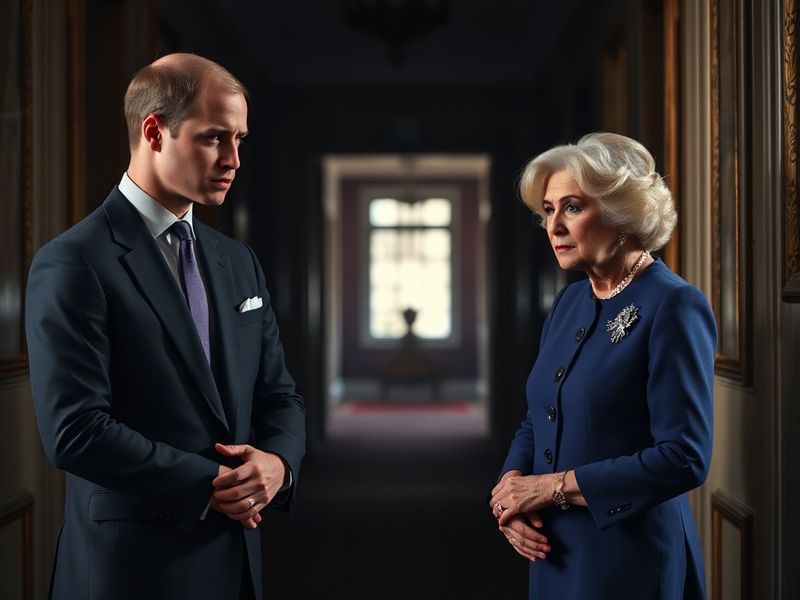
The British royal family has long been a subject of fascination, scrutiny, and speculation. Behind the carefully curated public image lies a complex web of relationships, traditions, and unspoken tensions. Recent reports suggest that King Charles III has privately asked Prince William to stop excluding Camilla, the Queen Consort, from key engagements—a move that could signal shifting dynamics within the monarchy.
Sources close to the royal household have indicated that the King is concerned about the perception of division within the family, particularly as it relates to William’s wife, Catherine, Princess of Wales. The alleged request underscores the ongoing challenges of blending modern expectations with centuries-old traditions, all while maintaining the monarchy’s relevance in a rapidly changing world.
The Royal Family’s Public Facade and Private Realities
For decades, the British royal family has perfected the art of presenting a united front to the public. Public appearances, carefully scripted statements, and synchronized family photos are all part of an image designed to project stability and continuity. Yet, behind closed doors, the realities can be far more complicated.
The relationship between William, Kate, and Camilla has been a topic of quiet discussion among royal observers. While Camilla has been fully integrated into official duties since Charles became king, there have been subtle signs of tension. Some speculate that William’s reluctance to include Camilla stems from lingering perceptions tied to the past—particularly the breakdown of Charles and Diana’s marriage, which Camilla was once controversially linked to.
In many ways, the royal family operates like a high-stakes institution where personal histories and public duties intersect. The monarchy’s survival depends on projecting harmony, even when private disagreements exist. King Charles’s reported intervention suggests an acknowledgment that even minor fissures in the family’s image could have outsized consequences in an era where public trust is increasingly fragile.
Cultural Shifts and the Changing Role of the Monarchy
The British monarchy has faced unprecedented challenges in recent years. The death of Queen Elizabeth II, the passing of Prince Philip, and the high-profile exits of Prince Harry and Meghan Markle have all tested the institution’s resilience. Meanwhile, public attitudes toward royalty have evolved, with younger generations questioning the relevance of a hereditary system in a democratic society.
Camilla’s role as Queen Consort has been a subject of debate since she married Charles in 2005. Initially met with resistance due to her history, she has worked diligently to rehabilitate her image and earn her place within the royal family. Her inclusion in official duties, such as state visits and ceremonial events, has been a deliberate effort to normalize her position. Yet, the question remains: How much of this is genuine acceptance, and how much is calculated public relations?
Globally, monarchies have had to adapt to survive. In Spain, King Felipe VI distanced himself from his father, Juan Carlos I, amid corruption scandals. In Japan, Emperor Naruhito has redefined the role of the monarchy by focusing on symbolic leadership rather than political influence. The British monarchy, too, must navigate these shifting sands. The reported request from Charles to William reflects an attempt to reinforce unity—not just for the sake of tradition, but as a strategic necessity.
What This Means for the Future of the Royal Family
The dynamics between William, Kate, and Camilla are more than just a family drama—they are a microcosm of the challenges facing the monarchy today. Public perception plays a critical role in shaping the institution’s future, and any hint of discord can be magnified by media and social platforms.
If King Charles is indeed pushing for a more inclusive approach, it could signal a deliberate effort to modernize the monarchy’s image. This might involve:
- More joint appearances between Camilla, William, and Kate to project unity
- Strategic public relations campaigns to reframe Camilla’s role
- A gradual shift in how the monarchy handles internal disagreements
However, enforcing such changes in a family as private and tradition-bound as the British royals is no small feat. William, as the future king, holds significant influence over how the monarchy is perceived. His willingness—or reluctance—to comply with his father’s wishes could set the tone for the next generation of royalty.
For now, the reported request remains unconfirmed, and the royal family has not issued an official response. Yet, the very existence of such discussions speaks to the underlying tensions that continue to shape one of the world’s most watched institutions.
Global Reactions and the Power of Perception
While the British public remains divided on the monarchy’s role in modern society, international observers often view the institution through a lens of fascination and nostalgia. The royal family’s drama is a global spectacle, dissected in news outlets, social media, and even entertainment platforms.
In some countries, the monarchy is seen as a symbol of stability and tradition. In others, it is viewed as a relic of a bygone era. The way the royal family manages its internal relationships—whether through unity or division—can influence these perceptions in profound ways.
The reported request from King Charles also raises questions about the monarchy’s ability to evolve. As younger generations of royals, such as William and Kate, take on more prominent roles, the institution must balance tradition with modernity. This includes redefining relationships, addressing historical baggage, and ensuring that public figures within the family present a cohesive image.
Ultimately, the royal family’s survival may depend on its ability to adapt without losing its essence. Whether this means embracing Camilla more fully or finding new ways to address internal tensions, the decisions made today will shape the monarchy’s legacy for decades to come.
A Conclusion Rooted in Tradition and Change
The British monarchy has endured for centuries by adapting to the times while preserving its core identity. The reported request from King Charles to Prince William reflects this delicate balance—a blend of tradition, strategy, and the unrelenting gaze of the public.
As the monarchy continues to evolve, so too will the expectations placed upon it. The inclusion—or exclusion—of figures like Camilla is not merely a personal matter; it is a statement about the institution’s direction. Whether through public gestures or private negotiations, the choices made in the coming years will determine how the world views the royals in the 21st century.
For now, the royal family remains a captivating subject, its internal dynamics as closely watched as any royal wedding or state funeral. And while the specifics of Charles’s request may never be fully confirmed, the conversation it has sparked is a reminder of the enduring power—and fragility—of tradition in a changing world.