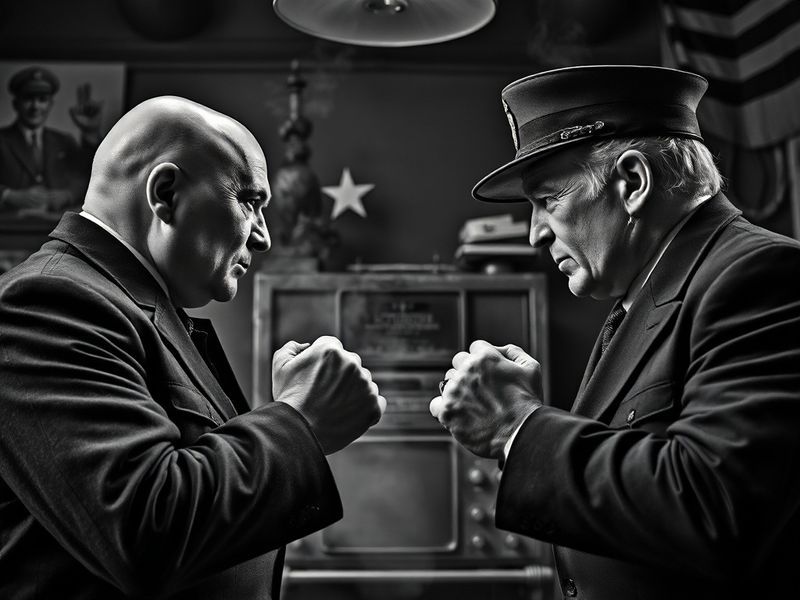
The Cold War, spanning roughly from 1947 to 1991, was more than just a period of geopolitical tension—it was a fundamental reshaping of global power structures. Unlike traditional wars marked by direct combat, this conflict played out through espionage, ideological battles, and proxy wars across continents. The rivalry between the United States and the Soviet Union created a bipolar world order that influenced nearly every aspect of international relations for decades.
The term “Cold War” itself underscores the absence of large-scale direct military confrontation between the two superpowers. Instead, both sides engaged in a relentless struggle for ideological supremacy, technological dominance, and influence over developing nations. This era defined military strategy, economic policies, and even cultural expressions worldwide, leaving an indelible mark on history.
The Origins of a Global Divide
The roots of the Cold War can be traced to the aftermath of World War II. The wartime alliance between the U.S. and the USSR quickly deteriorated as ideological differences—capitalism versus communism—became impossible to reconcile. By 1947, U.S. President Harry Truman articulated the policy of containment in a speech to Congress, signaling America’s commitment to preventing the spread of Soviet influence. This marked the formal beginning of a strategic confrontation that would last for generations.
The division of Europe into spheres of influence solidified the split. The Soviet Union established communist governments in Eastern Europe, while Western Europe aligned with the U.S. through institutions like NATO. Berlin, located deep within Soviet-controlled territory, became a flashpoint when the city was divided into East and West sectors in 1949. The Berlin Blockade and subsequent airlift demonstrated just how high tensions could rise without escalating into full-scale war.
Key moments in the early Cold War included:
- The Truman Doctrine (1947): Pledged U.S. support for nations threatened by communism, setting a precedent for future interventions.
- The Marshall Plan (1948): A $13 billion U.S. initiative to rebuild Western Europe, both as humanitarian aid and a bulwark against Soviet expansion.
- The Chinese Revolution (1949): The fall of China to communist forces expanded the ideological battlefield to Asia.
- The Korean War (1950–1953): The first major proxy conflict, ending in a stalemate but solidifying the division of Korea.
These events created a global chessboard where every move by one superpower was countered by the other, setting the stage for decades of tension.
Weapons of Influence: Espionage, Arms Race, and Space Exploration
The Cold War was as much a war of intelligence and innovation as it was of ideology. Both the U.S. and USSR invested heavily in espionage networks, with agencies like the CIA and KGB becoming central players in the conflict. Spy rings infiltrated governments, stole nuclear secrets, and orchestrated covert operations that shaped the fates of nations. The 1960 U-2 incident, where a U.S. spy plane was shot down over Soviet airspace, exemplified the high stakes of this shadow war.
Nuclear deterrence became the cornerstone of Cold War strategy. The doctrine of Mutual Assured Destruction (MAD) ensured that neither side could launch a first strike without facing catastrophic retaliation. This led to an unprecedented arms race, with both nations stockpiling thousands of warheads. The Cuban Missile Crisis in 1962 brought the world to the brink of nuclear war when Soviet missiles were discovered in Cuba, just 90 miles from Florida. For 13 days, the world held its breath as diplomats negotiated a tense standoff that ended with a secret agreement to remove missiles from both Cuba and Turkey.
Beyond the battlefield, the Cold War was also a competition of innovation. The space race became a symbol of technological superiority, culminating in the U.S. landing the first humans on the moon in 1969. The Soviet Union had earlier claimed victories with the launch of Sputnik in 1957 and Yuri Gagarin’s orbit in 1961. These achievements weren’t just scientific milestones—they were propaganda victories that showcased the prowess of each system.
The arms race and space exploration had unintended consequences, too. Nuclear proliferation spread to smaller nations, while the space program accelerated advancements in computing, materials science, and telecommunications. The Cold War, in many ways, laid the foundation for the modern technological era.
Proxy Wars and the Global Battlefield
Though direct conflict between the U.S. and USSR was avoided, the Cold War was fought in countless proxy wars across the globe. These conflicts allowed both superpowers to extend their influence without risking all-out war. Vietnam, Afghanistan, Angola, and Nicaragua became battlegrounds where local struggles were amplified by Cold War dynamics.
The Vietnam War (1955–1975) exemplified the brutality of proxy conflicts. The U.S. backed South Vietnam against the communist North, which received support from the USSR and China. The war dragged on for two decades, costing millions of lives and leaving deep scars on American society. Similarly, the Soviet invasion of Afghanistan in 1979 drew the U.S. into supporting Mujahideen fighters, a move that would later have unintended consequences in the rise of extremist groups.
These proxy wars often had lasting regional impacts. In Latin America, U.S.-backed coups and interventions—such as in Chile and Guatemala—destabilized democratically elected governments in the name of anti-communism. Meanwhile, Soviet support for revolutionary movements in Africa and Asia fueled insurgencies that redrew national boundaries and created enduring conflicts.
The Cold War’s proxy battles also extended into the cultural realm. The Olympics became a stage for ideological competition, with nations using athletic achievements as proxy victories. The 1972 “Blood in the Water” water polo match between Hungary and the USSR, played amid political tensions, remains one of the most infamous examples of sports as a Cold War battleground.
Legacy and Lessons: The Cold War’s Enduring Shadow
The Cold War officially ended in 1991 with the dissolution of the Soviet Union, a moment that reshaped global politics overnight. The fall of the Berlin Wall in 1989 had already signaled the collapse of communist regimes in Eastern Europe, and by December 1991, the USSR itself ceased to exist. The U.S. emerged as the world’s sole superpower, a position it has held—with varying degrees of challenge—ever since.
Yet the legacy of the Cold War persists in modern geopolitics. The nuclear arsenals amassed during the era remain a global concern, with nations like North Korea and Iran continuing to develop nuclear capabilities. The NATO alliance, created to counter Soviet power, has expanded eastward, straining relations with Russia and fueling new tensions reminiscent of the Cold War era. Cyber warfare and information operations, tools once used by spies and propagandists, have evolved into modern battlegrounds where nations clash without firing a shot.
The ideological battle isn’t over either. While communism as a dominant force has waned, authoritarian regimes continue to challenge democratic values, echoing the Cold War’s clash of systems. The U.S. and China’s current rivalry over technology, trade, and influence in the Indo-Pacific region suggests that the world may still be living in the Cold War’s long shadow.
Understanding the Cold War is essential not just for historians, but for anyone navigating today’s complex global landscape. It offers lessons in diplomacy, deterrence, and the dangers of unchecked ideological confrontation. The Cold War reminds us that the most dangerous conflicts are not always fought with bullets and bombs, but with ideas, intelligence, and the quiet accumulation of power.
As we reflect on this defining era, one question lingers: Will the world ever escape the cycle of superpower rivalry? Or are we doomed to replay the Cold War’s script in new forms? The answers may well determine the course of the 21st century.
For more on how historical conflicts shape modern politics, explore our Politics and Analysis sections on Dave’s Locker. These categories delve into the enduring impact of geopolitical struggles and their relevance today.