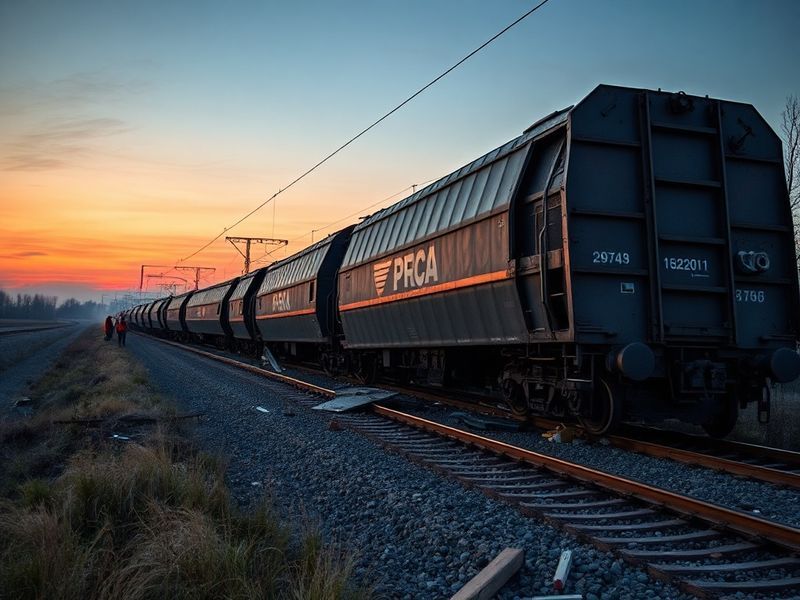
Derailment—whether literal or metaphorical—represents a sudden and often dramatic departure from an intended path. In its most immediate sense, it describes the moment when a train leaves its tracks, an event that can disrupt transportation networks, cause significant damage, and tragically, lead to loss of life. Yet beyond the physical rails, the concept of derailment permeates human experiences, symbolizing the unexpected collapse of ambitions, relationships, or systems that once seemed stable.
This dual nature—both literal and figurative—makes derailment a compelling subject of study. By examining its causes, consequences, and broader cultural implications, we can better understand how disruptions shape our world, from global supply chains to personal life goals.
The Mechanics of a Train Derailment
Train derailments are not random events. They result from a combination of mechanical failure, human error, environmental factors, and systemic weaknesses. Understanding these causes is essential for improving rail safety and preventing future incidents.
Common causes include:
- Track defects: Cracks, misalignments, or worn-out rails can cause wheels to lose contact with the tracks.
- Mechanical failure: Faulty wheels, axles, or braking systems may fail under stress.
- Human error: Miscommunication, improper speed, or failure to follow protocols can lead to catastrophic outcomes.
- Environmental conditions: Heavy rain, landslides, or extreme heat can weaken infrastructure.
- Sabotage or terrorism: Deliberate acts can target critical rail systems.
When a derailment occurs, the consequences ripple outward. Trains may block vital routes for hours or days. Cargo delays affect industries relying on just-in-time delivery. Most tragically, passengers and crew may suffer injuries or fatalities. In densely populated regions, derailments near urban areas can paralyze entire transit networks, demonstrating how localized failures can have regional impacts.
Metaphorical Derailment in Personal and Professional Life
The idea of being “derailed” transcends the physical realm. In psychology and self-improvement circles, derailment refers to the sudden interruption of a person’s life plan—whether career, education, or personal growth—due to unforeseen challenges. A job loss, health crisis, or family emergency can halt progress abruptly, forcing individuals to reassess their trajectories.
Research in career development highlights several key phases in such transitions:
- Shock: The initial disbelief or paralysis following the disruption.
- Disorientation: A period of confusion as old goals lose relevance.
- Reconstruction: Actively rebuilding direction and purpose.
- Renewal: Emerging with new goals, skills, or perspectives.
Not all derailments are negative. Some individuals use the disruption as a catalyst for reinvention. A 2022 study by the American Psychological Association found that people who experienced career derailments often developed greater resilience and pursued more fulfilling paths afterward. The key difference lies in adaptability—those who can pivot without losing sight of their core values tend to recover more effectively.
Yet, societal expectations often stigmatize derailment. Failure is rarely celebrated in professional cultures that emphasize consistency and upward mobility. This stigma can discourage people from seeking help or openly discussing setbacks, prolonging the emotional toll of disruption.
The Broader Ripple Effect: Systems, Society, and Supply Chains
When a single train derails, the effects can cascade through global networks. Consider the 2023 Ohio train derailment, where a Norfolk Southern train carrying hazardous materials caught fire, forcing evacuations and contaminating local water supplies. The incident disrupted supply chains, raised concerns about rail safety regulations, and sparked national debates over corporate accountability and environmental protection.
Such events expose vulnerabilities in interconnected systems. Rail networks, like digital platforms or financial markets, rely on redundancy and resilience. A single point of failure can trigger cascading failures if backup systems are inadequate or poorly maintained. This principle applies across industries:
- Healthcare: A hospital system failure during a pandemic can overwhelm emergency services.
- Technology: A cloud service outage can cripple businesses worldwide.
- Energy: A power grid failure can plunge cities into darkness.
In response, organizations increasingly adopt “derailment-proofing” strategies—diversifying suppliers, implementing real-time monitoring, and conducting stress tests to anticipate breakdowns. These measures reflect a growing recognition that resilience is not optional but essential in an era of climate change, geopolitical instability, and rapid technological change.
Can Derailment Be Prevented—or Even Embraced?
Prevention remains the primary focus in both literal and metaphorical contexts. In rail safety, technological advancements such as AI-powered track monitoring and automated braking systems are reducing risks. Regulatory bodies like the Federal Railroad Administration now mandate stricter inspections and crew training to minimize human error.
But complete prevention is impossible. Disruptions are inherent to complex systems. Therefore, a parallel strategy is learning to manage derailments when they occur. Crisis management frameworks emphasize transparency, rapid response, and long-term recovery planning. These principles are equally valid for individuals facing personal setbacks.
Some forward-thinking leaders even argue that derailment should be reframed—not as failure, but as a necessary part of growth. In creative fields, artists and entrepreneurs often cite “hitting rock bottom” as the moment that led to breakthrough innovation. The collapse of one path can clear space for something more authentic or sustainable.
As the philosopher Alan Watts once observed, “The only way to make sense out of change is to plunge into it, move with it, and join the dance.” Whether on a train track or in life, derailment may be an interruption—but it doesn’t have to be the end of the journey.
In an age of uncertainty, the ability to adapt—to derail, reassess, and reroute—may be one of the most valuable skills of all.
For more insights into how systems adapt under pressure, visit our Analysis section. To explore stories of resilience in the face of disruption, check out our Trending page.