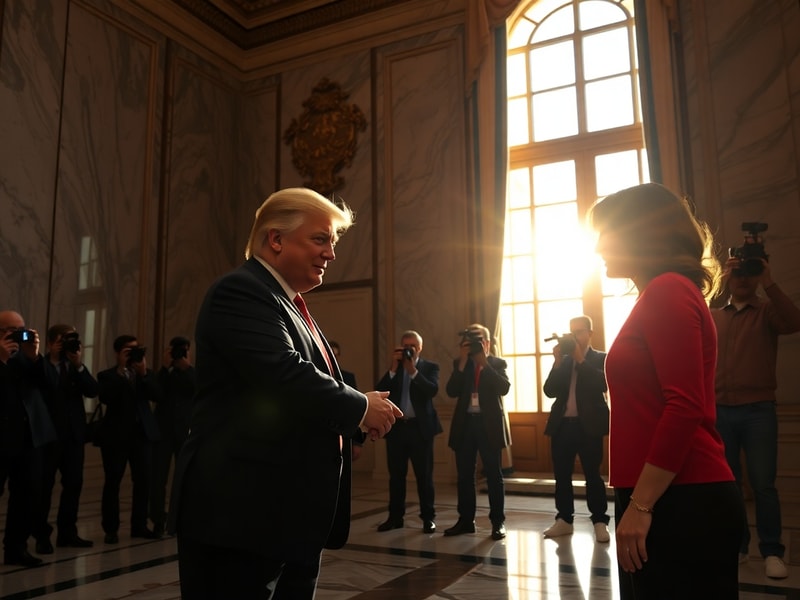
The process of uranium enrichment sits at the nexus of civilian energy production and geopolitical strategy. While it enables the generation of low-carbon electricity, the same technology also underpins nuclear weapons programs. This dual-use nature makes uranium enrichment one of the most closely monitored industrial processes in the world.
Nuclear power plants rely on uranium as fuel, but natural uranium contains less than 1% of the fissile isotope U-235 needed for most reactors. Enrichment increases this concentration, typically to between 3% and 5% for commercial reactors. Weapons-grade uranium, by contrast, requires enrichment levels exceeding 90%. The distinction is critical—both technologically and politically.
The Technical Process Behind Uranium Enrichment
Uranium enrichment is not a single method but a family of processes, each with unique trade-offs in efficiency, cost, and security risks. The most common industrial technique today is gas centrifuge enrichment, which has largely replaced the older gaseous diffusion method due to its lower energy consumption.
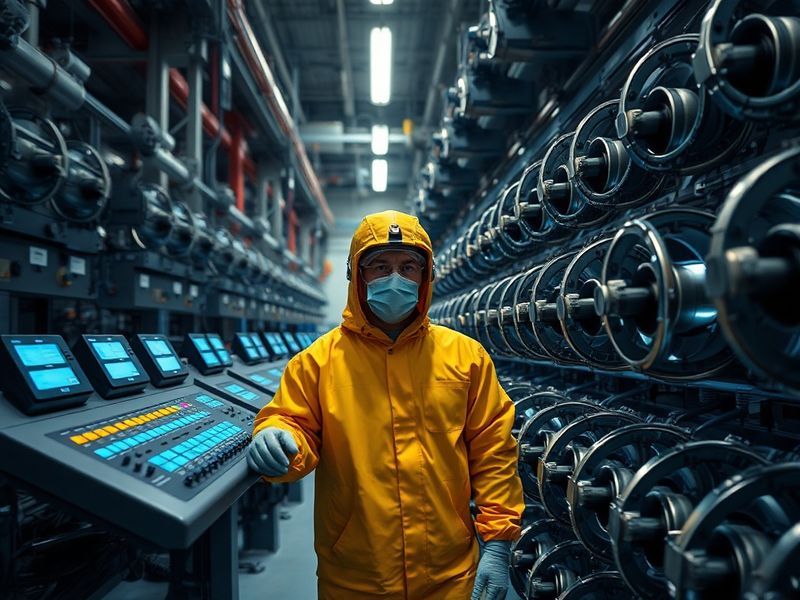
The process begins with uranium ore, which is milled into yellowcake—a powdered form of uranium oxide (U3O8). This is then converted into uranium hexafluoride (UF6), a compound that becomes gaseous at relatively low temperatures. The UF6 is fed into a series of centrifuges, where it is spun at high speeds.
Inside each centrifuge, heavier U-238 molecules move toward the outer wall, while lighter U-235 molecules concentrate near the center. The enriched stream is then siphoned off and fed into the next centrifuge in a cascading system. A single pass through a centrifuge increases the U-235 concentration only slightly, so hundreds of stages are required to reach the desired enrichment level.
Alternative enrichment methods include laser isotope separation, which uses finely tuned lasers to ionize U-235 atoms selectively, and aerodynamic separation, which relies on high-speed gas flows through curved nozzles. Though promising, these methods have seen limited commercial adoption due to technical challenges and regulatory hurdles.
Global Enrichment Capacity: Who Holds the Keys?
The global enrichment landscape is dominated by a handful of countries, reflecting both technological prowess and strategic intent. The world’s largest enrichment facility, Russia’s Urals Electrochemical Combine, can produce over 20 million separative work units (SWU) annually. SWU is the standard measure of enrichment capacity—the energy and effort required to separate isotopes.
Other major players include:
- United States: Operates the Paducah and Portsmouth plants, though much of its enrichment capacity has been mothballed in favor of newer technologies.
- France: Centrifuge-based enrichment at the Georges Besse II facility, operated by Orano (formerly Areva).
- Germany, Netherlands, and the UK: Operate the Urenco consortium, which supplies about a third of the world’s enrichment services.
- China: Rapidly expanding its centrifuge capacity, with plans to become self-sufficient in fuel production.
- Iran: Maintains a limited enrichment program under international oversight, a point of contention in nuclear diplomacy.
The concentration of enrichment capacity in so few hands has led to concerns about supply chain vulnerabilities. During the 2010s, for instance, the Fukushima disaster and subsequent German nuclear phase-out disrupted fuel markets, forcing some countries to seek alternative suppliers. This has accelerated interest in domestic enrichment programs, particularly in Asia and the Middle East.
Dual-Use Dilemmas: Energy vs. Weapons
The same centrifuges used to enrich uranium for power plants can, in theory, be repurposed to produce weapons-grade material. This inherent dual-use nature is why the International Atomic Energy Agency (IAEA) inspects enrichment facilities worldwide. Under the Nuclear Non-Proliferation Treaty (NPT), non-nuclear-weapon states are required to allow IAEA safeguards in exchange for access to nuclear technology.
Yet compliance is not universal. North Korea, for example, clandestinely developed enrichment capabilities in the 1990s and 2000s, eventually declaring a uranium-based nuclear program. Iran’s enrichment activities, while permitted under the 2015 Joint Comprehensive Plan of Action (JCPOA), have faced scrutiny over their pace and scale. The agreement limited Iran to 3.67% enrichment and capped its stockpile of enriched uranium, but the U.S. withdrawal from the deal in 2018 left future oversight uncertain.
Enrichment technology is also spreading through commercial channels. Urenco, the European consortium, has licensed its centrifuge designs to countries like the United Arab Emirates and South Korea as part of fuel supply agreements. While these transfers are strictly controlled, the risk of diversion or reverse-engineering remains a concern for non-proliferation experts.
The Future of Enrichment: Innovation and Geopolitics
Advances in enrichment technology could reshape the industry. Centrifuge designs are becoming more efficient, with some newer models consuming up to 50% less electricity than older generations. This could make enrichment more affordable and accessible, particularly for countries seeking energy independence.
On the horizon are next-generation methods like laser enrichment, which could dramatically reduce the time and energy required to separate isotopes. The U.S. firm Silex Systems has pioneered laser-based techniques, though regulatory and technical barriers have delayed commercial deployment. If successful, such innovations could decentralize enrichment, reducing reliance on a handful of dominant suppliers.
Geopolitically, the rise of China as an enrichment powerhouse is reshaping global dynamics. China’s enrichment capacity grew by nearly 50% between 2015 and 2020, and its state-owned enterprises are investing heavily in fuel cycle infrastructure across Africa and Central Asia. This expansion could challenge the dominance of Western and Russian suppliers, particularly as countries in the Global South seek diversified energy partnerships.
Meanwhile, the push for small modular reactors (SMRs) could create new demand for enriched uranium. SMRs are designed to operate on higher enrichment levels (up to 20%) and could revive interest in alternative enrichment methods tailored to smaller-scale production. Companies like NuScale and TerraPower are exploring fuel designs that may require novel enrichment approaches.
Yet the shadow of proliferation looms large. The IAEA estimates that over 1,000 tons of highly enriched uranium (HEU) remain in civilian stockpiles, enough for thousands of nuclear weapons. Reducing these stockpiles—through downblending to low-enriched uranium (LEU) or conversion to non-weapons-usable forms—remains a priority for global security.
As the world grapples with climate change and energy security, uranium enrichment will remain a critical—and contentious—technology. Balancing the need for clean energy with the risks of proliferation will require not only technological innovation but also robust international cooperation. The future of enrichment may well determine whether nuclear power becomes a cornerstone of sustainable energy or a flashpoint for global conflict.
For those interested in the broader implications of nuclear technology, explore our Technology and Politics sections for deeper analysis.