Antoine Griezmann: How the French Star Redefined Modern Football
“`html
Antoine Griezmann: The World Cup Winner Who Redefined Modern Striking
Antoine Griezmann stands as one of football’s most versatile and influential forwards of the past decade. His ability to dominate games through intelligence, technical skill, and relentless work rate has cemented his legacy as a modern attacking icon. From his early struggles to establish himself in Europe to becoming a Ballon d’Or finalist and World Cup winner, Griezmann’s career reflects both perseverance and adaptability.
Born on March 21, 1991, in Mâcon, France, Griezmann’s journey to football stardom wasn’t immediate. He was rejected by several youth academies due to his slight frame and slow physical development. Undeterred, he joined UF Maconnais before catching the eye of Real Sociedad’s scouts. His move to Spain at age 14 marked the beginning of a transformation that would shape his future.
Early Career and Rise at Real Sociedad
Griezmann’s professional debut came with Real Sociedad in 2009, but it was the 2012–13 season that announced his arrival on the European stage. Playing as a winger, he scored 10 goals and provided 7 assists in La Liga, helping the Basque club secure a Europa League spot. His performances drew attention from Europe’s elite clubs, and in 2014, Atlético Madrid secured his services for €30 million—a move that would define his career.
At Atlético, Griezmann flourished under Diego Simeone’s disciplined system. Though initially deployed on the right flank, he evolved into a complete forward capable of playing across the attack. His first season saw him score 22 league goals, earning comparisons to strikers despite his midfield contributions. By 2016, he was a Ballon d’Or finalist, finishing third behind Cristiano Ronaldo and Lionel Messi.
- Key Attributes During His Atlético Madrid Years:
- Clinical finishing inside the box
- Intelligent movement and link-up play
- Ability to press and recover possession
- Versatility to play as a false nine or second striker
World Cup Glory and Global Recognition
Griezmann’s crowning achievement came in 2018 at the FIFA World Cup in Russia. As France’s creative hub, he orchestrated attacks, scored four goals (including a penalty in the final), and provided two assists, earning the Silver Ball as the tournament’s second-best player. His performance against Argentina in the Round of 16—where he assisted Kylian Mbappé’s goal and scored himself—remains one of the tournament’s most memorable moments.
That World Cup cemented Griezmann’s status as a global superstar. His ability to dictate play, combine with teammates, and deliver in high-pressure moments showcased why he was considered among the best players in the world. The tournament also highlighted his leadership, as he wore the captain’s armband in several matches.
Transition to Barcelona and Return to Atlético
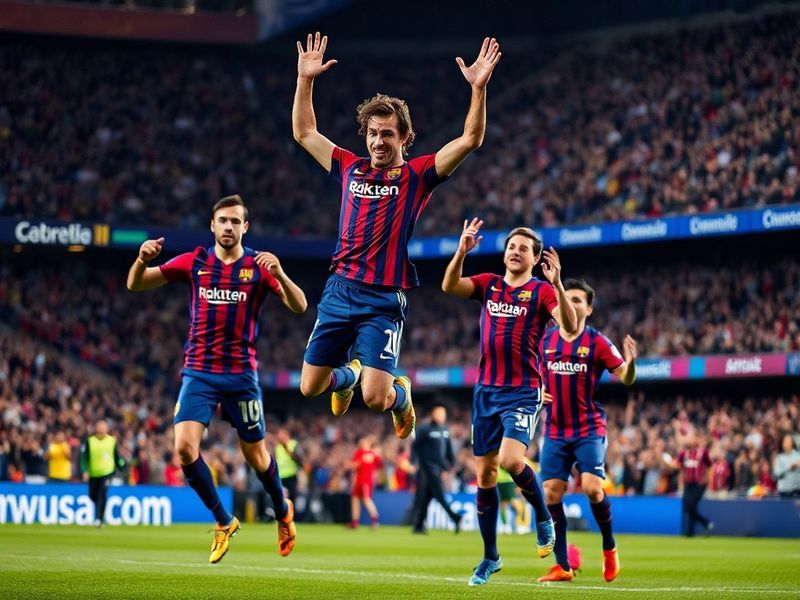
In 2019, Griezmann’s desire for a new challenge led to a controversial €120 million move to Barcelona. The transfer, orchestrated under new president Josep Maria Bartomeu, was met with skepticism due to his age and the club’s financial constraints. His time at Camp Nou was marked by inconsistency. While he scored crucial goals, including a brace against Napoli in the Champions League, he struggled to replicate his Atlético form.
By 2021, Griezmann returned to Atlético Madrid on loan, a move that revitalized his career. Playing alongside Luis Suárez and later Álvaro Morata, he rediscovered his scoring touch. His second stint at the club reaffirmed his importance, proving that his brilliance wasn’t confined to a single system or league. In 2022, Atlético made his return permanent, solidifying his legacy as one of the club’s most iconic players.
The Modern Forward: Griezmann’s Evolution
Griezmann’s career offers a masterclass in adaptation. Early in his career, he was seen primarily as a winger, but his tactical intelligence allowed him to transition into a false nine and complete striker. His dribbling, vision, and pressing intensity align with modern attacking principles, where forwards are expected to contribute beyond goals.
His playing style is a blend of creativity and efficiency. Unlike traditional poachers, Griezmann excels in creating chances through off-the-ball movement and one-touch combinations. His partnership with Mbappé in the French national team exemplifies this, as both players rotate positions to disorient defenses.
Off the pitch, Griezmann has cultivated a strong personal brand. His signature mustache, playful social media presence, and endorsement deals with brands like Nike and Head & Shoulders have made him a marketable figure. Yet, he maintains a professional demeanor, avoiding the controversies that often surround high-profile athletes.
Legacy and Future
At 33, Griezmann is in the latter stages of his career, but his influence extends beyond statistics. He has redefined the role of a modern forward, proving that creativity and work rate can rival raw athleticism. With 300+ career goals and over 150 assists, his numbers speak for themselves, but his impact is measured in moments that define eras.
As he continues to play for Atlético Madrid and the French national team, Griezmann’s legacy is secure. Whether he adds more trophies to his cabinet remains to be seen, but his career already stands as a testament to perseverance, intelligence, and adaptability in the ever-evolving world of football.
For young players aspiring to follow in his footsteps, Griezmann’s journey offers a blueprint: embrace versatility, prioritize tactical understanding, and never stop evolving.
To explore more about football legends and their careers, visit our Sports section. For deeper analysis on tactical trends in modern football, check out our Analysis category.