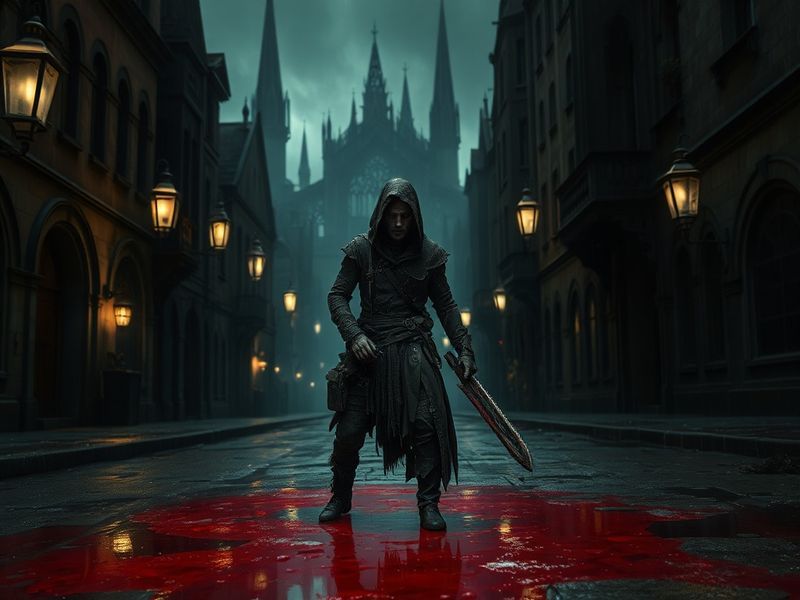
Bloodborne: How FromSoftware’s Gothic Horror Shaped Modern Gaming
“`html
Bloodborne: How FromSoftware’s Gothic Horror Shaped Modern Gaming
FromSoftware’s Bloodborne arrived in 2015 as a dark revelation in the action RPG genre, blending gothic horror with precise combat mechanics. Set in the cursed city of Yharnam, the game’s atmosphere alone redefined player expectations. Its influence persists years later, inspiring developers and captivating players worldwide.
The game emerged during a renaissance for FromSoftware, a studio previously known for gaming franchises like Armored Core and Demon’s Souls. While Demon’s Souls laid groundwork for the “Soulsborne” subgenre, Bloodborne expanded its reach by emphasizing speed, aggression, and a relentless narrative.
The Cultural Impact of a Gothic Nightmare
Bloodborne did not just enter the gaming conversation—it reshaped it. The game’s Victorian-inspired horror aesthetic drew comparisons to Lovecraftian themes and classic gothic literature. Its oppressive, rain-soaked streets and grotesque enemies created an immersive dread that few games matched.
Japan’s gaming culture, known for its meticulous design and atmospheric storytelling, embraced Bloodborne wholeheartedly. The game’s success in Japan contrasted with Western RPG trends, proving that narrative depth and mechanical precision could transcend cultural boundaries. Its influence trickled into Japanese media, inspiring manga, anime, and even fashion trends centered around gothic and Victorian motifs.
Globally, Bloodborne became a symbol of FromSoftware’s ambition. It demonstrated that AAA-quality production values weren’t necessary to create a masterpiece. Instead, the game relied on atmosphere, challenge, and meticulous design—a philosophy that later defined titles like Elden Ring.
FromSoftware’s Signature Challenge
At its core, Bloodborne is a punishing experience. The game demands mastery of its combat system, where timing, positioning, and aggression dictate survival. Unlike traditional RPGs that emphasize defense, Bloodborne rewards bold playstyles, creating a dynamic that feels both exhilarating and terrifying.
The game’s difficulty wasn’t just a gimmick—it was a statement. FromSoftware rejected the trend of “easy mode” games, opting instead for a philosophy of “git gud.” This approach resonated with players who craved challenge and depth, fostering a dedicated community that shared strategies, lore theories, and modding innovations.
Its difficulty also sparked discussions about accessibility in gaming. While some criticized the game for its steep learning curve, others praised it for fostering resilience and skill development. This debate continues today, influencing how modern games balance challenge and accessibility.
A Global Phenomenon Through Community and Modding
Bloodborne transcended its initial release thanks to its passionate fanbase. The game’s modding community, particularly on PC, extended its lifespan by adding new content, visual enhancements, and even total conversions. Modders reimagined entire areas, recreated cut content, and introduced fresh mechanics, ensuring the game remained relevant years after its launch.
This grassroots enthusiasm mirrored the game’s global appeal. In Europe, players praised its gothic aesthetic, while American audiences embraced its Lovecraftian themes. Even in regions with less established gaming cultures, Bloodborne found a niche, proving that great design knows no borders.
The game’s multiplayer component further cemented its legacy. Unlike traditional co-op experiences, Bloodborne’s summon system encouraged cooperation while maintaining the game’s solitary, eerie tone. Players could leave messages for each other, share warnings, or even invade others’ worlds to test their skills—a feature that fostered a unique sense of community.
Influence on Modern Gaming
Bloodborne’s impact is evident across the gaming landscape. Its combat mechanics inspired titles like Nioh, The Surge, and even Elden Ring, which expanded on FromSoftware’s open-world ambitions. The game’s gothic horror themes also left their mark, influencing RPGs such as Lies of P and Code Vein.
FromSoftware itself evolved after Bloodborne, releasing Dark Souls III and later Elden Ring, which became one of the best-selling games of all time. Yet, Bloodborne remains a touchstone for fans and developers alike, a testament to its enduring design.
A Lasting Legacy in Gaming Culture
The game’s influence extends beyond mechanics and aesthetics. Bloodborne sparked conversations about difficulty, storytelling, and player agency. It challenged the industry to prioritize depth over accessibility, proving that challenge could be a feature, not a flaw.
Its gothic horror aesthetic also left a cultural footprint. The game’s art style influenced fashion, music, and even film. Cosplayers recreated its iconic outfits, while musicians drew inspiration from its haunting soundtrack. The game’s visual and thematic DNA can be seen in everything from indie horror games to high-fashion editorials.
More than a decade after its release, Bloodborne remains a benchmark for quality in action RPGs. Its blend of challenge, atmosphere, and innovation set a new standard, one that continues to inspire developers and delight players.
Why Bloodborne Still Matters
Bloodborne is more than a game—it’s a cultural artifact. It represents a moment when gaming matured, when mechanics and storytelling converged to create something timeless. Its influence is everywhere, from the indie darlings it inspired to the AAA titles that followed in its footsteps.
The game’s legacy is a reminder that great art doesn’t need to be easy. It doesn’t need to cater to the lowest common denominator. Instead, it challenges, rewards, and endures. In an industry often obsessed with trends and quick profits, Bloodborne stands as a monument to passion, precision, and perseverance.
As FromSoftware continues to push boundaries with Armored Core VI and future projects, fans will look back at Bloodborne as the game that set the stage. It proved that gaming could be art, that challenge could be joy, and that horror could be beautiful.
For those who experienced its terrors and triumphs, Bloodborne isn’t just a memory—it’s a touchstone, a reminder of what gaming can achieve when it dares to be bold.