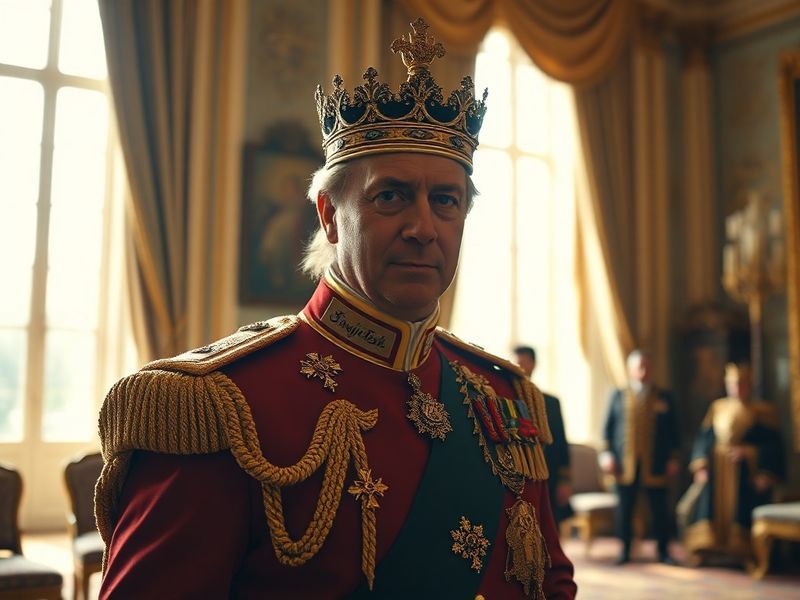
When Charles III ascended to the British throne on September 8, 2022, following the death of his mother, Queen Elizabeth II, he inherited more than just a crown. He stepped into a role that blends centuries of tradition with the demands of a rapidly changing world. As the oldest monarch to begin his reign in British history, Charles faces unique challenges and opportunities in redefining the monarchy’s place in the 21st century.
The transition from Elizabeth II to Charles III marked not just a generational shift but a cultural one. The new king inherited a monarchy that had spent decades carefully balancing public expectations with institutional preservation. Charles, who had spent 70 years preparing for this moment, brought his own vision to the throne—one that emphasizes environmental stewardship, social responsibility, and a more transparent relationship with the public.
The Early Years and Preparation for the Throne
Born on November 14, 1948, as the eldest son of Queen Elizabeth II and Prince Philip, Charles Philip Arthur George was destined for the crown from birth. His education at Gordonstoun—a school known for its rigorous discipline—was followed by studies at Trinity College, Cambridge, where he earned a Bachelor of Arts degree in history. His early life was marked by rigorous training in constitutional duties, including serving in the Royal Navy from 1971 to 1976.
Charles’s preparation for kingship extended beyond military service. He immersed himself in charitable work, founding The Prince’s Trust in 1976 to support disadvantaged young people. His commitment to environmental causes also became a hallmark of his public life, predating the modern climate movement by decades. These efforts were not merely symbolic; they reflected a deep belief in the monarchy’s role as a force for positive change.
As Prince of Wales, Charles cultivated a reputation as a thoughtful, sometimes controversial figure. His 1997 speech criticizing modern architecture, delivered at the Royal Institute of British Architects, sparked debate. Yet, his willingness to challenge conventions foreshadowed the leadership style he would bring to the throne. When he finally became king at 73, the monarchy was entering a new phase—one where tradition and innovation would need to coexist.
The Challenges of a Modern Monarchy
Charles III inherited a monarchy navigating uncharted waters. Public trust in institutions, including the royal family, had been shaken by scandals, media scrutiny, and shifting societal values. The monarchy’s relevance was no longer a given, particularly among younger generations who questioned its cost and purpose. Charles had to address these concerns while maintaining the institution’s dignity and continuity.
One of his first major decisions was to limit the number of working royals, reducing the monarchy’s footprint while ensuring its core functions remained intact. He also embraced digital communication, using social media to share his official engagements and messages, a stark contrast to his mother’s more reserved approach. This adaptation reflected a broader strategy: making the monarchy more accessible without compromising its mystique.
Charles’s reign has also been shaped by global events. The COVID-19 pandemic tested his ability to lead during a crisis, while the death of his wife, Queen Camilla, in 2024, added a personal dimension to his public duties. His responses to these challenges have underscored his commitment to duty, even as he navigates the complexities of a modern monarchy in an era of rapid change.
The King’s Role in a Changing United Kingdom
The United Kingdom Charles III leads is vastly different from the one his mother governed. Brexit, political polarization, and debates over national identity have reshaped the country’s social and political landscape. The monarchy, as a unifying symbol, has had to adapt to these divisions. Charles’s approach has been one of cautious engagement—acknowledging the diversity of modern Britain while upholding the monarchy’s role as a stabilizing force.
His coronation in May 2023 was a carefully curated blend of tradition and modernity. Unlike his mother’s coronation, which was a grand spectacle steeped in centuries of ritual, Charles’s ceremony incorporated elements that reflected his personal values, such as the inclusion of non-Christian faith leaders. This signaled a monarchy more attuned to the pluralistic society it serves.
The King has also taken steps to address historical controversies, such as acknowledging the monarchy’s role in colonialism and slavery. These acknowledgments, though long overdue for some, represent a shift in how the institution engages with its past. For Charles, this is not just about contrition but about forging a path forward that aligns with contemporary values.
The Global Perspective: A Monarchy Under the Spotlight
Charles III’s reign extends beyond the United Kingdom. As the head of the Commonwealth, he plays a key role in maintaining ties with 56 member nations, many of which are former British colonies. His leadership in this capacity has been marked by efforts to redefine the Commonwealth as a voluntary association rather than a relic of empire. This has not been without controversy, particularly in nations where anti-colonial sentiment remains strong.
Internationally, Charles has leveraged his platform to advocate for global issues, from climate change to sustainable development. His 2021 address to the United Nations General Assembly, where he emphasized the urgency of environmental action, highlighted his commitment to using the monarchy’s influence for good. This global engagement has positioned Charles as a statesman, albeit one whose role is constrained by constitutional boundaries.
The monarchy’s global image has also been shaped by Charles’s personal relationships. His friendship with world leaders, including U.S. President Joe Biden and French President Emmanuel Macron, has underscored the monarchy’s role in diplomacy. Yet, these relationships have also drawn criticism, particularly in the context of post-colonial power dynamics. Charles’s ability to navigate these complexities will define his legacy as a global monarch.
Looking Ahead: The Future of Charles III’s Reign
As Charles III enters the later years of his reign, the monarchy faces inevitable questions about its future. His eldest son, Prince William, is already being groomed as a successor, raising questions about the monarchy’s continuity. Charles’s health and longevity will also play a role in shaping the institution’s next chapter. Yet, his greatest challenge may be balancing tradition with the need for reform.
The monarchy’s survival in the 21st century depends on its ability to remain relevant. Charles III’s approach—a blend of steadfast duty and cautious innovation—offers a blueprint for how the institution can adapt without losing its essence. Whether this balance will satisfy critics and supporters alike remains to be seen, but one thing is clear: Charles III is determined to leave a legacy that extends beyond coronation ceremonies and royal duties.
For now, the King continues to fulfill his constitutional obligations with quiet determination. His reign may lack the glamour of his mother’s, but it carries the weight of a monarchy at a crossroads. In an era where institutions are increasingly scrutinized, Charles III’s ability to evolve while preserving the monarchy’s core values will be his ultimate test.
The Cultural Impact of Charles III’s Reign
Charles III’s reign has coincided with a period of cultural reckoning, both within the United Kingdom and globally. The monarchy, as a symbol of tradition, has found itself at the center of debates about history, identity, and power. Charles’s personal passions—environmentalism, architecture, and social justice—have seeped into the public consciousness, shaping how the monarchy is perceived in the modern world.
The arts and media have played a significant role in defining Charles’s image. Documentaries like Charles: The Man Who Will Be King have explored his life with nuance, highlighting both his strengths and vulnerabilities. Meanwhile, his public appearances, from climate summits to charity events, have reinforced his image as a conscientious leader. This cultural engagement has helped humanize the monarchy, making it more relatable to younger audiences.
Yet, the monarchy’s cultural footprint is not without controversy. Charles’s involvement in political issues, such as his opposition to fracking in the 2000s, has sparked debates about the limits of royal influence. His decision to lobby government ministers on certain issues has raised questions about the monarchy’s neutrality. These moments underscore the tension between Charles’s personal beliefs and the constitutional role he now occupies.
The monarchy’s relationship with popular culture has also evolved under Charles III. While his mother was often seen as a distant figure, Charles has embraced a more interactive approach. His appearances on television, including a 2023 interview with the BBC’s Huw Edwards, demonstrated a willingness to engage directly with the public. This shift reflects a broader trend in how institutions communicate with their audiences in the digital age.
Conclusion: A King for a New Era
Charles III’s reign represents a pivotal moment in the history of the British monarchy. As he navigates the challenges of leading an institution rooted in tradition while adapting to the demands of a modern world, his leadership style offers a case study in evolution. Whether through his environmental advocacy, his efforts to modernize the monarchy’s image, or his cautious engagement with global issues, Charles is redefining what it means to be a constitutional monarch in the 21st century.
For the monarchy to endure, it must find a balance between preserving its heritage and embracing change. Charles III’s approach—measured, thoughtful, and sometimes controversial—reflects this delicate equilibrium. His legacy will ultimately be defined not just by the decades he spends on the throne, but by how he shapes the institution for generations to come.
The world watches as Charles III continues his reign, a living bridge between the past and the future. His story is still being written, but one thing is certain: the modern monarchy he inherits will never be the same.
Explore more on the evolution of royal institutions and their global impact: