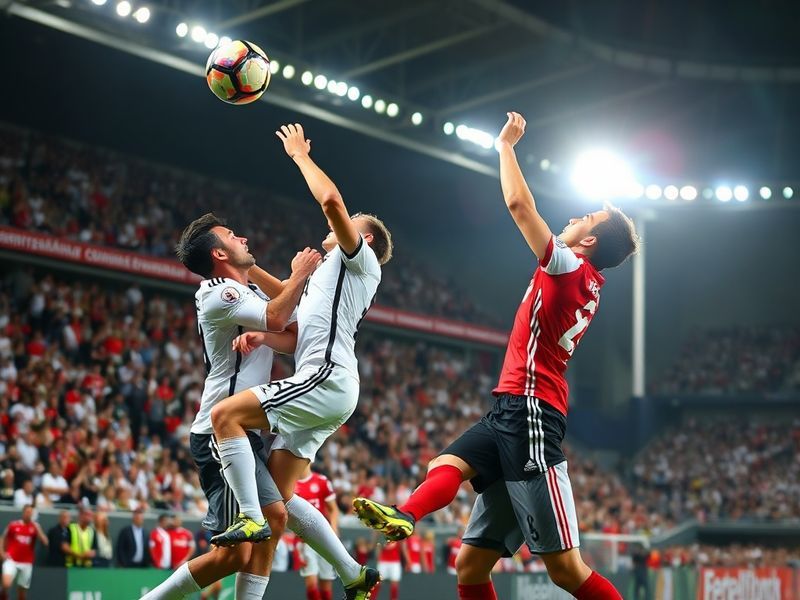
Germany and Austria share a complex relationship that extends far beyond the football pitch. While their on-field clashes often steal the spotlight, the broader context of their rivalry reveals deep historical ties, economic interdependence, and cultural exchanges that shape Central Europe. This dynamic plays out in diplomacy, trade, and even tourism, creating a rivalry that is as much about partnership as it is about competition.
The Historical Context: From Empires to Modern Nations
The roots of the Germany-Austria relationship stretch back centuries, intertwined with the rise and fall of empires. The Habsburg Monarchy, once the dominant power in Central Europe, ruled over vast territories that included modern-day Austria, parts of Germany, and beyond. The Austro-Hungarian Empire’s eventual decline after World War I left Austria as a diminished but culturally rich nation, while Germany emerged as a new political entity with ambitions of its own.
World War II further complicated their relationship. Austria, though annexed by Nazi Germany in 1938, later positioned itself as a victim of Hitler’s regime. This narrative helped shape post-war Austrian identity, distinct from its larger neighbor. Yet, the economic and political realities of the Cold War forced both nations to collaborate within the framework of Western Europe, particularly through their shared membership in the European Union and NATO.
Shared Challenges, Divergent Responses
The 21st century has presented both countries with similar challenges—migration crises, energy security, and the rise of populism—but their responses have often diverged. Germany, as Europe’s largest economy, has taken a leadership role in addressing these issues, while Austria has adopted a more cautious, sometimes skeptical approach. This difference in strategy has occasionally led to friction, particularly in debates over EU policies and border controls.
Economic Ties: Competition and Collaboration
Germany and Austria are among each other’s most important trading partners. German companies operate extensively in Austria, particularly in manufacturing and automotive sectors, while Austrian firms maintain a strong presence in Germany’s service industries. The automotive industry serves as a prime example—German giants like BMW and Mercedes have production facilities in Austria, while Austrian suppliers like AVL provide critical components to German automakers.
Despite this interdependence, competition remains fierce. Both nations vie for foreign investment, and Austria often markets itself as a more business-friendly alternative to Germany’s higher tax and regulatory environment. The rivalry extends to tourism as well, with Austria’s Alpine resorts attracting German visitors seeking winter sports and scenic retreats, while German cities like Munich and Berlin draw Austrian tourists for culture and shopping.
Key Economic Points of Comparison
- GDP: Germany’s economy is nearly ten times larger than Austria’s, but Austria enjoys a higher GDP per capita.
- Industries: Germany leads in automotive and machinery, while Austria excels in tourism and niche manufacturing.
- Trade Balance: Germany consistently runs a trade surplus with Austria, reflecting its dominant economic position.
- Labor Market: Austria has a lower unemployment rate but faces skilled labor shortages similar to Germany.
- Taxation: Austria’s corporate tax rates are slightly lower, attracting some German businesses to relocate.
The Football Rivalry: More Than Just a Game
When Germany and Austria meet on the football field, the intensity is undeniable. Matches between their national teams or club sides like Bayern Munich and Red Bull Salzburg often carry symbolic weight. The most infamous example is the “Gijón Affair” of 1982, when West Germany and Austria colluded in a deliberate 1-0 match to eliminate Algeria, sparking outrage across the football world. The incident remains a stain on their sporting history.
Yet, the rivalry also highlights the deep cultural connections between the two nations. Austrian players like David Alaba and Erwin Hoffer have thrived in the German Bundesliga, while German coaches like Felix Magath have managed Austrian clubs. The exchange of talent and ideas has enriched both football cultures, even as national pride occasionally clashes.
Broader Implications: A Model for European Relations?
The Germany-Austria relationship offers a microcosm of broader European dynamics. Their ability to balance rivalry with cooperation serves as a case study in how neighboring nations can navigate differences while pursuing common goals. This balance is particularly relevant today, as Europe faces rising nationalism, economic uncertainty, and shifting global alliances.
For policymakers, the Germany-Austria model demonstrates the value of pragmatic diplomacy. Despite occasional disputes, both nations prioritize stability and integration, whether through EU institutions or bilateral agreements. This approach has helped mitigate historical grievances and fostered a sense of shared destiny in Central Europe.
Lessons for Other Rivalries
The Germany-Austria relationship underscores several key lessons for other contentious pairings:
- Shared History as a Foundation: Rather than dwelling on past conflicts, both nations leverage their historical ties to build a cooperative future.
- Economic Interdependence as a Stabilizer: Trade and investment create vested interests in maintaining good relations.
- Cultural Exchange as a Bridge: People-to-people connections, from tourism to sports, foster mutual understanding.
- Pragmatic Diplomacy: Leaders prioritize practical outcomes over symbolic victories, ensuring stability even amid disagreements.
These principles could serve as a blueprint for other rivalries, from Greece and Turkey to India and Pakistan, where historical tensions often overshadow potential collaboration.
Conclusion: A Rivalry That Defines and Unites
The Germany-Austria rivalry is a paradox—one defined by competition yet sustained by cooperation. Whether in economics, politics, or culture, their dynamic reflects the broader challenges and opportunities of European integration. While football matches and trade disputes may grab headlines, the deeper story is one of resilience and adaptation.
As both nations navigate the uncertainties of the 21st century, their ability to balance rivalry with partnership will remain a critical factor in Central Europe’s stability. For observers, the Germany-Austria relationship serves as a reminder that even the most complex rivalries can yield unexpected benefits when approached with pragmatism and foresight.
Ultimately, the story of Germany and Austria is not just one of competition but of coexistence—a testament to the power of shared history and mutual ambition.