The Nissan Skyline and Infiniti Q50 represent two distinct branches of Nissan’s global automotive strategy, yet they share deep mechanical and cultural roots. Both lines trace their origins to Japan’s performance and luxury markets, but they’ve evolved into different directions over decades. Understanding their differences—and similarities—offers insight into how Nissan balances heritage with innovation in the modern era.
The Skyline, first introduced in 1957, began as a compact family car before transforming into a performance icon through models like the GT-R. The Infiniti brand, launched in 1989, was Nissan’s answer to premium sedans and SUVs in global markets, emphasizing luxury and advanced technology. While the Skyline remains deeply tied to Japan’s tuning and racing culture, Infiniti positioned itself as a luxury brand with global ambitions.
The Historical Roots of Skyline and Infiniti
The Nissan Skyline debuted as a 1.5-liter sedan built by Prince Motor Company, which Nissan later acquired in 1966. The Skyline quickly gained a reputation for reliability and adaptability, but it was the 1969 Skyline GT-R—powered by the legendary S20 inline-six engine—that cemented its legacy. The GT-R became a motorsport legend, dominating touring car races in Japan and earning the nickname “Godzilla.”
Infiniti, on the other hand, was born from Nissan’s push into the luxury segment during the late 20th century. Launched in the U.S. market in 1989, Infiniti was designed to compete with established brands like Lexus and Acura. Its early models, such as the Q45, emphasized smooth V8 power and whisper-quiet cabins, aligning with American expectations of luxury. While the Skyline thrived in the shadows of Japan’s underground racing scene, Infiniti aimed for showroom prestige.
These divergent paths reflect Nissan’s dual identity: one rooted in performance heritage and the other in international luxury branding. Both lines have influenced automotive culture, but in vastly different ways.
Design and Engineering: Where They Converge and Diverge
Despite their different market positions, the Skyline and Infiniti share platforms and components at various points in their histories. For instance, the Nissan GT-R (the modern Skyline’s performance flagship) and the Infiniti FX crossover both used versions of the Nissan FM platform. This platform prioritizes a front-midship layout for better weight distribution and handling.
However, their design philosophies diverge significantly:
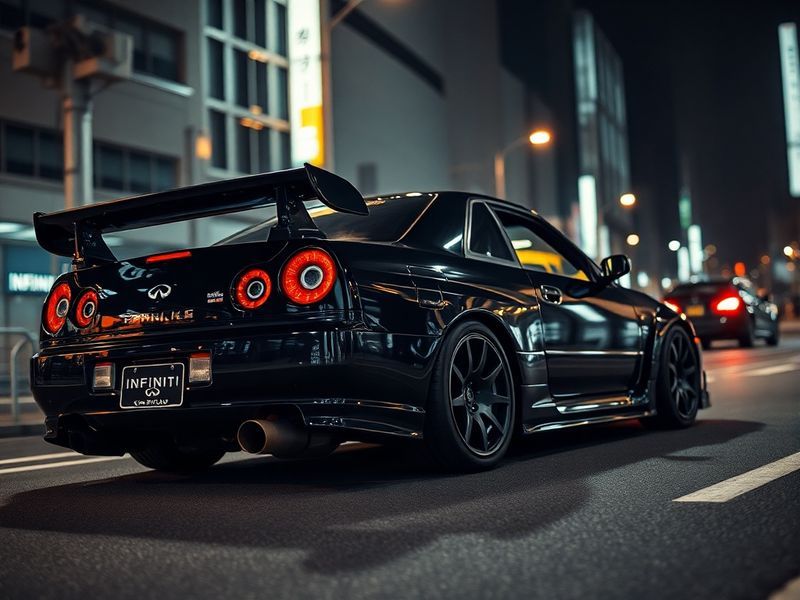
- Skyline: Aggressive, aerodynamic styling with wide fenders, quad exhausts, and functional vents. The GT-R, in particular, features a muscular, track-focused aesthetic with a focus on downforce and cooling.
- Infiniti: Sleek, understated luxury with flowing lines, LED light signatures, and premium materials. Models like the Q50 emphasize comfort and technology, with available options like semi-aniline leather and Bose audio systems.
Engineering differences also reflect their purposes. The Skyline GT-R has historically featured high-performance turbocharged inline-six engines (like the VR38DETT in the R35 GT-R), while Infiniti models often prioritize smooth, naturally aspirated V6 engines (such as the VQ37VHR in the Q50) for refined power delivery. These choices highlight how Nissan tailors each brand to its intended audience.
Performance and Driving Experience: A Tale of Two Philosophies
The driving experience of a Skyline GT-R and an Infiniti Q50 couldn’t be more different, despite sharing some mechanical underpinnings. The GT-R is engineered for high-speed stability, precise steering, and explosive acceleration. Its launch control and multi-clutch all-wheel-drive system make it a drag-strip and circuit specialist. In contrast, the Q50 focuses on a balanced, comfortable ride with adaptive suspension and advanced driver-assistance systems.
Consider the following performance contrasts:
- Power Output:
- 2023 Nissan GT-R (VR38DETT twin-turbo V6): 565 hp, 0-60 mph in 2.9 seconds
- 2023 Infiniti Q50 Red Sport (VQ37VHR V6): 400 hp, 0-60 mph in 5.2 seconds
- Handling: The GT-R’s rear-wheel-drive bias and track-tuned suspension prioritize cornering grip and feedback, while the Q50’s all-wheel-drive system and softer tuning emphasize comfort and stability.
- Technology: The GT-R includes a six-speed dual-clutch transmission and launch control, whereas the Q50 offers a seven-speed automatic with adaptive shift logic and available ProPILOT Assist semi-autonomous driving.
These differences underscore how Nissan uses the Skyline and Infiniti lines to cater to enthusiasts and luxury buyers, respectively. The GT-R is a tool for driving enthusiasts, while the Q50 is a statement of status and convenience.
Cultural Impact and Legacy
The cultural footprint of the Skyline and Infiniti extends far beyond their specifications. The Skyline GT-R, in particular, has become a global icon, celebrated in video games like Gran Turismo and Forza, as well as in film and anime. Its reputation as an untouchable performance machine has made it a sought-after collector’s item, with pristine examples selling for over $200,000 at auction.
Infiniti, while not as flashy, has carved out a niche in the luxury market, particularly in markets like the Middle East and China, where its blend of style and value resonates. The brand has also embraced performance with models like the Q60 coupe and QX50 crossover, though its racing pedigree doesn’t match the Skyline’s.
Both brands reflect Nissan’s broader strategy of segmenting its offerings to maximize market reach. The Skyline embodies Nissan’s performance DNA, while Infiniti represents its aspirations in the global luxury space.
A Shared Future?
In recent years, Nissan has consolidated some of its operations, and the future of both the Skyline and Infiniti remains tied to the brand’s global challenges. The Skyline name was discontinued in most markets after the R34 generation, though the GT-R continues as a standalone model. Infiniti has scaled back its U.S. operations, focusing on core markets like China and the Middle East.
However, the legacy of both lines endures. The GT-R’s influence is evident in Nissan’s electric performance vehicles, such as the Ariya-based concepts and potential future EV sports cars. Infiniti’s luxury focus may evolve into a more electrified lineup, with battery-electric models on the horizon.
As Nissan navigates an industry shift toward electrification and sustainability, the Skyline and Infiniti serve as reminders of the brand’s dual identity: one rooted in raw performance and the other in refined elegance. Their stories are not just about cars; they’re about the evolution of automotive culture itself.
For enthusiasts and collectors, the Skyline and Infiniti represent more than just machines—they are symbols of Nissan’s ambition, adaptability, and enduring legacy in the automotive world.
To explore more about Nissan’s performance lineup, visit our Automotive category. For deeper analysis on luxury car trends, check out our Analysis section.