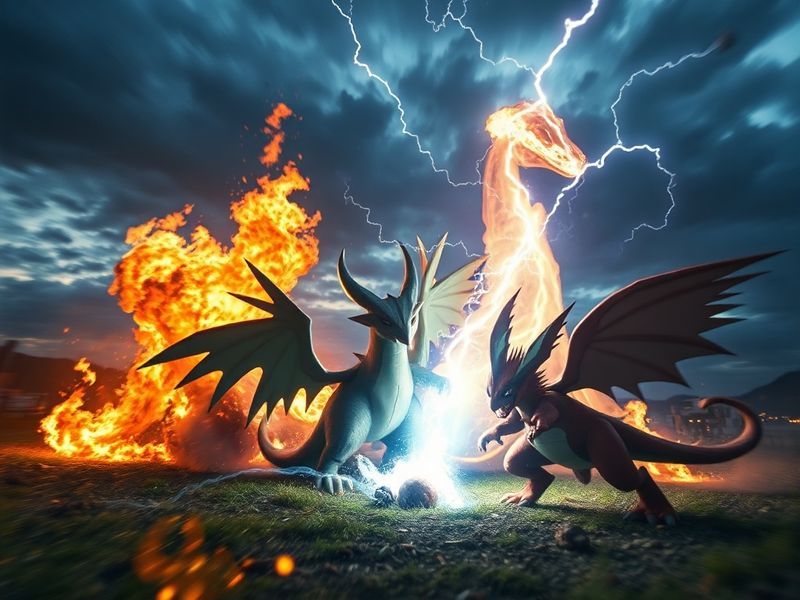
The introduction of Mega Evolution in Pokémon X and Y (2013) sent shockwaves through the franchise that continue to ripple today. What began as a temporary battle mechanic evolved into a defining feature of the series, reshaping competitive play and fan expectations. Yet, the chaos surrounding Mega Evolution persists, raising questions about its legacy and the future of Pokémon battles.
The concept was simple: for a limited time, certain Pokémon could temporarily evolve into more powerful forms using special Mega Stones. But the execution proved far more disruptive than Game Freak likely anticipated. The consequences of Mega Evolution’s introduction extended beyond gameplay, influencing merchandise, anime arcs, and even the core narrative of later titles.
The Competitive Earthquake: How Mega Evolution Redefined Battles
When Mega Evolution first appeared in Pokémon X and Y, it introduced a new layer of strategy to competitive play. Trainers had to consider not just type matchups and stats, but also whether to invest in Mega Evolving a key Pokémon during battle. This added a layer of unpredictability that forced players to adapt on the fly.
Some Mega Evolutions, like Mega Rayquaza and Mega Mewtwo X/Y, were so powerful they dominated the competitive scene for years. Mega Rayquaza, in particular, became infamous for its near-universal dominance, leading to its eventual ban in standard formats. The sheer power imbalance created by certain Mega forms forced the Pokémon Company to constantly adjust competitive rules.
The introduction of Mega Evolution also led to the rise of new battle formats. Players experimented with Mega Evolving Pokémon mid-battle, leading to innovative strategies that blended offense and defense in ways never seen before. This experimentation kept the competitive scene fresh, but it also created a divide between casual and hardcore players.
As newer games introduced additional mechanics like Z-Moves and Dynamax, Mega Evolution’s relevance began to wane in competitive circles. Yet, its impact on the series remains undeniable. The competitive chaos it introduced forced players to think differently about team building and strategy.
The Fan Divide: Why Mega Evolution Polarized the Community
Not everyone embraced Mega Evolution with open arms. The mechanic’s temporary nature created frustration among fans who wanted permanent changes. Some argued that Mega Evolution felt like an artificial way to extend the lifespan of certain Pokémon, rather than a natural evolution of the franchise.
Others criticized the power imbalance, pointing out that Mega Evolutions like Mega Charizard X and Mega Lucario were so strong they overshadowed other Pokémon. This led to accusations that Game Freak was favoring certain Pokémon over others, undermining the balanced design philosophy that had defined the series for years.
The fan reaction was far from uniform. Some players loved the new mechanics and the strategic depth they added. Competitive battlers in particular appreciated the fresh challenges Mega Evolution introduced. Meanwhile, casual players often found the mechanic confusing or unnecessary.
The polarization extended beyond gameplay. The anime’s handling of Mega Evolution, particularly in the XYZ arc, further divided fans. While some enjoyed the new arcs, others felt they disrupted the series’ traditional storytelling. The chaotic reception to Mega Evolution highlighted the challenges of introducing sweeping changes to a beloved franchise.
The Legacy of Mega Evolution: From Temporary Mechanic to Franchise Staple
Despite its controversial beginnings, Mega Evolution left a lasting mark on the Pokémon franchise. The mechanic’s success paved the way for other temporary transformations, such as Z-Moves in Pokémon Sun and Moon and Dynamax in Pokémon Sword and Shield. Each of these mechanics borrowed elements from Mega Evolution, proving its influence on the series.
Mega Evolution also became a key part of Pokémon’s marketing strategy. Mega Stones and Mega Evolved Pokémon became highly sought-after merchandise, driving sales and keeping the franchise relevant. The mechanic’s visual spectacle—with its dramatic animations and dynamic transformations—made it a standout feature in promotional materials.
Yet, Mega Evolution’s legacy is bittersweet. While it succeeded in revitalizing interest in certain Pokémon, it also created a precedent for temporary power-ups that sometimes felt exploitative. The franchise’s shift away from Mega Evolution in later games suggests that Game Freak may have recognized its limitations as well.
For some fans, Mega Evolution remains a nostalgic favorite, a reminder of the excitement that came with Pokémon X and Y. For others, it’s a symbol of how even well-intentioned changes can disrupt the balance of a beloved series. Either way, its impact on the Pokémon world is undeniable.
The Future of Pokémon Transformations: What’s Next After Mega Evolution?
With Mega Evolution now a thing of the past, fans are left wondering what the future holds for Pokémon transformations. The introduction of Terastallization in Pokémon Scarlet and Violet offered a new layer of customization, allowing players to change a Pokémon’s type mid-battle. While different in execution, Terastallization carries echoes of Mega Evolution’s emphasis on adaptability.
Competitive players have already begun experimenting with Terastallization strategies, much like they did with Mega Evolution. However, the reception has been more measured. Unlike Mega Evolution, which felt like a forced power-up, Terastallization integrates more naturally into the battle system. This suggests that Game Freak may have learned from the chaos Mega Evolution introduced.
Looking ahead, the Pokémon Company will need to balance innovation with stability. Fans have grown weary of constant mechanics shifts, and the backlash to certain features in Scarlet and Violet proves that even well-intentioned changes can backfire. Mega Evolution’s legacy serves as a cautionary tale for future transformations.
As the franchise continues to evolve, one thing is clear: the chaos Mega Evolution introduced was both a blessing and a curse. It reinvigorated the series but also highlighted the risks of disrupting a finely tuned ecosystem. Whether future mechanics will succeed where Mega Evolution stumbled remains to be seen.
Key Takeaways from Mega Evolution’s Chaos
- Competitive Impact: Mega Evolution forced players to rethink strategy, leading to new battle formats and power imbalances.
- Fan Reactions: The mechanic polarized the community, with some embracing its innovation and others criticizing its temporary nature.
- Merchandising Boost: Mega Stones and Mega Evolved Pokémon became major selling points, driving franchise revenue.
- Legacy Influence: Mega Evolution set the stage for future mechanics like Z-Moves and Dynamax, though with varying degrees of success.
- Future Challenges: The franchise must balance innovation with stability to avoid repeating Mega Evolution’s chaotic reception.
For a deeper look at competitive Pokémon strategies, check out our Pokémon Competitive Battles section. To explore more about the history of Pokémon transformations, visit our Pokémon Evolution Guide.
Mega Evolution may have been a temporary mechanic, but its impact on the Pokémon franchise is permanent. Whether it’s remembered as a bold experiment or a misguided power-up, its legacy continues to shape the series in ways both big and small. As Pokémon evolves, so too must the strategies and expectations of its fans.