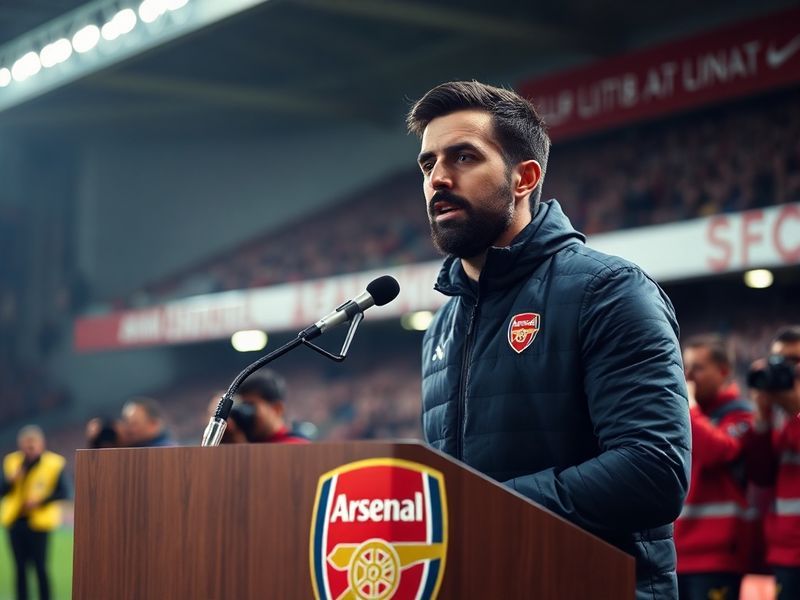
The Friday afternoon press conference at the Emirates Stadium has become a cultural moment in English football. Long before the final whistle, journalists and fans alike know that Mikel Arteta’s responses will shape the weekend’s conversations. These briefings are no longer just about match reactions—they’ve evolved into a platform where tactical philosophy meets club identity, all delivered in Arteta’s measured, analytical tone.
Arteta’s press conferences are a study in contrast. They blend the precision of a former midfield maestro with the gravitas of a modern head coach navigating the pressures of elite football. In an era where soundbites often overshadow substance, his willingness to dissect performances—both good and bad—with nuance stands out. This transparency has cultivated a rare level of trust between the manager, his players, and the Arsenal faithful.
The Art of Tactical Transparency
Arteta’s background as a player under Arsène Wenger and Pep Guardiola instilled in him a deep appreciation for tactical discourse. His press conferences frequently serve as masterclasses in football strategy, particularly as Arsenal aim to redefine their playing identity under his leadership. Whether discussing the nuances of positional play, the importance of pressing triggers, or the psychological demands of high-pressure moments, Arteta rarely shies away from technical detail.
During a recent briefing ahead of a Champions League tie, he broke down Arsenal’s approach to building from the back, emphasizing the need for “rhythmic transitions” rather than forced progression. Such terminology has seeped into fan discussions across platforms like Reddit and Twitter, where tactical threads dissect his every word. The global reach of these insights is undeniable—coaches from youth academies in Tokyo to amateur clubs in Buenos Aires study his explanations as part of their own tactical education.
Key Themes in Arteta’s Press Conferences
Arteta’s responses often circle back to a few recurring themes, each reflecting both his footballing values and Arsenal’s evolving project:
- Player Development: He frequently highlights the importance of individual growth within a collective system, often citing specific examples of players improving technical or tactical aspects of their game.
- Cultural Shift: Arteta emphasizes the need for a unified mentality, drawing parallels between on-field cohesion and the club’s historical values of resilience and creativity.
- Adaptability: Whether addressing injuries, tactical switches, or in-game decisions, he frames challenges as opportunities to evolve rather than obstacles to overcome.
- Long-Term Vision: Even after setbacks, he redirects focus to the broader project, framing short-term results as stepping stones toward sustainable success.
This consistency in messaging isn’t accidental—it’s a deliberate strategy to align stakeholders around a shared narrative. Fans, players, and even critics begin to see patterns in Arteta’s thinking, which fosters a sense of collective purpose. It’s a model that transcends football, echoing the approach of leaders in other high-performance fields like business or technology.
Global Reach and Cultural Resonance
Arteta’s press conferences have transcended the confines of the Premier League, resonating with audiences worldwide. His articulate delivery and thoughtful analysis make his words accessible to non-native English speakers, while his emphasis on technical detail appeals to the global football intelligentsia. In markets like the United States, where Arsenal’s fanbase has grown significantly, his briefings are often clipped and shared on social media platforms, introducing new audiences to the nuances of tactical football.
The cultural impact extends beyond language barriers. In regions where football is deeply intertwined with identity—such as South America, where players like Gabriel Martinelli and Gabriel Jesus have strong followings—Arteta’s respect for Brazilian and Brazilian-influenced styles of play has earned him credibility. His acknowledgment of cultural influences in football, whether through playing styles or fan traditions, adds another layer to his global appeal.
Even in Europe, where tactical discourse is already highly developed, Arteta’s press conferences are cited in media outlets from Spain’s Marca to Italy’s Gazzetta dello Sport. His ability to articulate complex ideas in relatable terms has made him a sought-after voice in football media, often invited to contribute to broader discussions about the sport’s future.
The Media’s Role in Amplifying the Message
The relationship between Arteta and the media is symbiotic. Journalists gain access to one of the most intriguing managerial minds in the game, while Arteta leverages the press to reinforce his vision. However, this dynamic isn’t without tension. The relentless scrutiny of modern football means every word is dissected, and missteps can be magnified. Arteta’s measured approach helps mitigate this risk, but it also sets a high bar for consistency.
His press conferences often follow a predictable structure: a brief opening statement, followed by a series of questions from journalists. What’s less predictable is the depth of his responses. Whether addressing a controversial refereeing decision or a player’s form, he rarely offers empty platitudes. Instead, he provides context, acknowledges limitations, and outlines steps forward. This approach has cultivated a level of trust that’s rare in today’s football landscape.
Yet, the pressure to perform in these settings is immense. A single misstep—a poorly chosen phrase, an overreliance on clichés—can fuel narratives that distract from the team’s on-field progress. Arteta’s ability to navigate this landscape speaks to his preparation and self-awareness. He knows that every press conference is an opportunity to shape perceptions, not just respond to them.
Conclusion: The Press Conference as a Cultural Artifact
Mikel Arteta’s press conferences are more than routine post-match briefings. They are a microcosm of modern football’s evolution—a blend of tactical sophistication, cultural exchange, and media dynamics. In an era where soundbites often dominate, Arteta’s commitment to substance has redefined the role of the manager in public discourse. His words resonate not just with fans of Arsenal, but with anyone interested in the intersection of sport, culture, and leadership.
As football continues to globalize, the influence of figures like Arteta will only grow. His press conferences serve as a reminder that the beautiful game is as much about ideas as it is about results. And in a world often distracted by noise, clarity is a rare and valuable commodity.
For those who tune in, whether out of fandom, curiosity, or professional interest, Arteta’s briefings offer a window into the mind of a coach shaping not just a team, but a philosophy. In doing so, he’s turned a simple press conference into something far more significant—a cultural touchstone for football’s global community.