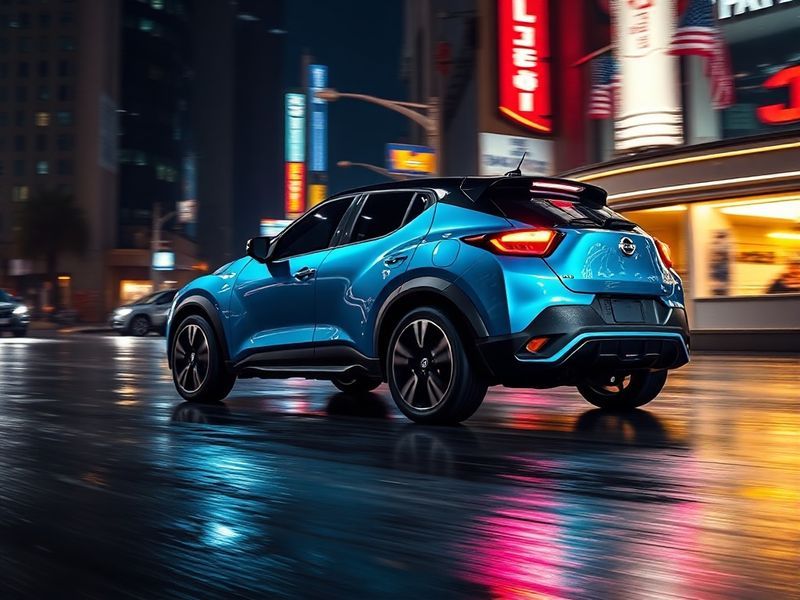
Nissan Juke EV Review: Style Meets Electric Efficiency in a Compact Crossover
“`html
Nissan Juke EV: Electrifying Style Meets Practical Innovation
Nissan’s Juke has long stood out in the compact crossover segment, blending bold design with everyday usability. With the arrival of the all-electric Nissan Juke EV, the brand is taking that formula into the electric vehicle (EV) era. This isn’t just a repackaged version of the existing Juke—it’s a reinvention that signals how Nissan intends to keep its quirky, fun-loving crossover relevant as the automotive world shifts toward zero-emission mobility.
While EVs often prioritize efficiency over character, the Juke EV manages to preserve the model’s signature flair without compromising on practicality. It’s a balancing act many automakers still struggle to achieve, making the Juke EV a noteworthy entry in the growing subcompact EV market. Here’s what sets it apart.
The Design: Familiar Silhouette, Fresh Electric Edge
The Juke EV retains the Juke’s unmistakable silhouette—a high beltline, angular headlights, and a boxy, almost playful rear. But subtle electric cues give it away. The front fascia features a closed-off grille with a glossy panel, a design language increasingly common among EVs. Blue accents, including an illuminated Nissan logo, subtly hint at the model’s zero-emission powertrain.
Inside, the Juke EV benefits from Nissan’s latest digital cockpit. A curved 12.3-inch infotainment display dominates the dashboard, paired with a 7-inch digital instrument cluster. The minimalist center console houses physical climate controls, a thoughtful nod to drivers who prefer tactile interfaces over touchscreens alone. Standard features include wireless Apple CarPlay and Android Auto, wireless charging, and a premium BOSE audio system—amenities that elevate the Juke EV from a niche choice to a genuinely desirable one.
Performance and Range: Efficiency Without Sacrifice
The Juke EV is powered by Nissan’s proven 87 kWh battery, paired with a 110 kW (148 hp) electric motor. While these figures don’t match the outright power of some hot hatches or performance EVs, they’re perfectly suited to the Juke’s compact footprint. The motor delivers 210 lb-ft of torque, providing brisk acceleration from a standstill—ideal for urban driving and spirited country roads.
Nissan estimates the Juke EV’s WLTP range at approximately 239 miles (385 km), a figure that positions it competitively within the subcompact EV segment. Real-world range will vary based on driving conditions, climate control use, and charging habits, but it’s sufficient for daily commutes and weekend getaways without frequent stops.
The Juke EV supports 130 kW DC fast charging, enabling a 10–80% charge in about 30 minutes under ideal conditions. For home charging, a 7.4 kW onboard charger allows a full recharge in roughly seven hours using a Level 2 charger. These specifications make the Juke EV a practical choice for city dwellers and those with access to home charging.
Key Performance Specifications
- Battery Capacity: 87 kWh
- Electric Motor Output: 110 kW (148 hp), 210 lb-ft torque
- Estimated Range (WLTP): 239 miles (385 km)
- DC Fast Charging: Up to 130 kW (10–80% in ~30 minutes)
- 0–60 mph: Approximately 7.5 seconds
- Top Speed: Electronically limited to 93 mph
Why the Juke EV Matters in a Crowded EV Market
The EV market is rapidly expanding, but it’s also becoming increasingly segmented. Consumers now face a choice between high-range luxury EVs, affordable city cars, and everything in between. The Juke EV slots neatly into a gap that’s often overlooked: the stylish, compact crossover that prioritizes personality and practicality over sheer distance.
Nissan isn’t the first to target this segment. The Mini Cooper SE and Fiat 500e have paved the way, proving that small EVs can succeed by focusing on charm and urban agility. The Juke EV distinguishes itself with a more rugged, adventurous aesthetic and a more spacious interior than many of its rivals. Its raised ride height and available all-wheel-drive system (in select markets) also give it a slight edge for drivers who encounter mixed road conditions.
Moreover, the Juke EV benefits from Nissan’s experience with the Leaf, one of the world’s best-selling EVs. While the Leaf is a practical hatchback, the Juke EV inherits the brand’s electric expertise and applies it to a more expressive body style. This crossover strategy reflects a broader industry trend: automakers are using EVs to reimagine familiar models rather than reinventing the wheel entirely.
Broader Implications: Can Personality Drive EV Adoption?
The automotive industry is racing toward electrification, but adoption remains uneven. Range anxiety, charging infrastructure, and price premiums continue to deter some buyers. The Juke EV doesn’t solve these challenges outright, but it addresses a critical psychological barrier: the idea that EVs must be dull or utilitarian.
Cars have always been emotional purchases, and the Juke EV leans into that tradition. By blending EV technology with a bold design, Nissan is making a statement: electrification doesn’t have to mean sacrificing character. This approach could influence other automakers to prioritize style and fun alongside sustainability—a shift that might accelerate mainstream acceptance of EVs.
There’s also a cultural dimension. The Juke has always appealed to drivers who value individuality, and the EV version extends that ethos to a new generation. In an era where personal expression is increasingly tied to technology, the Juke EV offers a way to align environmental values with a unique automotive identity.
Verdict: A Strong Contender in the Subcompact EV Space
The Nissan Juke EV isn’t a groundbreaking technical achievement, nor is it the longest-range EV on the market. What it is, however, is a well-executed blend of style, practicality, and electric efficiency. It’s a car that understands its audience: drivers who want an EV but refuse to compromise on personality.
For urban commuters, city explorers, and anyone who values a distinctive ride, the Juke EV offers a compelling alternative to the usual EV suspects. It’s proof that electrification and excitement aren’t mutually exclusive—and that sometimes, the most innovative step forward is the one that stays true to the past.
As the EV market matures, models like the Juke EV will play a crucial role in normalizing electric driving. They prove that you can go green without going grey.
For more on the latest in automotive innovation, visit our Technology and Automotive sections.