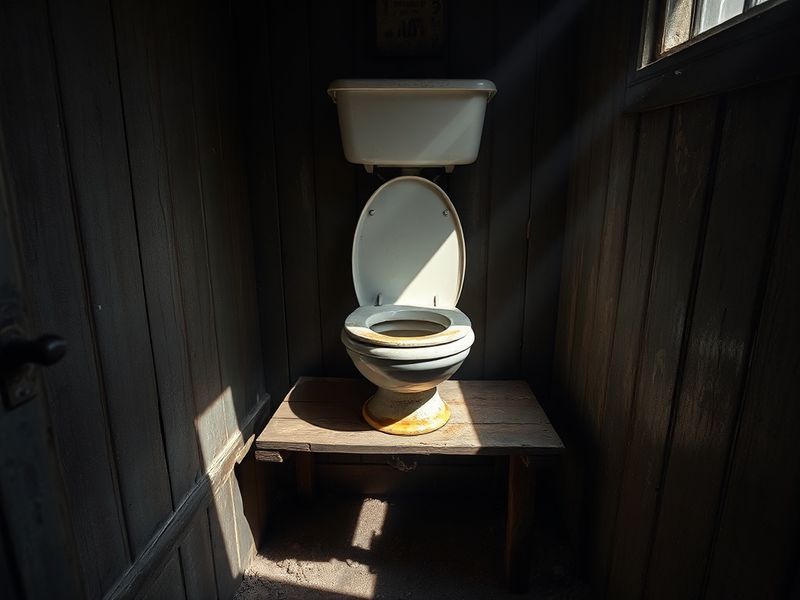
Long Drop Toilets: History, Design, and Modern Relevance Explained
“`html
Long Drop Toilets: History, Design, and Modern Relevance
The long drop toilet is a simple yet ingenious sanitation solution that has served communities for centuries. Unlike modern plumbing systems, it relies on gravity and time to manage waste, making it a practical choice in areas without access to sewer infrastructure. Its design is unassuming, yet its impact on public health and hygiene has been profound in regions where it remains in use today.
To understand the long drop toilet, we must first examine its origins and the engineering principles behind it. The concept is rooted in basic physics: waste falls through a vertical shaft into a sealed pit below. Over time, the waste decomposes naturally, reducing odor and minimizing health risks. This method has been employed in various forms across different cultures, from ancient Roman latrines to rural outhouses in the American frontier.
The Design and Mechanics of Long Drop Toilets
A long drop toilet consists of three primary components: the toilet seat, the vertical drop pipe, and the waste pit. The toilet seat is typically elevated above ground level, connected to a pipe that extends downward. The length of the drop pipe varies depending on the design, but it usually ranges from 6 to 12 feet. The waste pit, located at the bottom of the pipe, is dug into the ground and lined with materials like concrete or bricks to prevent contamination of the surrounding soil.
The mechanics of a long drop toilet are straightforward but highly effective. When waste is deposited into the toilet, it falls through the pipe into the pit below. The vertical distance ensures that waste is deposited quickly and with minimal splashing. Over time, the waste decomposes through natural bacterial processes, reducing its volume and odor. This decomposition process is accelerated in warmer climates, where heat and humidity expedite the breakdown of organic matter.
One of the key advantages of the long drop toilet is its low maintenance. Unlike flush toilets, which require a constant water supply and sewage infrastructure, long drop toilets function independently. The only maintenance required is occasional emptying of the pit, which can be done manually or with the help of a vacuum truck. This makes it an ideal solution for remote areas, refugee camps, and regions with limited resources.
Key Features of Long Drop Toilets
- Gravity-fed waste disposal: Waste falls through a vertical pipe into a sealed pit, eliminating the need for water or mechanical systems.
- Natural decomposition: Organic waste breaks down over time through bacterial action, reducing odor and volume.
- Low water usage: Unlike flush toilets, long drop toilets require little to no water, making them suitable for arid regions.
- Durable construction: The pit is typically lined with concrete or bricks to prevent soil contamination and structural collapse.
- Minimal maintenance: The system requires only occasional emptying, which can be done with basic equipment.
The Historical and Cultural Significance
The long drop toilet has played a crucial role in human sanitation for millennia. In ancient Rome, for example, public latrines featured a similar design, with waste falling into a flowing water channel that carried it away. This system was a precursor to modern sewage systems and demonstrated the early recognition of the link between sanitation and public health.
In rural communities, particularly in Africa and Asia, long drop toilets have been a staple of sanitation infrastructure for generations. They are often constructed from locally available materials like wood, bamboo, and mud bricks, making them accessible to communities with limited resources. The design has also been adapted for use in schools, hospitals, and refugee camps, where access to modern plumbing is limited.
However, the long drop toilet is not without its critics. In some regions, the lack of proper waste management has led to environmental concerns, such as groundwater contamination. Critics argue that while the long drop toilet is better than open defecation, it is not a sustainable long-term solution. As communities grow and urbanize, the need for more advanced sanitation systems becomes increasingly urgent.
Modern Adaptations and Environmental Considerations
Despite its historical roots, the long drop toilet continues to evolve. Modern adaptations include improved ventilation systems to reduce odor, and the use of biogas digesters to capture methane from decomposing waste. These innovations aim to address some of the environmental and health concerns associated with traditional long drop toilets.
One notable example is the “double-pit” system, which involves two separate waste pits. When one pit is full, it is sealed and left to decompose, while waste is diverted to the second pit. This system allows for continuous use while ensuring that waste has sufficient time to break down completely. The double-pit system is particularly effective in reducing odor and improving hygiene.
Another modern adaptation is the integration of long drop toilets with composting systems. In these systems, waste is diverted to a composting chamber, where it is mixed with organic materials like sawdust or straw. The resulting compost can then be used as fertilizer, providing a sustainable way to recycle nutrients back into the soil. This approach not only improves sanitation but also supports agricultural productivity.
However, the environmental impact of long drop toilets cannot be ignored. In areas with high population density or poor soil conditions, the risk of groundwater contamination remains a significant concern. To mitigate this, some communities have turned to improved designs, such as lined pits and sealed tanks, which prevent waste from leaching into the surrounding environment. Additionally, regular monitoring and maintenance are essential to ensure that the system remains effective and safe.
The Future of Long Drop Toilets
As global populations continue to grow, and urbanization accelerates, the need for sustainable sanitation solutions has never been greater. While long drop toilets are not a perfect solution, they remain a viable option for many communities, particularly in rural and low-resource settings. Their simplicity, low cost, and minimal environmental impact make them an attractive alternative to more complex systems.
Looking ahead, the future of long drop toilets may lie in hybrid systems that combine traditional design with modern technology. For example, solar-powered ventilation systems could reduce odor, while composting chambers could turn waste into a valuable resource. These innovations could help bridge the gap between traditional sanitation and modern infrastructure, providing a sustainable solution for communities in transition.
Ultimately, the long drop toilet is a testament to human ingenuity and adaptability. It has served communities for centuries, and with continued innovation, it may continue to do so for many more. As we strive to improve global sanitation, it is essential to recognize the value of simple, effective solutions like the long drop toilet.
For those interested in exploring more about sanitation innovations, Trending and Technology categories on Dave’s Locker offer a wealth of information on modern solutions and emerging trends.