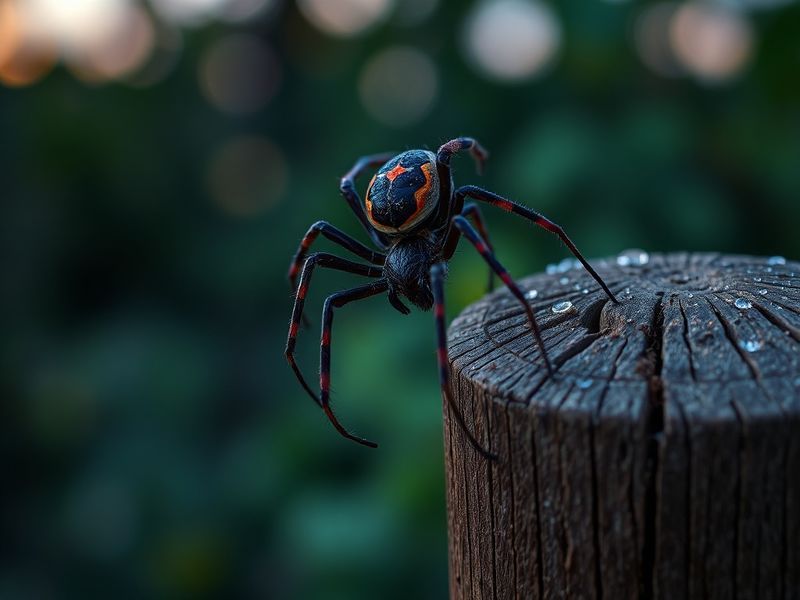
The noble false widow spider, Steatoda nobilis, has quietly become one of Europe’s most talked-about arachnids. Often spotted clinging to walls, fences, and garden sheds, this eight-legged creature has sparked a mix of fear, fascination, and misplaced hostility. While not as venomous as its namesake—the black widow—its growing presence across the continent has led to a wave of public concern, exaggerated media reports, and even calls for eradication.
But is the noble false widow truly a threat, or has it fallen victim to an arachnid reputation crisis? To understand its real impact, we need to separate fact from fiction, examine its ecological role, and consider why this species continues to divide public opinion.
The Noble False Widow’s Rise in Europe
Originally native to the Canary Islands and Madeira, the noble false widow spider has steadily expanded its range across mainland Europe over the past century. Its journey began in the late 19th century, likely hitching rides in cargo ships and potted plants. Today, it is firmly established in countries including the UK, Ireland, France, Germany, and even as far north as Scandinavia.
Several factors have contributed to its successful colonization. The species thrives in urban and suburban environments, where it finds shelter in nooks and crannies of buildings. Climate change has also played a role, creating milder winters that allow more spiders to survive and reproduce. Unlike some invasive species, the noble false widow doesn’t aggressively outcompete native spiders—it simply fills an ecological niche that others have left vacant.
Key Facts About the Noble False Widow
- Scientific Name: Steatoda nobilis
- Family: Theridiidae (cobweb spiders)
- Venom Potency: Mild compared to black widows; bites rarely require medical attention
- Diet: Insects, including pests like flies and woodlice
- Appearance: Shiny, dark brown or black with a distinctive white or cream pattern on the abdomen
The Bite Debate: How Dangerous Is It Really?
The most contentious issue surrounding the noble false widow is its bite. While the spider possesses venom capable of subduing small prey, human reactions vary widely. Most bites result in localized pain, swelling, and redness, similar to a bee sting. Severe systemic reactions—such as nausea, headaches, or dizziness—are rare but have been documented in isolated cases.
However, media coverage often amplifies isolated incidents. Headlines screaming “deadly spider” or “invasive killer” tend to overshadow the fact that bites are infrequent and usually mild. Arachnologists point out that the spider is not aggressive and will only bite if provoked or accidentally pressed against skin. In reality, humans are far more likely to encounter a false widow than be bitten by one.
Dr. John Jackson, an arachnologist at the University of Reading, explains: “The noble false widow has been demonized far beyond what the evidence supports. While it’s important to remain cautious, the risk to human health is minimal compared to other common household pests.”
Ecological Role and Benefits
Beyond the fear factor, the noble false widow plays a beneficial role in local ecosystems. As a predator, it helps control insect populations, including flies, mosquitoes, and woodlice—many of which are considered household nuisances or agricultural pests. In gardens, it contributes to natural pest management, reducing the need for chemical interventions.
Its presence also highlights broader ecological shifts. The spider’s expansion is a symptom of globalization and environmental change, reflecting how species adapt—and sometimes thrive—in altered landscapes. Rather than viewing it solely as an invader, some ecologists suggest it should be seen as a colonizer that has integrated into European ecosystems without causing significant harm to native species.
In the UK, for example, the noble false widow coexists with native spiders like the false black widow (Steatoda grossa) and the lace web spider (Amaurobius similis). While competition for resources does occur, there is little evidence to suggest it is driving native species to decline.
Public Perception and the Media’s Role
The noble false widow’s reputation is as much a product of human psychology as it is of arachnid behavior. Spiders, in general, suffer from an ingrained cultural fear—a phenomenon known as arachnophobia. The noble false widow, with its glossy black exterior and association with the more notorious black widow, becomes an easy target for sensationalism.
Social media amplifies this fear. Videos of spiders in homes circulate with alarmist captions, while news outlets often frame sightings as “invasions” or “attacks.” This narrative ignores the spider’s passive nature and ecological benefits, instead reinforcing a narrative of menace.
Yet, not all reactions are negative. Some communities have embraced the spider as a symbol of urban wildlife resilience. Citizen science projects, such as the UK’s Spider Recording Scheme, encourage people to document sightings and learn more about these creatures. Education initiatives have helped demystify the noble false widow, replacing fear with curiosity.
What Should You Do If You Encounter One?
If you spot a noble false widow in your home or garden, experts recommend a calm and measured approach:
- Observe from a distance: The spider is unlikely to be aggressive.
- Avoid handling it: Use a glass and paper to relocate it outdoors if necessary.
- Don’t panic: Bites are rare and usually mild.
- Report sightings (optional): Contribute to scientific data through local biodiversity projects.
In most cases, the noble false widow is simply doing what spiders have done for millions of years: quietly maintaining ecological balance while avoiding contact with humans.
Conclusion: A Spider Worth Watching
The noble false widow spider is a testament to nature’s adaptability—and humanity’s capacity for misplaced fear. While its presence may unsettle some, there is little scientific justification for treating it as a major threat. Instead, it offers an opportunity to reflect on how we coexist with wildlife in an increasingly urbanized world.
Rather than resorting to eradication efforts, a more balanced approach would involve education, tolerance, and appreciation for the spider’s role in controlling pests. After all, in the grand tapestry of European ecosystems, the noble false widow is just one thread—not the entire fabric.
As climate change and globalization continue to reshape our environment, encounters with species like this will become more common. The question isn’t whether we should fear the noble false widow, but whether we can learn to share our spaces with it—and with the natural world beyond our doorsteps.
For those still uneasy, remember: the noble false widow is far more interested in flies than in humans. And in the battle against household pests, it might just be an unlikely ally.
To learn more about spiders and other fascinating creatures, visit our Trending and Science sections.