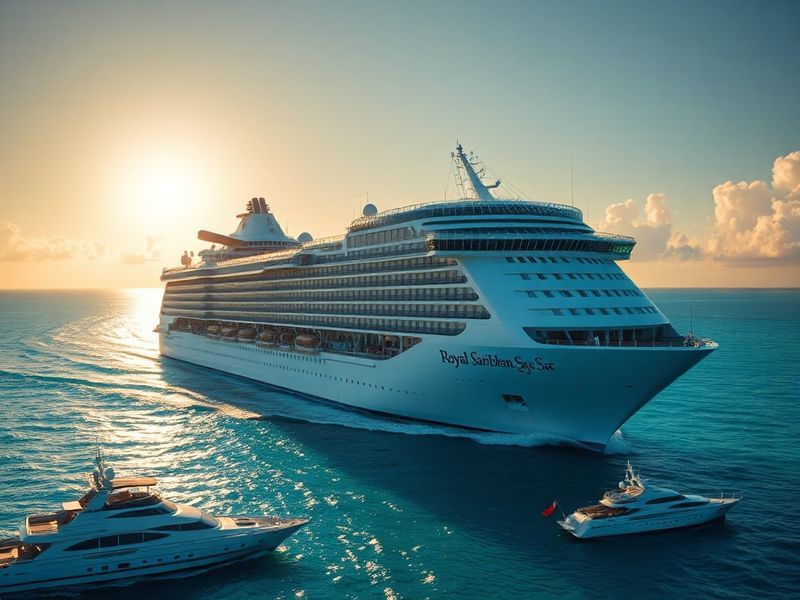
Royal Caribbean Group has long stood as one of the most influential names in the global cruise industry. With a fleet that combines innovation, luxury, and operational scale, the company continues to redefine what it means to sail the world’s oceans. Beyond its ships, Royal Caribbean Group represents a carefully cultivated ecosystem of brands, each targeting different segments of the travel market. From ultra-luxury to family-friendly voyages, the group’s strategy reflects a deep understanding of evolving consumer preferences and industry trends.
Fleet Evolution: From Pioneers to Industry Leaders
Founded in 1968, Royal Caribbean International launched its first ship, the Song of Norway, setting the stage for decades of maritime innovation. What began as a single vessel has grown into a fleet of 26 ships under Royal Caribbean Group, including Celebrity Cruises and Silversea Cruises. Each brand operates with distinct identities: Royal Caribbean is known for high-energy destinations and massive ships like the Icon of the Seas, while Silversea caters to discerning travelers seeking all-inclusive luxury with butler service and exclusive ports.
The group’s most recent milestone came with the debut of the Icon of the Seas in January 2024. At 250,800 gross tons and capable of carrying over 7,600 guests, it became the largest and most expensive cruise ship ever built. Designed with eight distinct neighborhoods, the vessel blends family-friendly amenities—such as the first open-air aquatic park at sea—with sophisticated adults-only zones. This dual appeal reflects a deliberate strategy to attract multigenerational travelers without alienating luxury-focused guests.
Looking ahead, Royal Caribbean Group has committed to adding two more “Icon” class ships by 2026, reinforcing its commitment to sustainable growth. These vessels are also among the most energy-efficient in the fleet, featuring advanced air lubrication systems and shore power capabilities to reduce emissions in port. This balance of scale and sustainability underscores the company’s evolving role as both an industry leader and a responsible corporate citizen.
Brand Portfolio: A Multi-Tiered Approach to Cruising
The group’s multi-brand strategy allows it to serve nearly every segment of the cruise market. Below is a breakdown of its core offerings:
- Royal Caribbean International: The flagship brand, known for innovation, size, and vibrant onboard experiences. Ships like the Symphony of the Seas and Wonder of the Seas feature skydiving simulators, Broadway-style shows, and sprawling waterparks.
- Celebrity Cruises: Targets upscale travelers with a modern, design-forward aesthetic. Celebrity ships emphasize culinary excellence, wellness-focused spas, and immersive destination experiences like overnight stays in port.
- Silversea Cruises: The ultra-luxury arm, offering all-inclusive fares with 24-hour butler service, butler-suite accommodations, and exclusive partnerships with Michelin-starred chefs. Destinations often include remote locales such as Antarctica and the Northwest Passage.
- Celebrity Expeditions: A sub-brand focused on expedition cruises to polar regions, Galápagos, and the Amazon, blending adventure with luxury.
This tiered approach enables Royal Caribbean Group to capture market share across price points and traveler demographics. While Royal Caribbean dominates in volume, Silversea and Celebrity appeal to higher-spending guests who value exclusivity and personalized service. According to Cruise Lines International Association (CLIA), the group collectively carried over 2.7 million guests in 2023, representing a significant share of the global cruise market.
Technology and Sustainability: Charting the Future of Cruising
Royal Caribbean Group has positioned itself at the forefront of cruise technology, not only in ship design but also in environmental stewardship. The company has invested over $250 million in emissions reduction initiatives since 2016. Key programs include:
- Advanced Air Lubrication Systems (ALS): Reduces hull friction by up to 5%, cutting fuel consumption and emissions.
- Liquefied Natural Gas (LNG) Propulsion: The Icon of the Seas and upcoming ships run on LNG, a cleaner-burning fuel that eliminates sulfur oxide emissions.
- Shore Power Technology: Enables ships to run on electricity while docked, reducing portside air pollution.
- Hydrogen Fuel Cells and Battery Storage: Under development for future ships, these systems aim to further decarbonize operations.
Beyond environmental tech, the group has integrated AI-driven guest services into its operations. The “Royal Caribbean App” now features real-time crowd prediction, personalized dining reservations, and AI concierge capabilities. This digital transformation enhances guest satisfaction while improving operational efficiency. According to internal data, guests using the app spend 22% more onboard and report higher satisfaction scores.
The company’s commitment to sustainability extends to its supply chain. Royal Caribbean Group has pledged to eliminate single-use plastics across its fleet by 2025 and has partnered with organizations like Oceanic Global to certify sustainable shore excursions. These efforts reflect a broader industry shift, as cruise lines face increasing scrutiny over environmental impact.
Challenges and Strategic Responses in a Post-Pandemic World
The COVID-19 pandemic disrupted the cruise industry like no other event in modern history. With global sailing suspensions in 2020 and 2021, Royal Caribbean Group faced unprecedented challenges—financial losses, fleet layups, and reputational risks. The company responded by implementing rigorous health protocols, including PCR testing for all guests and crew, enhanced air filtration systems, and flexible rebooking policies.
By mid-2022, demand rebounded strongly, though not uniformly across all brands. Luxury brands like Silversea recovered more quickly, driven by pent-up demand from high-net-worth travelers. Royal Caribbean International, while slower to rebound due to its family-focused image, saw a surge in 2023 as travel confidence returned. The group reported a net income of $660 million in 2023, a significant recovery from the $2.4 billion loss in 2020.
Looking forward, Royal Caribbean Group continues to monitor geopolitical risks, inflationary pressures on shipbuilding costs, and evolving consumer expectations. The company has also expanded its private destinations portfolio, including Perfect Day at CocoCay in the Bahamas, which remains one of the most visited cruise ports in the Caribbean. These exclusive venues enhance profitability and guest loyalty.
In response to labor shortages in the maritime industry, the group has invested in crew training programs and partnerships with maritime academies. Employee retention has improved through enhanced benefits and career development initiatives, addressing one of the industry’s most pressing challenges.
Conclusion: Sailing into a New Era
Royal Caribbean Group stands at a pivotal moment—balancing growth with responsibility, innovation with tradition, and scale with intimacy. Its multi-brand strategy ensures resilience across market segments, while technological advancements position it as a leader in sustainable cruising. The recent launch of the Icon of the Seas is not just a milestone in size, but a testament to the company’s ability to adapt to modern traveler demands.
As the cruise industry navigates a rapidly changing world, Royal Caribbean Group’s focus on sustainability, technology, and guest experience will likely define its next chapter. With a fleet expansion pipeline through 2028 and a renewed commitment to environmental stewardship, the company is charting a course toward a more responsible and dynamic future. For travelers, that means more choices, richer experiences, and a continued evolution of what it means to cruise the world.
For those interested in exploring cruise industry trends further, visit our Travel category on Dave’s Locker, where we analyze the latest shifts in global tourism. To learn more about luxury travel and expedition cruising, check out our Entertainment section, which features in-depth guides on high-end travel experiences.