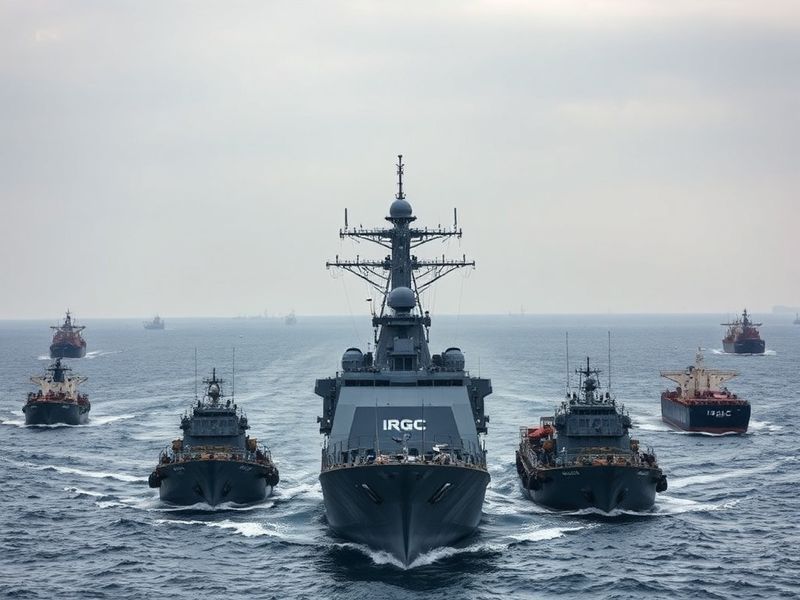
The Strait of Hormuz remains one of the most strategically vital maritime passages in the world. Connecting the Persian Gulf to the Gulf of Oman, this narrow waterway handles approximately 20% of the world’s oil supply. Given its significance, any disruption—whether intentional or accidental—could send ripples through global markets, energy security, and geopolitical stability.
The Geopolitical Context Behind the Blockade Threats
The Strait of Hormuz has long been a flashpoint in international relations. Iran, which borders the strait, has repeatedly threatened to block the passage in response to sanctions, military tensions, or perceived threats to its sovereignty. These threats are not merely rhetorical. In 2019, Iran seized a British-flagged oil tanker, the Stena Impero, in retaliation for the UK’s detention of an Iranian vessel. Such actions underscore the fragility of maritime security in the region.
Several key factors contribute to the volatility surrounding the strait:
- Regional Rivalries: Tensions between Iran and Gulf Cooperation Council (GCC) states, particularly Saudi Arabia and the UAE, exacerbate security concerns.
- U.S.-Iran Relations: The U.S. has imposed heavy sanctions on Iran’s oil exports, prompting Tehran to use the strait as leverage in negotiations.
- Proxy Conflicts: Yemen’s civil war, where Iran-backed Houthis have targeted Saudi oil facilities, adds another layer of instability.
- Naval Patrols: The presence of international naval forces, including the U.S. Fifth Fleet, aims to deter aggression but also risks escalation.
The Strait of Hormuz is not just a military concern—it is an economic lifeline. With over 17 million barrels of oil passing through daily, even a temporary disruption could send oil prices soaring and trigger energy shortages in Asia, Europe, and beyond.
Historical Precedents and Lessons
The idea of a Strait of Hormuz blockade is not new. During the Iran-Iraq War (1980-1988), both sides targeted each other’s oil shipping lanes, leading to one of the most dangerous periods for maritime traffic in the region. Iraq’s attacks on Iranian oil terminals and Iran’s retaliatory strikes on Gulf shipping demonstrated how quickly the strait could become a battleground.
More recently, in 2012, Iran threatened to close the strait in response to Western sanctions over its nuclear program. While the threat was not carried out, it sent oil prices surging by nearly 20% in a single day. This episode highlighted the strait’s role as a pressure point in diplomatic standoffs.
Other incidents include:
- 2008: U.S. Navy vessels reported confrontations with Iranian Revolutionary Guard boats in the strait.
- 2016: Iran test-fired ballistic missiles near the strait, signaling military intent.
- 2019: Attacks on Saudi oil facilities at Abqaiq and Khurais, linked to Iran-backed groups, disrupted global oil supply chains.
These events reveal a pattern: the Strait of Hormuz is both a pressure valve and a powder keg. Its closure, even temporarily, would force nations to seek alternative routes, such as the Bab el-Mandeb Strait or the East-West pipeline in Saudi Arabia. However, these alternatives are costly, logistically challenging, and far from foolproof.
Broader Implications: Energy, Economy, and Security
A prolonged blockade of the Strait of Hormuz would have cascading effects across multiple sectors. Energy markets would be the first to react. Oil prices could spike to triple digits per barrel, reminiscent of the 1973 oil crisis. Countries heavily reliant on Middle Eastern oil—such as China, India, and Japan—would face severe shortages, leading to economic slowdowns and potential social unrest.
The global shipping industry would also suffer. Insurance premiums for vessels transiting the Persian Gulf would skyrocket, and some insurers might refuse coverage altogether. This could force shipping companies to reroute, adding weeks to delivery times and increasing costs. The Suez Canal, another critical chokepoint, would see increased traffic, further straining its capacity.
Militarily, a blockade could trigger a broader conflict. The U.S. has repeatedly stated that it will use “all necessary measures” to keep the strait open. This could involve direct military intervention, potentially drawing in other regional players like Russia or China, which have vested interests in maintaining stable energy flows.
Diplomatically, the crisis could fracture alliances. European nations, already divided on issues like Iran’s nuclear deal, might struggle to present a united front. Meanwhile, China and Russia could exploit the situation to deepen ties with Iran, further complicating Western efforts to isolate Tehran.
Possible Scenarios and Preventive Measures
While the risks are significant, several scenarios could mitigate—or exacerbate—the situation:
- Diplomatic Negotiations: Renewed talks between Iran and the U.S., mediated by third parties like Oman or Qatar, could ease tensions. However, trust is severely lacking.
- Military Deterrence: Increased naval patrols and joint exercises by Gulf states and Western allies could deter aggression but also provoke Iran.
- Economic Alternatives: Countries could accelerate investments in renewable energy or diversify supply chains to reduce dependence on Middle Eastern oil.
- Cyber Warfare: Asymmetric attacks, such as hacking oil infrastructure, could become a new frontier in the conflict.
The most plausible near-term scenario is a series of limited, targeted attacks—such as drone strikes or sabotage—rather than a full-scale blockade. Iran’s military doctrine emphasizes asymmetric warfare, making it unlikely to engage in a conventional conflict it cannot win.
For businesses and policymakers, the lesson is clear: the Strait of Hormuz remains a ticking time bomb. Diversification, contingency planning, and diplomatic engagement are essential to weather potential disruptions.
Conclusion: A Chokepoint That Demands Attention
The Strait of Hormuz is more than a geographic feature—it is a symbol of the world’s energy vulnerability. Its closure would disrupt economies, destabilize regions, and reshape global power dynamics. While history shows that outright blockades are unlikely, the risk of accidental or deliberate escalation remains high.
Nations must prioritize dialogue over confrontation. Energy importers should reduce reliance on the strait by expanding storage reserves and developing alternative supply routes. Meanwhile, regional powers must recognize that military posturing only heightens the stakes.
In an era of shifting alliances and rising tensions, the Strait of Hormuz serves as a stark reminder: the world’s energy lifelines are fragile, and their protection requires more than just military might. It demands wisdom, cooperation, and foresight.
For further insights into global energy dynamics and geopolitical risks, explore our News and Analysis sections.