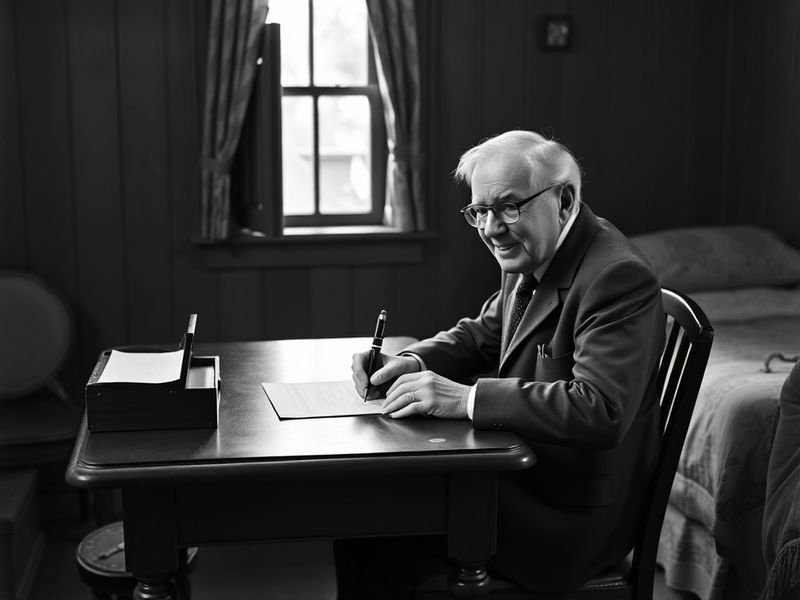
Warren Buffett’s first tax return, filed in 1944 when he was just 14 years old, offers more than just a historical curiosity—it provides a rare look at the financial instincts that would later define one of the greatest investors of all time. The document, which Buffett has occasionally referenced in interviews and biographies, shows a young boy not only earning income but also demonstrating an unusual grasp of tax efficiency and long-term financial planning.
This early financial activity wasn’t a fleeting childhood hobby; it was the foundation of a disciplined approach that would shape Buffett’s investment philosophy for decades. From selling chewing gum to pinball machines, Buffett’s teenage ventures were more than small-time hustles. They were experiments in capital allocation, risk assessment, and reinvestment—skills he would later refine into the Berkshire Hathaway empire.
Understanding Buffett’s first tax return isn’t just about nostalgia. It’s about recognizing how early patterns of financial behavior can predict future success. The return reflects a mindset that prioritized reinvestment over consumption, a principle that remains central to Buffett’s philosophy today.
The Income Streams of a Teenage Entrepreneur
Buffett’s 1944 tax return listed income from multiple sources, all of which were self-generated. At age 14, he wasn’t relying on allowances or part-time jobs—he was running businesses. His primary income came from delivering newspapers for The Washington Post, a job he had held since age 13. But the return also included earnings from a paper route for the Omaha World-Herald, as well as profits from selling magazines and chewing gum door-to-door.
What’s particularly striking is the scale of his income for a teenager in the mid-20th century. Adjusted for inflation, Buffett’s earnings that year would be equivalent to roughly $20,000 annually in today’s dollars—a substantial amount for a child. More impressive than the amount, however, was how he reported it. Buffett filed as an independent contractor, not as an employee, which suggests he viewed his work as entrepreneurial ventures rather than traditional jobs.
His tax return also included deductions for business expenses, such as bicycle repairs (essential for his paper route) and even a typewriter he purchased for $20 to manage his subscriptions. These details reveal a young entrepreneur who was already thinking about optimizing his operations for profitability.
A Lesson in Tax Efficiency
One of the most revealing aspects of Buffett’s first tax return is his approach to deductions. Unlike many adults who might overlook smaller expenses, Buffett meticulously tracked costs that could offset his taxable income. His return included deductions for:
- Bicycle maintenance (critical for his paper route)
- Postage stamps for mailing subscription renewals
- A $20 typewriter for managing his business records
- Magazine subscriptions used for research in his ventures
This attention to detail wasn’t just child’s play. It reflected a disciplined mindset that would later define Buffett’s approach to investing. He understood that minimizing unnecessary expenses was a way to maximize long-term growth—a principle he would apply to everything from Berkshire Hathaway’s corporate structure to his personal spending habits.
Buffett’s tax return also showed that he claimed a deduction for a portion of his bedroom as a home office. While this might seem trivial today, it was an early example of Buffett’s ability to leverage every legal advantage to reduce taxable income. This kind of strategic thinking would later become a hallmark of his investment decisions, particularly in tax-efficient structures like Berkshire’s insurance subsidiaries.
The Reinvestment Mentality: A Glimpse into Buffett’s Future
Perhaps the most telling detail of Buffett’s first tax return is what he did with his earnings. Instead of spending his income on toys or entertainment, he reinvested it into his businesses. He used his profits to purchase additional paper routes, expand his magazine delivery service, and even invest in a pinball machine venture that he later sold for a profit.
This reinvestment mentality was not just a childhood habit; it was the core of Buffett’s investment philosophy. In his 1986 letter to Berkshire Hathaway shareholders, he wrote, “Someone’s sitting in the shade today because someone planted a tree a long time ago.” This sentiment reflects the same mindset he displayed as a teenager, where short-term sacrifices were made for long-term gains.
Buffett’s early tax return also reveals a strategic use of savings. He set aside money not just for immediate needs but for future opportunities. This foresight would later become a cornerstone of his investment strategy, where he prioritized liquidity and flexibility to capitalize on market dislocations.
A Contrast with Modern Teenage Earning Habits
Comparing Buffett’s teenage earnings to those of today’s teenagers highlights a stark generational shift. Modern teens are more likely to earn income through gig economy jobs like food delivery or tutoring, which often come with immediate payoffs but limited scalability. Buffett, by contrast, built businesses that could grow and compound over time.
His first tax return underscores a fundamental difference in how he viewed work: not as a means to an end, but as a vehicle for creating long-term value. This perspective is rare among teenagers, even today. Most young people focus on immediate rewards rather than building assets that appreciate over time.
The Legacy of a Teenage Tax Return
Buffett’s first tax return is more than a historical footnote—it’s a blueprint for how early financial habits can shape future success. The document reveals a young boy who was not only earning money but also thinking critically about how to optimize, reinvest, and grow his income. These principles would later become the foundation of Berkshire Hathaway’s success.
For aspiring investors and entrepreneurs, Buffett’s early financial behavior offers a valuable lesson: success is often the result of disciplined habits formed long before adulthood. Whether it’s tracking expenses, reinvesting profits, or seeking tax efficiencies, the habits that served Buffett as a teenager are the same ones that propelled him to billionaire status.
Buffett himself has often reflected on the importance of starting early. In a 2010 interview with CNBC, he remarked, “The best investment you can make is in your own abilities. Anything you can do to develop your own skills and knowledge will pay off in the future.” His first tax return is a testament to this philosophy in action.
Lessons for Today’s Investors
Buffett’s teenage ventures and tax return offer practical insights for modern investors:
- Start early: Buffett’s first income came at age 13. The power of compounding means that even small amounts invested early can grow into significant wealth over time.
- Reinvest profits: Instead of spending his earnings, Buffett used them to expand his businesses. This reinvestment mentality is a key driver of long-term success.
- Optimize for efficiency: Buffett’s careful tracking of deductions shows the importance of minimizing unnecessary costs to maximize growth.
- Focus on scalable ventures: His businesses (paper routes, pinball machines) were designed to grow. Modern investors should seek opportunities with similar scalability.
For those interested in exploring more about Buffett’s investment strategies or the history of value investing, you can dive deeper into our Finance and Business categories.
Warren Buffett’s first tax return is a reminder that greatness often begins with small, disciplined steps. For investors, entrepreneurs, and even teenagers with a dream, it’s proof that the habits formed early can define the trajectory of a lifetime.