<h2>World Quantum Day Celebrates Science Across Continents</h2>

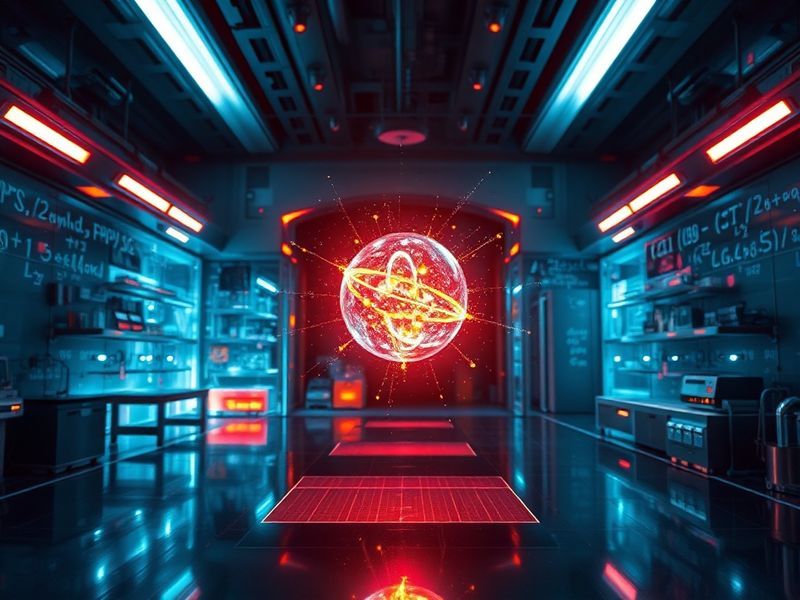
<p>Each April 14, the global scientific community pauses to recognize <strong>World Quantum Day</strong>, a 24-hour observance dedicated to quantum mechanics and its sweeping influence on technology, security, and daily life. The date itself holds significance—April 14 represents Planck’s constant, written as 4.14 × 10<sup>−15</sup> eV·s in scientific notation. This year, events spanned from Buenos Aires to Bangalore, from Reykjavik to Sydney, uniting researchers, educators, and enthusiasts in a shared celebration of the invisible forces shaping modern science.</p>

<p>The initiative began in 2021, launched by quantum scientists across Europe and quickly adopted worldwide. Unlike traditional science festivals, World Quantum Day emphasizes accessibility, inviting non-physicists to explore quantum concepts through art, music, and interactive demonstrations. In Tokyo, a pop-up exhibition featured quantum-inspired origami and light installations. Meanwhile, in Nairobi, university students built simple quantum simulators using recycled electronics. The diversity of formats reflects the event’s core mission: demystifying science without diluting its depth.</p>

<h3>How Countries Are Marking the Occasion</h3>

<p>From policy announcements to public lectures, nations are leveraging Quantum Day to advance both education and innovation. In the United States, the National Science Foundation announced $15 million in grants for quantum information science in underserved communities. The move aligns with the U.S. National Quantum Initiative Act, aiming to diversify the quantum workforce by 2030.</p>

<p>In the European Union, the Quantum Flagship program hosted a continent-wide “Quantum Classroom” series, offering free online courses in multiple languages. Over 12,000 participants registered, including high school teachers from Poland and Portugal. The EU’s coordinated effort underscores a key trend: quantum literacy is becoming a civic priority, much like digital literacy was in the 1990s.</p>

<p>Across Asia, countries are treating Quantum Day as a catalyst for regional collaboration. Japan’s RIKEN research institute opened its quantum computing lab to virtual tours, while South Korea launched “Quantum Tech Week,” featuring hackathons for young developers. Even in regions with limited infrastructure, such as parts of Latin America and Africa, grassroots organizations hosted webinars using open-source tools like Qiskit and Cirq. These efforts highlight a global shift—where quantum science is no longer confined to elite labs, but is becoming a shared cultural asset.</p>

<h3>The Cultural Dimensions of Quantum Science</h3>

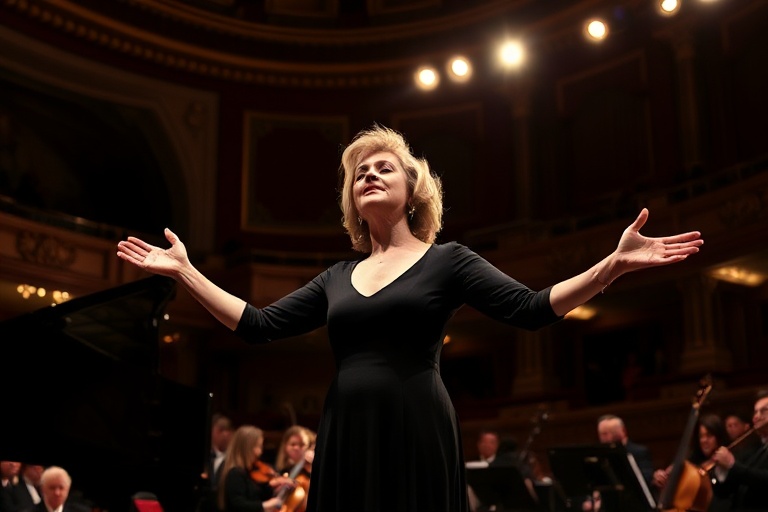
<p>Quantum mechanics has long inspired artists, writers, and musicians. World Quantum Day amplifies this connection by commissioning new works that interpret quantum principles through creative media. In Berlin, an experimental electronic music collective premiered a symphony based on electron spin states. The composition mapped quantum transitions to musical notes, creating a tangible bridge between abstract theory and sensory experience.</p>

<p>In India, theater troupes performed street plays exploring quantum paradoxes like Schrödinger’s cat. These performances often blend local folklore with scientific concepts, making quantum ideas relatable across generations. For instance, a Mumbai-based group retold the story of a mythical crow that could be both alive and dead—until observed—drawing parallels to quantum superposition. Such cultural adaptations are crucial in regions where scientific outreach competes with entrenched belief systems.</p>

<p>Literature has also played a role. In Brazil, a graphic novel titled <em>O Mundo Quântico</em> (The Quantum World) debuted during the 2023 celebrations. The book follows a young girl who enters a quantum realm where particles communicate through dance. Its success in schools led to translations in Spanish and French, proving that storytelling can accelerate scientific understanding.</p>

<h3>Challenges and Opportunities in Global Quantum Engagement</h3>

<p>Despite growing enthusiasm, disparities persist. High-income countries dominate quantum research, with 78% of quantum patents filed in the U.S., China, and Europe. Meanwhile, many African and Latin American nations lack access to quantum hardware or training. World Quantum Day events often include calls for international partnerships to address this imbalance.</p>

<p>One promising model is the <strong>Quantum Open Source Foundation</strong>, launched during the 2022 celebrations. It provides free access to quantum simulators and educational modules in over 20 languages. The foundation’s recent report showed a 40% increase in users from low- and middle-income countries since last year.</p>

<p>Regulatory hurdles also arise. In some nations, quantum encryption is restricted due to national security concerns, limiting research transparency. Conversely, open quantum networks in Canada and Australia are being tested to secure critical infrastructure. These contrasting approaches reveal a tension between innovation and control—one that will define the next decade of quantum development.</p>

<h3>Looking Ahead: The Next Decade of Quantum Discovery</h3>

<p>As we approach 2030, World Quantum Day is evolving from a commemorative event into a movement. The next phase focuses on three pillars: education, ethics, and equity. Global initiatives now aim to train one million quantum-literate individuals by 2027. At the same time, debates intensify over quantum ethics, particularly in areas like surveillance and artificial intelligence.</p>

<p>Looking to the future, we may see quantum concepts integrated into school curricula as early as primary education. Countries like Singapore and Finland are piloting quantum modules for 10-year-olds, using games and storytelling. Such early exposure could redefine how future generations perceive reality itself.</p>

<p>The momentum is undeniable. From art installations in Reykjavik to policy summits in Buenos Aires, World Quantum Day is more than a celebration—it’s a rehearsal for a quantum-ready world. By fostering global dialogue and inclusive innovation, the event is helping ensure that the quantum future is not just powerful, but also equitable and imaginative.</p>

<p>For those inspired to learn more, local science museums and <a href="/category/education/">educational programs</a> often host year-round quantum exhibits. Whether you’re a student, artist, or simply curious, the quantum world is closer than you think.</p>

---

<!-- METADATA -->
{
  "title": "World Quantum Day 2024: Celebrating Science Across the Globe",
  "metaDescription": "Discover how World Quantum Day 2024 is uniting nations through art, education, and innovation in quantum science.",
  "categories": ["Science", "Technology"],
  "tags": ["quantum computing", "science education", "global science events", "quantum mechanics", "STEM outreach"],
  "imageDescription": "A vibrant global collage showing diverse people engaging with quantum science through art installations, educational workshops, and digital simulations. The setting includes a Tokyo pop-up exhibit, a Nairobi classroom with recycled electronics, and a Berlin electronic music performance based on electron spin states. Warm, inclusive lighting conveys curiosity and collaboration."
}
---END METADATA---