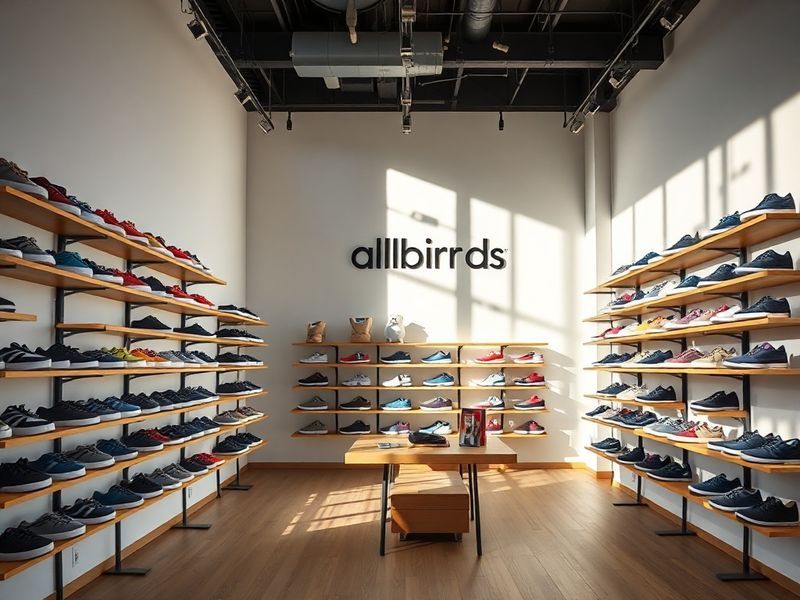
Allbirds, the eco-conscious footwear brand known for its wool and tree-based sneakers, went public in November 2021 at a valuation of $4 billion. Investors initially flocked to the company’s shares, drawn by its sustainability messaging and direct-to-consumer model. Yet nearly three years later, Allbirds stock (NASDAQ: BIRD) has struggled to maintain its early momentum. The company’s journey from green disruptor to publicly traded entity reflects broader challenges in sustainable fashion—balancing purpose with profitability.
The IPO and Early Investor Enthusiasm
Allbirds’ initial public offering (IPO) was one of the first major sustainability-focused listings on Wall Street. The company raised $300 million at $15 per share, positioning itself as a leader in environmentally responsible fashion. Early investors were attracted to its innovative materials—such as eucalyptus-based Tencel and sugarcane-based SweetFoam—and its carbon-neutral supply chain. The brand’s minimalist aesthetic and celebrity endorsements from figures like Leonardo DiCaprio further fueled interest.
At the time, sustainable fashion was gaining traction globally. Consumers, particularly younger demographics, were increasingly prioritizing eco-friendly products. Allbirds capitalized on this trend, positioning itself not just as a shoe company but as a lifestyle brand aligned with environmental values. The IPO was seen as a validation of this approach, with shares briefly trading above $20 in the weeks following the debut.
Market Performance and Financial Struggles
Despite its strong start, Allbirds stock has faced persistent challenges. By mid-2024, shares had fallen to around $3, a significant decline from their peak. Several factors contributed to this downturn:
- Profitability Concerns: Allbirds has struggled to achieve consistent profitability, reporting net losses in multiple quarters. High production costs for sustainable materials and supply chain complexities have pressured margins.
- Competition: The sustainable footwear market has become more crowded, with brands like Adidas (with its Primeblue line) and Nike (using recycled polyester) investing heavily in eco-friendly products. Even traditional retailers like H&M and Zara have launched sustainability initiatives.
- Consumer Trends: While sustainability remains important, price sensitivity has increased, particularly in inflationary economic environments. Allbirds’ premium pricing—often over $100 per pair—has limited its appeal to broader audiences.
- Brand Fatigue: Some analysts suggest that Allbirds’ core message has become diluted over time. The company’s early promise as a trailblazer in sustainable footwear has been challenged by copycat brands and competing narratives.
The company’s financial reports have done little to reassure investors. In its most recent earnings call, Allbirds highlighted growth in direct-to-consumer sales but acknowledged slower-than-expected expansion in international markets. The brand’s reliance on the U.S. market—where it generates over 80% of its revenue—has left it vulnerable to domestic economic fluctuations.
Global Expansion and Cultural Adaptation
Allbirds’ international strategy has yielded mixed results. The brand has expanded into Europe and Asia, where sustainability is also a growing priority. However, cultural differences in consumer behavior have posed challenges. In Europe, for instance, consumers are more accustomed to buying shoes from traditional brick-and-mortar retailers, which conflicts with Allbirds’ direct-to-consumer model. Meanwhile, in Asia, the brand has had to adapt its marketing to emphasize durability over sustainability, as price often takes precedence in these markets.
In China, Allbirds entered the market through a partnership with Tmall, Alibaba’s e-commerce platform. While initial sales were promising, the brand faced competition from local sustainable brands that offered lower-priced alternatives. The company’s attempt to localize its product line—such as introducing a more affordable canvas sneaker—has helped, but it remains a niche player in a vast market.
Cultural context plays a significant role in Allbirds’ global performance. In Scandinavia, where sustainability is deeply ingrained in consumer culture, the brand has found a receptive audience. However, in regions where fast fashion dominates, such as Southeast Asia, Allbirds struggles to compete on price. This highlights a broader tension in sustainable fashion: the conflict between ethical production and mass-market accessibility.
Can Allbirds Regain Its Footing?
Despite its struggles, Allbirds is not without potential. The company has taken steps to address its financial challenges, including cost-cutting measures and a renewed focus on innovation. In 2023, it introduced the “Dasher 2.0,” a shoe made from 90% recycled materials, aiming to reduce its environmental footprint further while appealing to cost-conscious consumers.
There are also signs that the market for sustainable footwear is evolving. Investors are increasingly scrutinizing companies’ environmental, social, and governance (ESG) credentials, which could benefit brands like Allbirds if they can demonstrate tangible progress. The company’s commitment to carbon neutrality—it became the first fashion brand to achieve this in 2020—remains a key differentiator.
However, regaining investor confidence will require more than just sustainability credentials. Allbirds must prove it can scale profitably while maintaining its brand identity. This may involve diversifying its product line, exploring new markets, or even revisiting its pricing strategy. The company’s ability to balance purpose with performance will determine whether it can reclaim its position as a leader in sustainable fashion.
For now, Allbirds stock remains a high-risk, high-reward proposition. Investors drawn to its mission must grapple with the realities of a competitive market and the challenges of scaling a purpose-driven business. Whether the brand can turn its struggles into a sustainable path forward will be one of the most closely watched stories in fashion and finance.
“Allbirds’ journey underscores a critical lesson for the sustainable fashion industry: purpose alone is not enough. Innovation and adaptability are essential to survive—and thrive—in a crowded and evolving market.”