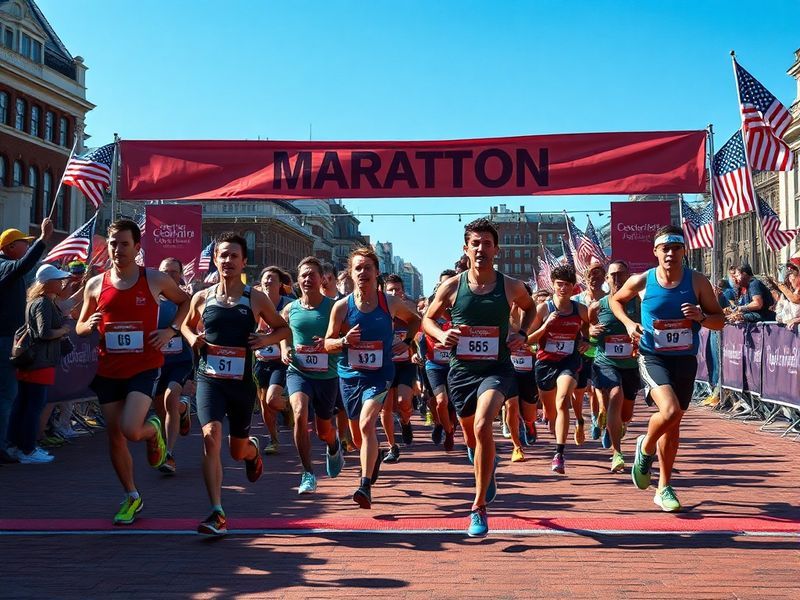
The Boston Marathon stands as one of the most prestigious and storied events in the world of long-distance running. Since its inception in 1897, it has grown from a modest local race into a global spectacle, drawing elite athletes and amateur runners alike. Its rich history is intertwined with moments of triumph, tragedy, and resilience, shaping its identity as more than just a sporting event.
Unlike other major marathons that emerged in the 20th century, Boston’s race holds a unique place in athletic lore. It was the first to officially recognize a women’s division in 1972, decades before gender equality became a standard in competitive sports. This forward-thinking approach has cemented its reputation as a pioneer in the running community.
The Origins and Evolution of the Boston Marathon
The Boston Marathon traces its roots to the 1896 revival of the Olympic Games in Athens. Inspired by the ancient tradition, local businessman John Graham proposed a similar event in Boston to promote physical fitness. The first race, held on April 19, 1897, featured just 18 participants who ran a 24.5-mile course from Ashland to Boston.
Over the decades, the marathon evolved in both distance and prestige. In 1924, the course was extended to the modern 26.2 miles to align with Olympic standards. The 1960s and 70s brought increased professionalism, with prize money introduced in 1986. Today, it remains the only major marathon that requires runners to meet strict qualifying times, ensuring a field of highly accomplished athletes.
The race’s enduring appeal lies in its accessibility. While elite runners dominate the headlines, the Boston Marathon also celebrates everyday participants. Charity runners, who raise millions for various causes, now make up a significant portion of the field. This blend of elite competition and grassroots involvement has fostered a sense of community unlike any other sporting event.
Defining Moments: Triumph and Tragedy
The Boston Marathon has been the stage for some of the most inspiring and heartbreaking moments in sports history. One of its proudest achievements came in 1967, when Kathrine Switzer became the first woman to officially register and complete the race, defying the Amateur Athletic Union’s ban on female competitors. Her courage not only broke barriers but also accelerated the push for gender equality in athletics.
Yet, the marathon is also remembered for the dark day of April 15, 2013, when two bombs exploded near the finish line, killing three spectators and injuring hundreds. The attack shocked the world and led to a massive manhunt, temporarily halting the race. In the aftermath, the running community demonstrated remarkable resilience. The following year, the marathon resumed with even greater determination, symbolizing unity and perseverance.
Other notable moments include the 1980 victory of Rosie Ruiz, whose initial win was later disqualified due to evidence of course-cutting. Her infamous story remains a cautionary tale about integrity in sports. Meanwhile, legends like Bill Rodgers and Joan Benoit Samuelson have left indelible marks on the event’s legacy, their names synonymous with Boston’s spirit.
Key Achievements in Boston Marathon History
- 1967: Kathrine Switzer becomes the first woman to officially run the Boston Marathon.
- 1980: Rosie Ruiz’s controversial victory is later overturned after she is found to have cheated.
- 2013: The Boston Marathon bombing occurs, leading to a temporary shutdown of the race.
- 2014: The marathon returns with a record 36,000 runners, showcasing resilience and unity.
- 2019: Brigid Kosgei sets a new women’s world record with a time of 2:14:04.
Broader Implications: Culture, Charity, and Community
The Boston Marathon’s influence extends far beyond the finish line. It has become a cultural touchstone, celebrated in films, literature, and local traditions. The iconic red brick “Heartbreak Hill” near the 20-mile mark is a rite of passage for runners, testing both physical and mental endurance. The event’s association with the city of Boston itself—its history, resilience, and pride—has made it a symbol of the region’s identity.
Charity has also become a cornerstone of the marathon. Since the 1980s, runners have increasingly participated to raise funds for causes ranging from cancer research to veterans’ support. In 2023, charity runners contributed over $34 million to nonprofit organizations, demonstrating the race’s role in philanthropy. This aspect has transformed the marathon into a year-round effort, with participants training for months while organizing fundraisers.
The event’s economic impact is another critical factor. Boston estimates that the marathon generates over $200 million annually in tourism, hospitality, and local business. Hotels, restaurants, and shops see a surge in activity, benefiting the city’s economy. However, this influx also presents challenges, such as managing crowds and ensuring safety—a lesson reinforced by the 2013 tragedy.
For many, the Boston Marathon represents more than a race. It is a testament to human potential, a platform for social change, and a celebration of community. Whether through elite competition or grassroots fundraising, it continues to inspire millions around the world.
Looking Ahead: The Future of the Boston Marathon
As the Boston Marathon approaches its 130th edition, it faces both opportunities and challenges. Climate change poses a growing threat, with extreme weather conditions disrupting training and race day conditions. Organizers have already adjusted start times and hydration strategies to adapt, but future innovations may be necessary to ensure the event’s sustainability.
Technology is also reshaping the marathon experience. Wearable devices, virtual races, and streaming services have expanded access to the event, allowing fans worldwide to participate in real time. Meanwhile, social media has amplified the voices of runners, charities, and spectators, creating a global conversation around the race.
Despite these changes, the core essence of the Boston Marathon remains unchanged. It is a celebration of perseverance, a test of human limits, and a gathering of people united by a shared passion. As long as there are runners willing to push their boundaries, the Boston Marathon will endure as a symbol of what is possible.
For those interested in the intersection of sports and culture, the Boston Marathon offers a compelling case study. It reminds us that the most enduring legacies are not built overnight but through decades of tradition, adaptation, and community. Whether you’re a runner, a spectator, or simply an admirer, the Boston Marathon invites you to be part of its story.
For more on the intersection of sports and culture, visit our Sports and Culture sections. To explore the broader impact of major sporting events, check out our Analysis category.