When HBO premiered Euphoria on June 16, 2019, it didn’t just introduce a new show—it detonated a cultural grenade that left critics scrambling for superlatives and audiences divided. Created by Sam Levinson and executive produced by Drake, the series followed a group of high school students navigating trauma, addiction, love, and identity, all while wading through the murky waters of Gen Z’s most pressing crises. Season one, which ran for eight episodes, was raw, unflinching, and visually arresting. It became the kind of show people either called a masterpiece or labeled gratuitous shock value.
What made Euphoria stand apart wasn’t just its willingness to grapple with taboo subjects like opioid addiction, self-harm, and sexual violence. It was the way it wrapped those themes in a lush, almost hallucinatory aesthetic—one that blended TikTok-style visuals with the grit of classic coming-of-age films like Kids and Trainspotting. The show’s pilot, directed by Augustine Frizzell, set the tone: a slow-motion parade of neon, glitter, and blood, all scored to a haunting cover of “All My Life” by Lil Peep. It was messy. It was beautiful. It was impossible to look away.
The Visual Language: A Collision of Beauty and Brutality
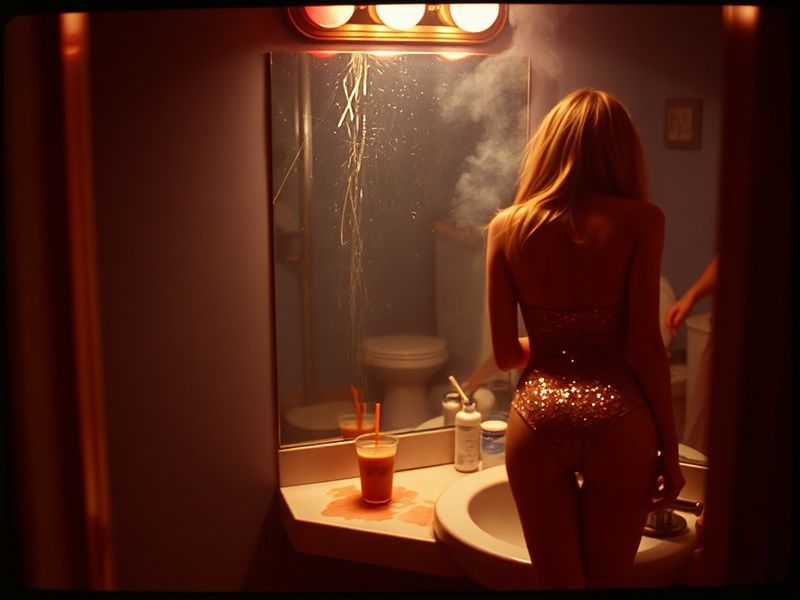
The visual identity of Euphoria wasn’t just a stylistic choice—it was a narrative device. Each episode unfurled like a fever dream, with cinematography that oscillated between soft-focus dreaminess and stark, documentary-like realism. The show’s use of color was deliberate: the sickly greens and pinks of Rue’s world mirrored her spiraling mental state, while the warm golds and blues in Jules’ scenes suggested fleeting moments of peace before the storm.
Notable was the show’s reliance on long takes and close-ups, which placed the viewer directly in the characters’ emotional crosshairs. The infamous “hot girl” aesthetic, popularized by Zendaya’s Rue, wasn’t just a fashion statement—it was a commentary on performative happiness, the way people curate their pain into something palatable for social media. The show’s use of split-screens, distorted lenses, and surreal dream sequences further blurred the line between reality and hallucination, making it clear that Rue’s perspective wasn’t just unreliable—it was unstable.
This aesthetic wasn’t without controversy. Some critics argued that the show’s beauty undercut its serious themes, turning trauma into a fashion statement. Others praised it for reflecting how Gen Z consumes and processes pain—through a lens of irony and hyper-stylization. Either way, Euphoria forced audiences to confront an uncomfortable truth: we often aestheticize what we can’t fully understand.
Character Studies: Flawed, Human, and Unforgettable
Euphoria wasn’t a show about heroes or villains. It was a show about people—deeply flawed, deeply human people—caught in the throes of adolescence. At its center was Rue Bennett, played with raw vulnerability by Zendaya, who carried the series with a performance that felt less like acting and more like eavesdropping on someone’s diary. Rue’s journey from clean sobriety to relapse to tentative recovery was messy, inconsistent, and painfully real. She wasn’t a cautionary tale. She was a mirror.
The supporting cast was just as compelling. Jacob Elordi’s Nate Jacobs was a revelation—not because he was the show’s villain, but because he was a victim of his own privilege and toxicity, a character whose rage and insecurity made him both repellent and pitiable. Hunter Schafer’s Jules Vaughn, meanwhile, became an instant icon for trans representation on television, bringing a quiet strength and complexity that balanced Rue’s volatility.
Other characters, like Barbie Ferreira’s Kat Hernandez and Algee Smith’s Chris McKay, served as microcosms of their own struggles—body image, consent, and the pressure to conform. Even minor characters like Alexa Demie’s Maddy Perez and Barbie’s older brother, played by Numa Perrier, felt fully realized, their arcs given space to breathe in a show that could have easily drowned in its own ambition.
The result was a tapestry of teenage life that felt both hyper-specific and universally relatable. Euphoria refused to sanitize its characters. They lied, they manipulated, they made terrible choices—but they also loved, they grew, and they survived. That balance is what made them stick.
Themes That Resonated Beyond the Screen
Euphoria wasn’t just a show about addiction or sexuality or mental health. It was a show about the ways in which these issues intersect, particularly for young people navigating a world that feels increasingly fragmented. The show’s exploration of digital culture—how social media shapes identity, how pornography distorts expectations, how online spaces can both heal and harm—felt eerily prescient, especially as Gen Z’s relationship with technology deepened.
One of the show’s most powerful themes was the idea of performative healing. Rue’s recovery meetings, her attempts to “get better” for her family, her performative sobriety—all of it was complicated by her desire to be seen as strong, even when she was at her weakest. It’s a dynamic that mirrors real-life struggles with addiction and mental health, where the pressure to appear “fixed” can often exacerbate the problem.
The show also tackled the myth of the “perfect victim.” Characters like Cassie, whose emotional breakdown was broadcast across social media, or Maddy, who was gaslit and controlled by Nate, weren’t given easy resolutions. Their pain wasn’t neatly packaged for audience catharsis. Instead, Euphoria forced viewers to sit with their discomfort, to recognize that healing isn’t linear and that trauma doesn’t always have a clear villain or a happy ending.
Key Takeaways from Euphoria Season 1
- Unflinching Realism: The show didn’t shy away from depicting addiction, self-harm, and sexual violence with brutal honesty, forcing audiences to confront uncomfortable truths.
- Visual Innovation: The use of color, lighting, and surreal cinematography created a distinct aesthetic that blurred the line between reality and hallucination.
- Complex Characters: Every character, no matter how minor, was given depth and agency, avoiding one-dimensional portrayals of trauma or villainy.
- Intersectional Storytelling: The show wove together themes of mental health, sexuality, race, and social media to reflect the multifaceted lives of Gen Z.
- Cultural Impact: Euphoria sparked conversations about representation, addiction narratives, and the ethics of depicting trauma on screen.
The Broader Implications: Why Euphoria Still Matters
Four years after its debut, Euphoria remains one of the most debated shows on television. It’s been both celebrated as a groundbreaking exploration of youth culture and criticized for its perceived glorification of suffering. But its real legacy lies in how it changed the conversation around teen dramas. Before Euphoria, shows like 13 Reasons Why and Riverdale dominated the landscape, often relying on sensationalism or moralizing. Euphoria rejected those tropes, opting instead for ambiguity and authenticity.
Its influence can be seen in subsequent shows like Genera+ion and Heartstopper, which also prioritize messy, human stories over neat resolutions. Even in film, movies like Aftersun and Euphoria’s spiritual successor, The Idol (created by Levinson and starring The Weeknd), have borrowed its bold visual style and willingness to embrace discomfort.
But perhaps Euphoria’s most lasting impact is on the way we talk about mental health. The show didn’t just depict addiction—it humanized it, showing the banal moments alongside the crises. It didn’t just show queer love; it showed the messiness of queer relationships, the jealousy, the insecurity, the fear of being “too much.” In doing so, it gave permission for young people to see their own struggles reflected on screen, even if those reflections were painful.
That’s not to say the show is without flaws. Its second season, while still strong, struggled to recapture the raw energy of the first. The controversy surrounding Levinson’s firing from the show in 2023 cast a shadow over its legacy. And there are valid critiques about the show’s racial representation, particularly in how it handled Black characters like Maddy and BB.
Yet even with these missteps, Euphoria’s first season endures as a cultural touchstone. It proved that television could be both art and entertainment, that it could be ugly and beautiful, that it could make us cry and cringe and feel seen—all at once. In an era where streaming has made content both abundant and disposable, Euphoria reminded us that some stories are worth the discomfort.
As Rue might say: “It’s not that I don’t want to get better. It’s that I don’t know how.” That line encapsulates the show’s power. It doesn’t offer answers. It offers honesty. And sometimes, that’s enough.
For those looking to dive deeper into the themes of Euphoria or explore similar shows, be sure to check out our Entertainment and Culture sections, where we analyze the intersection of media and society.