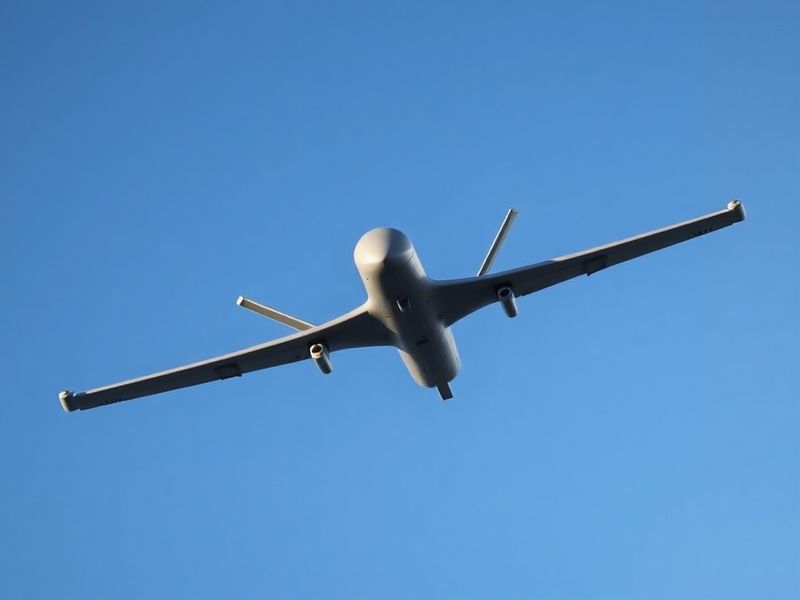
The Northrop Grumman MQ-4C Triton is more than just an unmanned aerial vehicle (UAV); it represents a strategic leap in how militaries monitor vast oceanic expanses. Designed to operate at high altitudes for extended periods, the Triton enhances situational awareness without risking human lives. Its integration into naval operations underscores a shift toward autonomous systems that can cover thousands of miles while providing real-time intelligence.
Originally developed for the U.S. Navy’s Broad Area Maritime Surveillance (BAMS) program, the Triton complements the P-8 Poseidon maritime patrol aircraft. Together, these platforms create a layered surveillance network capable of tracking submarines, surface vessels, and even detecting emerging threats before they reach coastal waters. The Triton’s endurance—up to 24 hours per mission—makes it a critical asset in an era where traditional manned patrols are increasingly expensive and resource-intensive.
The Evolution of Maritime Surveillance Technology
Maritime surveillance has evolved significantly since the days of radar-equipped ships and propeller-driven patrol planes. The MQ-4C Triton builds on decades of advancements in sensor technology, artificial intelligence, and unmanned systems. Its development began in the early 2000s, with Northrop Grumman leveraging its experience from the RQ-4 Global Hawk to create a specialized maritime variant.
The Triton’s design incorporates several key innovations:
- Multi-INT Payload: Equipped with a suite of sensors, including radar, electro-optical/infrared (EO/IR) cameras, and automatic identification system (AIS) receivers, the Triton can detect and classify maritime targets with precision.
- Open Mission Systems (OMS) Architecture: This modular design allows for rapid upgrades and integration of new technologies, ensuring the platform remains relevant as threats evolve.
- Anti-Icing Capabilities: Unlike its Global Hawk predecessor, the Triton is designed to operate in harsh maritime environments, including icy Arctic waters, without performance degradation.
- Networked Operations: The Triton can share data in real time with allied forces, creating a seamless intelligence-sharing ecosystem across naval and air domains.
These features position the Triton as a cornerstone of modern naval strategy, particularly in contested regions where traditional surveillance methods fall short.
Operational Capabilities and Strategic Impact
The MQ-4C Triton’s operational range is staggering. With a service ceiling of 56,000 feet and a cruising speed of 330 knots, it can monitor an area of over 2.7 million square nautical miles in a single mission. This capability is invaluable for tracking adversarial submarines, monitoring illegal fishing activities, or even supporting disaster response efforts by relaying critical data to ground stations.
One of the Triton’s most notable missions occurred during Exercise Rim of the Pacific (RIMPAC) 2022, where it demonstrated its ability to integrate with allied forces, including Japan and Australia. During the exercise, the Triton conducted maritime surveillance in the South China Sea, a region increasingly scrutinized for territorial disputes and military buildups. Its presence not only provided real-time intelligence but also served as a deterrent against aggressive maritime posturing.
The Triton’s strategic impact extends beyond the Pacific. In Europe, NATO allies have expressed interest in acquiring the platform to bolster their maritime surveillance capabilities amid tensions with Russia. The platform’s ability to operate autonomously reduces the strain on manned assets, allowing traditional patrol aircraft to focus on high-priority tasks.
The Broader Implications of Unmanned Maritime Surveillance
The MQ-4C Triton is part of a broader trend toward unmanned systems in military operations. As nations invest in artificial intelligence and autonomous technologies, the role of human pilots in surveillance missions is gradually diminishing. This shift has several implications:
- Cost Efficiency: Unmanned platforms like the Triton reduce operational costs by eliminating the need for pilot training, life support systems, and onboard life rafts. A single Triton mission can cost a fraction of what a manned patrol aircraft mission would require.
- Risk Mitigation: By removing pilots from potentially hostile environments, militaries can conduct surveillance without endangering human lives. This is particularly relevant in scenarios involving anti-access/area-denial (A2/AD) threats.
- Scalability: The Triton’s modular design allows for rapid reconfiguration to meet emerging threats. Whether tracking hypersonic missiles or monitoring cyber threats in maritime domains, the platform can adapt to new challenges.
- Global Alliances: The Triton’s interoperability with allied forces enhances collective security. By sharing data across NATO and other partnerships, nations can present a unified front against maritime threats.
However, the rise of unmanned surveillance also raises ethical and legal questions. Who is accountable if an autonomous system misidentifies a target? How do nations ensure compliance with international maritime laws when using AI-driven platforms? These are questions that military strategists and policymakers must address as the technology becomes more prevalent.
Conclusion: A New Era for Maritime Security
The Northrop Grumman MQ-4C Triton is more than a tool; it is a symbol of the future of maritime surveillance. Its ability to operate autonomously, cover vast distances, and integrate with allied forces makes it an indispensable asset in an increasingly complex security environment. As nations continue to invest in unmanned systems, the Triton will likely serve as a model for next-generation surveillance platforms.
For the U.S. Navy and its allies, the Triton represents a critical step toward maintaining superiority in the maritime domain. Its deployment in high-stakes regions like the South China Sea and the Arctic underscores its role as a deterrent against aggression and a guardian of global stability. As technology advances, the Triton’s capabilities will only grow, ensuring that it remains at the forefront of maritime surveillance for decades to come.
For those interested in exploring other cutting-edge military technologies, visit Dave’s Locker’s Technology section for more insights. Additionally, dive deeper into defense innovations with our News coverage.