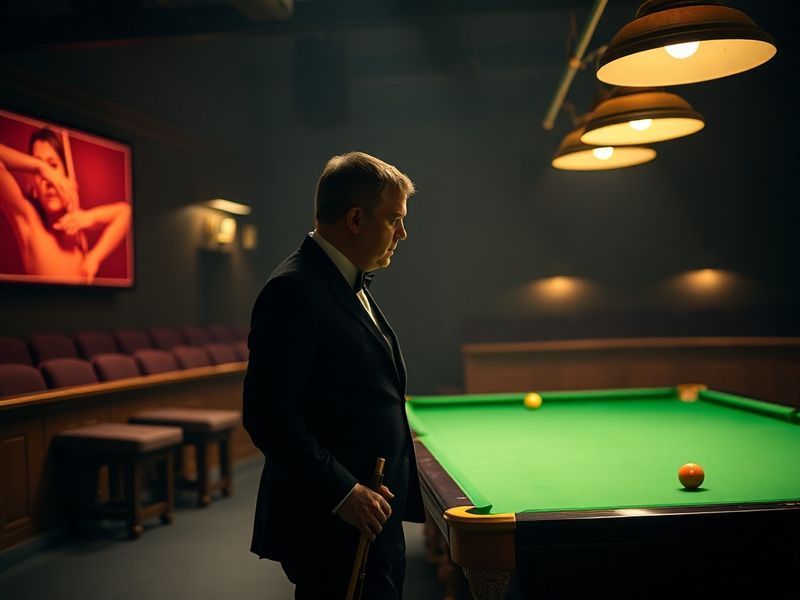
Stuart Bingham, one of snooker’s most decorated players, will once again watch the World Championship from the sidelines. The 47-year-old Englishman, a former world number one and 2015 Crucible champion, failed to qualify for the 2024 tournament. This marks his third consecutive absence from the sport’s most prestigious event, raising questions about the future of a career that has defied time and expectations.
Bingham’s journey to the top of snooker was anything but conventional. Born in Basildon, Essex, he turned professional in 1996 after working as a plasterer. His rise through the ranks was steady but unspectacular until the mid-2000s, when he began to establish himself as a top-tier player. A decade later, he reached the pinnacle of the sport, defeating Shaun Murphy 18-15 in the 2015 final to claim the world title at the age of 38. Few could have predicted the longevity of his career at that point.
The Crucible Curse: Why Bingham Struggles to Qualify
The Crucible Theatre in Sheffield has long been a fortress for snooker’s elite, but it has also become a graveyard for aging champions. Bingham’s difficulties in qualifying reflect broader challenges faced by veteran players in a sport that increasingly favors youth and athleticism. While he remains competitive, the physical and mental demands of modern snooker have made it harder for players over 40 to secure their spots.
Several factors contribute to Bingham’s recent struggles:
- Increased competition: The rise of younger players like Judd Trump, Mark Allen, and Luca Brecel has intensified the qualifying rounds. These athletes bring fresh energy and technical precision that older players must now overcome.
- Physical demands: Snooker is often perceived as a sedentary sport, but the mental stamina required to perform under pressure for extended periods is immense. Players must endure grueling practice sessions and maintain peak concentration across multiple frames.
- Format changes: The introduction of the “one-year ranking list” system has made consistency more critical than ever. A single poor season can derail a player’s chances of qualifying, regardless of past achievements.
Bingham’s recent form has been solid but not spectacular. He reached the semi-finals of the 2023 Tour Championship and has maintained a top-32 ranking, but his inability to convert these performances into Crucible qualification has frustrated fans and pundits alike. His 2024 campaign ended in disappointment at the UK Championship qualifiers, where he lost 6-4 to Si Jiahui, a player 15 years his junior.
A Global Perspective: Aging Athletes in Elite Sports
Bingham’s situation is not unique to snooker. Across the sporting world, athletes in their late 30s and 40s face similar challenges in maintaining their elite status. The phenomenon of aging champions has become more pronounced in recent years, driven by advancements in sports science, nutrition, and training methodologies.
In tennis, Roger Federer and Serena Williams extended their careers well into their 30s, but even they eventually succumbed to the relentless march of time. In golf, Tiger Woods continues to compete at a high level in his 50s, though his dominance has waned. These examples highlight the broader cultural shift in how we view aging athletes: no longer are they seen as exceptions, but rather as testaments to human resilience and adaptability.
For Bingham, the challenge is twofold. Not only must he contend with the physical toll of the sport, but he must also navigate the psychological burden of chasing a dream that seems increasingly elusive. Speaking to The Guardian in 2023, he admitted, “I still feel like I have something to give, but the body isn’t always willing to cooperate.” This sentiment resonates with many athletes who refuse to retire, even as the odds stack against them.
What’s Next for Stuart Bingham?
Despite his Crucible heartbreak, Bingham shows no signs of calling it quits. His passion for the game remains undiminished, and he continues to compete at a high level. His future plans will likely revolve around securing a spot in the top 32 for the 2025 season, which would guarantee his place at the Crucible without needing to qualify. Alternatively, he may seek to add to his already impressive trophy cabinet by targeting other major events, such as the Masters or the Champion of Champions.
Bingham’s legacy is already secure. With over 15 ranking titles, including the 2015 World Championship, the 2017 UK Championship, and the 2019 Players Championship, he has cemented his place among snooker’s all-time greats. His rivalry with Ronnie O’Sullivan, one of the sport’s most iconic figures, has produced some of the most memorable matches in recent history. Even if his Crucible days are numbered, his influence on the game will endure.
For fans of snooker, Bingham’s absence from the Crucible is a reminder of the sport’s unpredictability. The tournament has a way of humbling even the greatest players, and its magic lies in its ability to produce new heroes each year. Yet, Bingham’s story is also a testament to the enduring appeal of champions who refuse to fade away quietly. Whether he returns to the Crucible or not, his legacy is one that will inspire future generations of snooker players.
The Cultural Impact of Snooker’s Aging Stars
Bingham’s career reflects broader cultural trends in sports and entertainment. In an era where youth is often lionized, athletes who defy the odds by extending their careers capture the public’s imagination. Their stories resonate because they challenge our perceptions of aging and success. Bingham, like many of his contemporaries, represents a bridge between the traditional ethos of the sport and its modern, more commercialized iteration.
Snooker, in particular, has a rich history of veteran players who continued to perform at a high level into their later years. Players like Jimmy White, who reached the 1994 World Championship final at age 32, and Stephen Hendry, who dominated the 1990s despite being one of the youngest players on tour, have left an indelible mark on the sport. Bingham’s career fits neatly into this tradition, proving that snooker is a game where experience and guile can still triumph over raw power and youth.
As the sport evolves, the role of aging stars like Bingham may shift. They could become mentors to younger players, sharing their wisdom and experience to nurture the next generation. Alternatively, they may transition into broadcasting or coaching roles, ensuring their influence on the game continues long after their playing days are over.
A Look Ahead: Can Bingham Return to the Crucible?
The road to the Crucible is fraught with challenges, but Bingham has proven time and again that he is capable of overcoming them. His 2024 season may have ended in disappointment, but the snooker calendar is long, and opportunities abound. If he can string together a few deep runs in ranking events, he may yet secure his place in the 2025 World Championship.
For now, fans will have to content themselves with watching Bingham compete in other tournaments, where his skill and experience continue to shine. His absence from the Crucible is a reminder that even the greatest players are not immune to the passage of time. Yet, it is also a testament to the unpredictability of sport—a reminder that no story is truly over until the final frame is played.
For more updates on snooker and other sports, visit our Sports section.