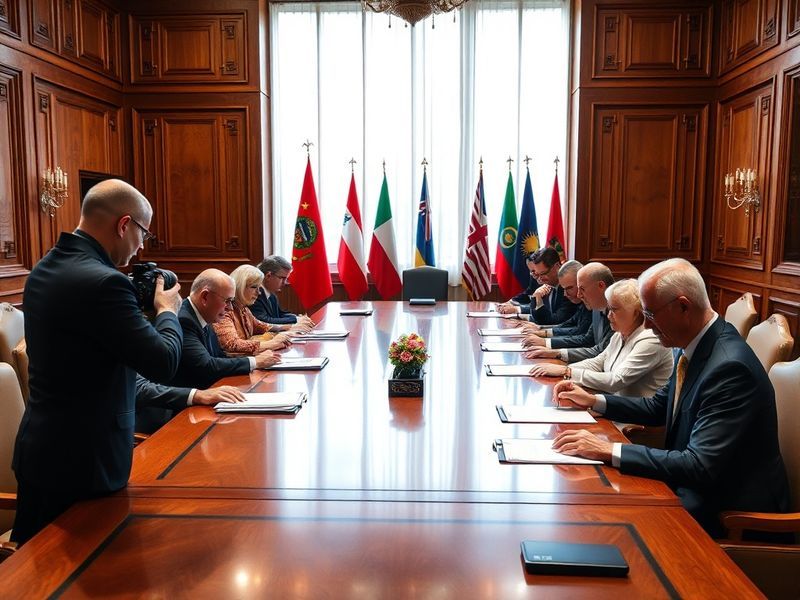
Trade agreements have long been a cornerstone of international commerce, shaping economic relationships between nations. These agreements, whether bilateral or multilateral, aim to reduce barriers to trade such as tariffs, quotas, and regulatory hurdles. By fostering cooperation, they create opportunities for businesses to expand into new markets while promoting economic growth. However, the impact of trade agreements extends far beyond economics—they influence geopolitical dynamics, labor markets, and even environmental policies.
At their core, trade agreements are designed to create a more predictable and stable trading environment. For businesses, this means reduced uncertainty when investing in foreign markets. Consumers, on the other hand, often benefit from lower prices and a greater variety of goods. Yet, the benefits are not always evenly distributed. Some industries may struggle to compete with foreign competitors, leading to job losses or shifts in production. The balance between these outcomes is one of the most debated aspects of trade policy.
The Evolution of Trade Agreements
Trade agreements have evolved significantly since the post-World War II era. The General Agreement on Tariffs and Trade (GATT), established in 1948, laid the groundwork for reducing trade barriers through successive negotiation rounds. The most notable of these was the Uruguay Round, which led to the creation of the World Trade Organization (WTO) in 1995. The WTO serves as a global forum for trade negotiations and dispute resolution, ensuring that member countries adhere to agreed-upon rules.
In recent decades, trade agreements have become more comprehensive, covering not just goods but also services, intellectual property, and investment. Modern agreements like the United States-Mexico-Canada Agreement (USMCA), which replaced NAFTA in 2020, reflect this shift. USMCA includes provisions on labor rights, environmental standards, and digital trade, reflecting a broader trend toward “deep integration” in trade policy. These agreements are no longer purely economic tools but also instruments for addressing social and environmental challenges.
Another notable trend is the rise of regional trade blocs, such as the European Union (EU) and the African Continental Free Trade Area (AfCFTA). Regional agreements aim to deepen economic ties among neighboring countries, often with the goal of creating larger, more competitive markets. The AfCFTA, for example, seeks to unite 55 African nations into a single market of 1.3 billion people, a move that could significantly boost intra-African trade.
Key Benefits of Trade Agreements
One of the most immediate benefits of trade agreements is the reduction of tariffs and other trade barriers. Tariffs, which are taxes on imported goods, can make foreign products more expensive and less competitive. By lowering or eliminating these taxes, trade agreements make it easier for businesses to sell their products abroad. This is particularly beneficial for small and medium-sized enterprises (SMEs), which may lack the resources to navigate complex trade regulations.
Trade agreements also promote economic growth by encouraging foreign direct investment (FDI). When countries agree to open their markets, multinational corporations are more likely to invest in production facilities, research and development, and other activities that create jobs and stimulate innovation. For example, the ASEAN-Australia-New Zealand Free Trade Agreement has helped Australia strengthen its economic ties with Southeast Asia, leading to increased investment in sectors like mining and agriculture.
Beyond economics, trade agreements can have positive spillover effects in areas like labor and the environment. Modern agreements often include clauses that require countries to uphold international labor standards, such as prohibitions on child labor and forced labor. Similarly, environmental provisions may encourage sustainable practices by banning certain harmful trade practices or promoting green technologies. These aspects of trade agreements reflect a growing recognition that trade policy cannot be separated from broader social and environmental goals.
Challenges and Criticisms
Despite their benefits, trade agreements are not without controversy. One of the most common criticisms is that they can lead to job losses in industries that face increased foreign competition. For example, the North American Free Trade Agreement (NAFTA) was widely blamed for the decline of the U.S. manufacturing sector, particularly in states like Michigan and Ohio. While the USMCA has tried to address these concerns by including stricter labor provisions, the debate over trade and jobs remains contentious.
Another challenge is the potential for trade agreements to exacerbate inequality, both within and between countries. Critics argue that the benefits of trade are often concentrated in the hands of large corporations and wealthy nations, while smaller businesses and developing countries struggle to compete. This dynamic can widen the gap between rich and poor, both domestically and globally. For instance, some African countries have expressed concerns that trade agreements with more developed nations could undermine their fledgling industries.
Environmentalists, too, have raised alarms about the environmental impact of trade agreements. While modern agreements include environmental provisions, these are often seen as too weak to address pressing issues like deforestation and climate change. For example, the Trans-Pacific Partnership (TPP), which was negotiated under the Obama administration, faced criticism for its lack of enforceable environmental protections. Although the U.S. withdrew from the TPP, the agreement was later revived as the Comprehensive and Progressive Agreement for Trans-Pacific Partnership (CPTPP) without the U.S., highlighting the ongoing debate over balancing trade and environmental goals.
The Future of Trade Agreements
The future of trade agreements is likely to be shaped by several key trends. First, the rise of digital trade is creating new opportunities—and challenges—for policymakers. As more commerce moves online, trade agreements will need to address issues like data localization, cybersecurity, and the taxation of digital services. The EU’s General Data Protection Regulation (GDPR) and the proposed EU-U.S. Trade and Technology Council are examples of how governments are grappling with these issues.
Second, geopolitical tensions are influencing the design and implementation of trade agreements. The U.S.-China trade war, for example, has led to a fragmentation of global supply chains, with countries seeking to reduce their dependence on any single trading partner. This has given rise to “friendshoring,” where countries prioritize trade with allies over economic efficiency. Meanwhile, China’s Belt and Road Initiative (BRI) is expanding its influence through infrastructure investments and trade partnerships across Asia, Africa, and Europe.
Finally, the push for sustainability is reshaping trade policy. Countries and corporations are under increasing pressure to align trade practices with climate goals, such as the Paris Agreement. This could lead to the inclusion of carbon border taxes or other mechanisms to ensure that trade does not undermine environmental objectives. The European Union’s Carbon Border Adjustment Mechanism (CBAM), which will impose a carbon price on imports of certain goods, is a case in point.
As trade agreements continue to evolve, their role in shaping the global economy will remain a subject of intense debate. Policymakers, businesses, and civil society will need to work together to ensure that these agreements deliver on their promises of growth, stability, and sustainability. For those interested in exploring the broader implications of trade policy, our News section offers in-depth analysis on related topics. For a closer look at the economic dimensions of trade, our Business category provides expert insights and commentary.
Key Takeaways
- Trade agreements reduce barriers to commerce, fostering economic growth and job creation.
- Modern agreements address not just tariffs but also labor rights, environmental standards, and digital trade.
- Critics highlight job losses, inequality, and weak environmental protections as major challenges.
- The future of trade agreements will be shaped by digital trade, geopolitical tensions, and sustainability goals.
In an increasingly interconnected world, trade agreements will continue to play a pivotal role in shaping economic and political landscapes. Their success will depend on the ability of nations to balance the pursuit of growth with the need for fairness, sustainability, and stability.