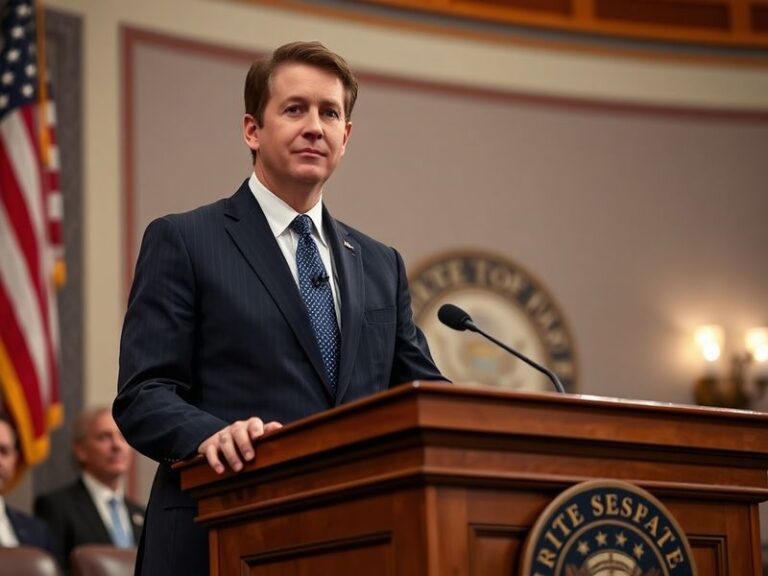
What Does a United States Federal Judge Actually Do?
“`html
Understanding the Role of a United States Federal Judge
The federal judiciary in the United States is a cornerstone of the nation’s legal system, ensuring the fair application of laws and the protection of constitutional rights. At the heart of this system are federal judges, who preside over cases ranging from civil disputes to criminal prosecutions. Their role is not merely administrative; it carries significant responsibility, as their rulings can shape legal precedents, influence public policy, and impact the lives of countless individuals. Unlike state judges, federal judges are appointed for life, a provision designed to insulate them from political pressures and allow them to make decisions based on the law rather than public opinion or electoral cycles.
The Appointment and Confirmation Process
Federal judges, including those on the Supreme Court, are nominated by the President and must be confirmed by the Senate. This process is outlined in Article II, Section 2 of the U.S. Constitution, which grants the President the authority to appoint judges “by and with the Advice and Consent of the Senate.” The confirmation process has evolved over time, becoming increasingly politicized, particularly for Supreme Court justices. Nominees typically undergo rigorous scrutiny, including background checks, Senate Judiciary Committee hearings, and public debates.
The Senate’s role in confirming federal judges is not merely ceremonial. It serves as a critical check on executive power, ensuring that judicial nominees meet the qualifications and temperament required for the role. For example, in 2016, the Senate’s refusal to hold hearings for Merrick Garland, President Obama’s nominee to the Supreme Court, underscored the partisan divides that can stall the confirmation process. Conversely, the swift confirmation of Amy Coney Barrett in 2020 highlighted how a shift in political control can accelerate the process when it aligns with the Senate’s majority.
For those interested in the broader implications of judicial appointments, our Politics section offers deeper analysis on how these decisions influence governance and policy.
Jurisdiction and Types of Cases
Federal judges preside over cases that fall under federal jurisdiction, which is defined by the U.S. Constitution and federal statutes. This includes disputes involving the Constitution, federal laws, treaties, and cases where the U.S. government is a party. Additionally, federal courts handle cases between citizens of different states, known as diversity jurisdiction, provided the amount in controversy exceeds $75,000. Cases involving maritime law, intellectual property disputes, and certain civil rights violations also fall within the purview of federal judges.
The federal court system is structured into three tiers: district courts, circuit courts of appeals, and the Supreme Court. District courts are the trial courts of the federal system, where evidence is presented, witnesses testify, and rulings are made. Circuit courts of appeals review decisions from district courts, focusing on whether the law was applied correctly rather than re-evaluating the facts. The Supreme Court, as the highest court in the land, has the final say on matters of federal law and constitutional interpretation.
Here’s a breakdown of the types of cases federal judges typically handle:
- Constitutional cases: Disputes involving the interpretation or application of the U.S. Constitution, such as First Amendment challenges or due process claims.
- Federal statutory cases: Cases involving violations of federal laws, such as the Civil Rights Act, the Clean Water Act, or the Americans with Disabilities Act.
- Criminal cases: Prosecutions brought by the federal government for offenses like drug trafficking, fraud, or terrorism.
- Civil cases: Disputes between individuals, corporations, or government entities, such as contract disputes or employment discrimination claims.
- Bankruptcy cases: Proceedings involving individuals or businesses seeking relief from debt under federal bankruptcy laws.
The Impact of Judicial Philosophy
Judicial philosophy plays a pivotal role in how federal judges interpret the law and render decisions. Broadly speaking, judges can be categorized as either “strict constructionists” or “judicial activists,” though these labels often oversimplify the nuances of their approaches. Strict constructionists, sometimes associated with originalism, believe judges should interpret the Constitution and statutes based on their original meaning or the intent of the framers. This approach emphasizes a limited role for the judiciary in policymaking, deferring to the legislative and executive branches.
On the other hand, judges with a more activist or living Constitution approach argue that the law should evolve with societal changes. This perspective allows for broader interpretations of constitutional provisions to address contemporary issues, such as digital privacy or same-sex marriage rights. For instance, the Supreme Court’s decision in Obergefell v. Hodges (2015), which legalized same-sex marriage nationwide, reflected a judicial philosophy that embraced evolving societal norms.
Judicial philosophy is not always a straightforward divide. Many judges adopt a pragmatic approach, balancing textualism with practical considerations. Justice Anthony Kennedy, for example, often served as the swing vote in closely divided cases, crafting narrow rulings that reflected a mix of originalist and pragmatic reasoning. His opinion in Rumsfeld v. Forum for Academic and Institutional Rights (2006), which upheld the Solomon Amendment allowing military recruiters on college campuses, demonstrated this blend of judicial reasoning.
Challenges and Controversies
Federal judges operate in a high-stakes environment where their decisions can attract intense scrutiny and criticism. One of the most contentious issues is the lifetime tenure granted to federal judges. While this provision is intended to protect judicial independence, it has also sparked debates about accountability. For instance, calls for term limits or mandatory retirement ages have gained traction in recent years, particularly as the average age of Supreme Court justices has risen. Critics argue that lifetime appointments can lead to a judiciary out of touch with modern society, while proponents contend that they safeguard against political interference.
Another challenge is the perception of bias, whether ideological, racial, or gender-based. Studies have shown that judicial decisions can be influenced by unconscious biases, and federal judges are not immune to this. Efforts to diversify the judiciary have intensified, with advocacy groups pushing for greater representation of women and minorities in the federal bench. For example, President Biden has made judicial diversity a priority, appointing a record number of women and people of color to federal courts. However, progress remains uneven, particularly at the appellate and Supreme Court levels.
The ethical obligations of federal judges also come under scrutiny, particularly regarding recusal in cases where personal or financial conflicts may arise. The Judicial Code of Conduct provides guidelines for recusals, but its application can be contentious. For instance, Justice Samuel Alito faced criticism for not recusing himself from cases involving former President Trump, given their personal relationship. Such controversies highlight the delicate balance judges must strike between impartiality and the need to fulfill their duties.
For readers interested in the ethical dimensions of judicial conduct, our Analysis section delves into the complexities of legal ethics and accountability.
Conclusion
Federal judges in the United States serve as guardians of the rule of law, tasked with interpreting the Constitution and federal statutes in a manner that balances justice, fairness, and precedent. Their roles are defined by rigorous appointment processes, defined jurisdictions, and the weight of their judicial philosophies. Yet, they operate in an environment fraught with challenges, from political polarization to ethical dilemmas and public scrutiny. The lifetime tenure of federal judges ensures independence but also raises questions about accountability and relevance in a rapidly changing society.
As the federal judiciary continues to evolve, so too will the debates surrounding its practices and principles. Whether through landmark rulings that redefine civil rights or controversial decisions that spark national debates, federal judges remain pivotal figures in the American legal system. Their work underscores the importance of an impartial judiciary in preserving democracy and protecting individual liberties. For those seeking to understand the intricacies of the federal judiciary, exploring its history, controversies, and impact offers valuable insights into the foundations of American governance.