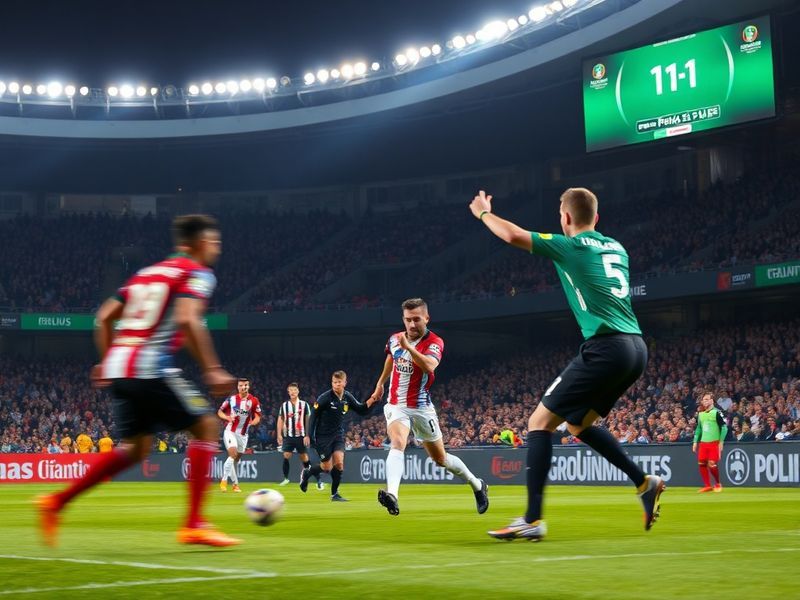
Celta Vigo vs SC Freiburg: A Tactical Battle in European Football
European football continues to evolve, blending tradition with tactical innovation. The clash between RC Celta Vigo and SC Freiburg highlights this dynamic, offering a compelling study of contrasting styles. Both clubs, though from different leagues, share a commitment to progressive football that appeals to modern fans. Their recent encounters provide insight into how tactical flexibility can shape outcomes in continental competitions.
Celta Vigo, based in Galicia, Spain, represents a club that has long been associated with attacking football. Despite financial constraints, the team has cultivated a reputation for nurturing young talent and playing an attractive brand of soccer. Freiburg, on the other hand, is a club from Germany’s Bundesliga known for its disciplined structure and emphasis on pressing. This contrast sets the stage for a tactical battle where adaptability could be the deciding factor.
The Tactical Foundations of Both Teams
Celta Vigo typically lines up in a 4-4-2 formation, prioritizing width and quick transitions. Their full-backs push high up the pitch, creating overloads in wide areas. The midfield often features a double pivot, allowing for both defensive cover and progressive carries. Freiburg, under coaches like Christian Streich, has favored a 3-4-2-1 or 3-5-2 system. This setup enables them to dominate midfield through numerical superiority while maintaining compactness in defense.
The differences extend beyond formations. Celta’s style is characterized by high pressing in the final third, often forcing turnovers in dangerous areas. Freiburg, meanwhile, employs a mid-block press, inviting opponents forward before launching counterattacks with vertical passes. These contrasting approaches make their matchups particularly intriguing for tactical enthusiasts.
A Global Perspective: Football’s Evolving Landscape
European football has increasingly become a melting pot of cultures, tactics, and philosophies. Clubs like Celta and Freiburg reflect this diversity, drawing influences from across the continent. Celta’s style mirrors the possession-based football popularized by Spanish clubs, while Freiburg’s system aligns with the high-intensity, pressing culture of the Bundesliga. This blend of traditions underscores how football has become a global conversation.
The rise of data analytics has further shaped tactical decisions. Clubs now rely on detailed metrics to assess player performance and opposition weaknesses. For instance, Freiburg’s emphasis on pressing triggers is often data-driven, ensuring their players react at the optimal moment. Celta, meanwhile, uses analytics to identify spaces left by high-pressing opponents, allowing them to exploit defensive transitions.
The global appeal of these tactical battles extends beyond the pitch. Fans worldwide engage with football as both a spectacle and a strategic puzzle. Social media amplifies discussions around formations, player roles, and in-game adjustments, turning matches into cultural events. This interconnectedness has elevated the importance of tactical innovation in modern football.
Key Matchups and Player Roles
When these two teams meet, several individual battles could determine the outcome. For Celta, the performance of their attacking midfielders—such as Iago Aspas or Gabri Veiga—will be crucial. Their ability to link play between midfield and attack could unlock Freiburg’s compact defense. Freiburg, meanwhile, relies heavily on their wing-backs to provide width and crosses. Players like Christian Günter or Philipp Lienhart must be at their best to support the attack while maintaining defensive solidity.
The midfield duel is equally significant. Celta’s duo, often consisting of a deep-lying playmaker and a box-to-box midfielder, will face Freiburg’s trio or double pivot. The latter’s ability to control tempo and recycle possession could stifle Celta’s transition play. Additionally, Freiburg’s central defenders must be vigilant against Celta’s quick transitions, where Aspas or a late-arriving midfielder could pose a threat.
Set pieces also present an opportunity for both teams. Freiburg’s tall defenders, such as Lienhart or Matthias Ginter, could prove decisive in aerial duels. Celta, meanwhile, has a history of exploiting dead-ball situations, particularly with Aspas’s creativity. These moments often decide tightly contested matches, making set-piece specialists valuable assets.
Cultural and Historical Context
The rivalry between these clubs is not rooted in historical animosity but rather in their shared commitment to progressive football. Celta Vigo, founded in 1923, has long been a symbol of resilience in Spanish football. Despite limited resources, the club has produced talents like Hugo Mallo and Brais Méndez, who have gone on to represent top European sides. Freiburg, established in 1904, has similarly carved a niche as a breeding ground for young talent, with alumni including Joshua Kimmich and Florian Neuhaus.
Their encounters in European competitions, such as the UEFA Europa League, have added a layer of significance to these matches. Fans from both regions eagerly anticipate these fixtures, which offer a glimpse into the future of European football. The cultural exchange extends to the stands, where supporters from Galicia and Baden-Württemberg share a mutual respect for the game’s tactical intricacies.
What the Future Holds
As football continues to evolve, the tactical battles between clubs like Celta Vigo and SC Freiburg will only grow in importance. The increasing globalization of the sport means that ideas and philosophies will continue to intertwine, creating new styles of play. For fans, this evolution offers endless opportunities to engage with the game on a deeper level.
Celta and Freiburg represent two distinct yet complementary approaches to football. Their matchups are not just about results but about the broader narrative of how the game is played. As clubs adapt to new challenges—whether financial, tactical, or cultural—their stories will remain integral to the fabric of European football.
For those interested in exploring more about tactical innovations in football, visit our Sports category for in-depth analysis and coverage of global football trends.
Conclusion: A Matchup Worth Watching
The next time Celta Vigo and SC Freiburg face off, the tactical battle will be as compelling as the result. These encounters offer more than just points—they provide a window into the future of football. As clubs continue to push boundaries, their matches become laboratories of innovation, where ideas are tested and refined.
Whether you’re a fan of Spanish football’s flair or German football’s structure, there’s something to appreciate in this clash. It’s a reminder that football is not just a game of 11 vs. 11 but a chess match where tactics, culture, and history collide.