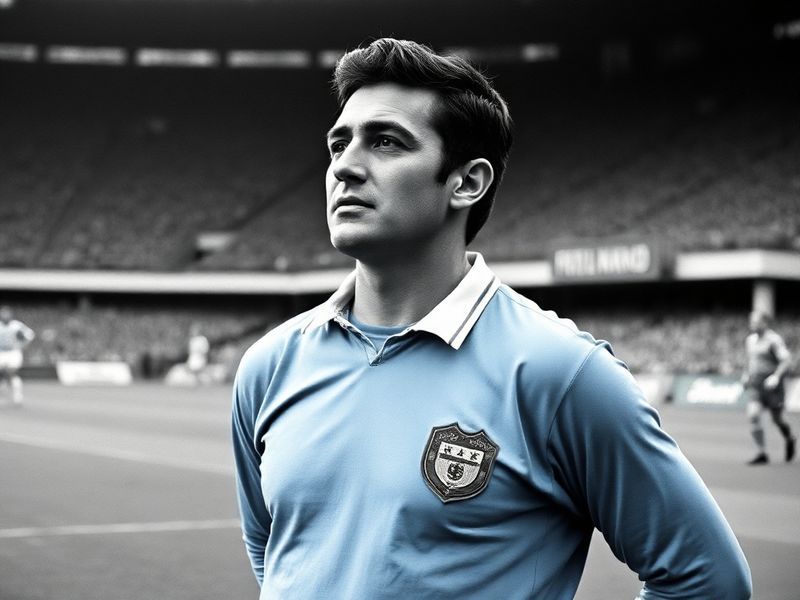
José Emilio Santamaría remains one of football’s most influential yet understated figures. Born in 1935 in Montevideo, Uruguay, he rose from humble beginnings to become a defensive rock for both Nacional and Real Madrid, leaving an indelible mark on the sport. His career spanned two decades, bridging the gap between South American football’s raw passion and Europe’s tactical evolution. More than just a player, Santamaría became a bridge between eras, embodying the transition from Uruguay’s golden age to Spain’s dominance in the 1950s and 60s.
A Humble Start in Montevideo
Santamaría’s journey began in the working-class neighborhoods of Montevideo, where football was more than a sport—it was a way of life. He joined Nacional in 1954, quickly establishing himself as a composed, intelligent defender. His ability to read the game and distribute the ball with precision set him apart from his peers. By 1957, he had become a cornerstone of Nacional’s defense, helping the club win multiple Uruguayan league titles.
His performances caught the attention of European scouts, particularly from Spain, where football was entering a new phase of professionalism and tactical sophistication. The contrast between Uruguay’s physical, direct style and Spain’s emerging preference for technical, possession-based football made Santamaría an intriguing prospect. His move to Real Madrid in 1957 was not just a personal milestone but a symbolic one—a South American talent adapting to and influencing European football’s evolution.
Real Madrid’s Unbreakable Wall
Santamaría’s arrival at Real Madrid coincided with the club’s golden era under manager Miguel Muñoz. Though he arrived after the era of Di Stéfano and Puskás had peaked, he became a vital piece in the team’s continued dominance. His partnership with players like Ferenc Puskás and Francisco Gento showcased his adaptability, blending defensive solidity with an ability to initiate attacks from deep positions.
Between 1958 and 1966, Santamaría won five La Liga titles and four European Cups with Real Madrid. His performances in the 1960 European Cup Final against Eintracht Frankfurt, where he marshaled the defense against a relentless attacking side, are still celebrated as a masterclass in defensive organization. His ability to anticipate danger and his composure under pressure earned him comparisons to Uruguay’s legendary defenders like José Nasazzi.
Yet, despite his success, Santamaría often worked in the shadows of more flamboyant teammates. His humility and professionalism made him a coach’s dream—a player who prioritized the team over individual accolades. This mindset would later define his post-playing career, as he transitioned seamlessly into coaching.
From Player to Coach: A New Chapter
After retiring in 1966, Santamaría remained in football, taking up coaching roles in Spain and Latin America. His understanding of the game’s tactical nuances made him a respected figure in the dugout. He managed clubs like Real Murcia and Granada, as well as national teams, including Spain’s youth sides. His coaching philosophy emphasized structure and discipline, traits he had honed as a player.
One of his most notable contributions came during Spain’s failed 1978 World Cup qualifying campaign, where his insights into defensive organization were evident. Though the team fell short, Santamaría’s influence on Spanish football’s defensive culture was undeniable. He also worked with young talents, mentoring future stars and passing on the wisdom of his generation.
Legacy: The Bridge Between Eras
Santamaría’s legacy extends beyond trophies and statistics. He represents a generation of South American players who adapted to and influenced European football without losing their identity. His career highlights the fluidity of football’s evolution, where tactics and playing styles are constantly refined by those who lived through the game’s most transformative periods.
In Uruguay, he remains a symbol of national pride. His inclusion in Nacional’s and Real Madrid’s hall of fame underscores his impact on two of football’s most storied institutions. For historians and analysts, he is a case study in how individual adaptability can shape the broader development of the sport.
Today, as football continues to globalize, Santamaría’s story serves as a reminder of the game’s roots. He embodied the values of teamwork, humility, and tactical intelligence—qualities that are often overshadowed in an era obsessed with individual brilliance and financial extravagance.
Key Takeaways from José Emilio Santamaría’s Career
- Defensive Mastery: Santamaría’s ability to read the game and organize defenses made him one of the most reliable defenders of his generation.
- Cultural Bridge: His move from Uruguay to Spain highlighted the exchange of footballing philosophies between South America and Europe.
- Adaptability: He thrived in both physical, direct football and tactical, possession-based systems, showcasing his versatility.
- Humility and Professionalism: Despite his success, he remained grounded, prioritizing team success over personal glory.
- Coaching Influence: His transition to coaching extended his impact, shaping the next generation of Spanish football talent.
Why José Emilio Santamaría Matters Today
Santamaría’s career offers valuable lessons in an era where football is increasingly dominated by analytics and short-term results. His emphasis on defensive organization, tactical intelligence, and humility contrasts sharply with the modern obsession with attacking flair and high-pressing systems. For younger players and coaches, his journey is a testament to the importance of fundamentals and adaptability.
Moreover, his story challenges the narrative that football’s development is a linear progression from simplicity to complexity. Instead, it highlights how players like Santamaría—who bridged different eras and styles—are essential to the sport’s continuous evolution. His ability to thrive in multiple contexts underscores that greatness is not confined to a single system or philosophy.
As football continues to evolve, Santamaría’s legacy reminds us of the human element in the game. Behind every tactical revolution and financial deal, there are players and coaches who shape the sport through their dedication and vision. His career is a celebration of that human touch, a reminder that football is ultimately about people, not just systems.
For fans and analysts alike, José Emilio Santamaría’s story is a compelling chapter in football’s rich history. It’s a story of adaptation, humility, and the enduring power of defensive excellence—qualities that remain as relevant today as they were in his playing days.
To explore more about football legends and their impact on the game, visit our Sports and Analysis sections for in-depth articles and insights.