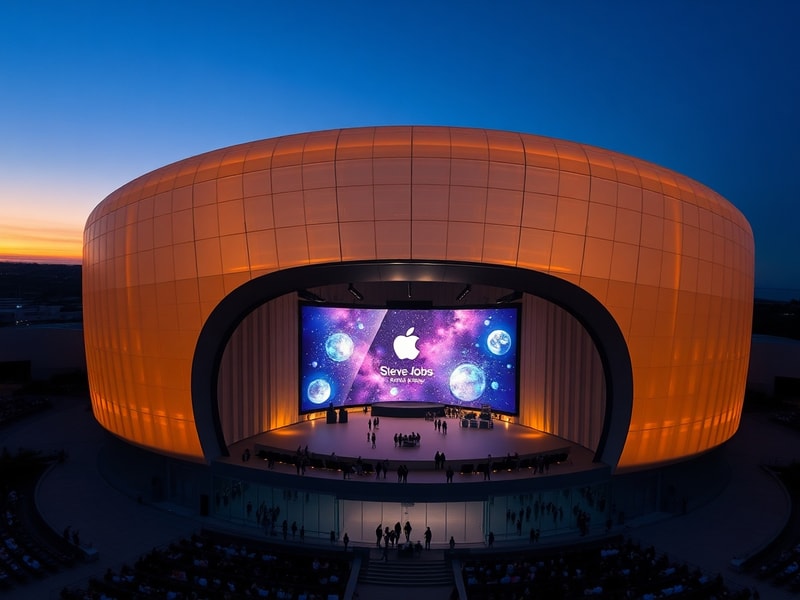
Apple’s Worldwide Developers Conference (WWDC) has long served as the company’s most anticipated annual showcase, where hardware whispers and software futures collide in a carefully choreographed reveal. While the 2025 edition introduced incremental yet meaningful updates—including deeper AI integration and refined interface elements—the real intrigue lies ahead with WWDC 2026.
Historically, WWDC has been Apple’s proving ground for innovation, not just iteration. From the unveiling of Swift in 2014 to the introduction of Vision Pro in 2023, the event has consistently redefined expectations. As Apple continues to navigate the balance between privacy and artificial intelligence, the 2026 edition is poised to reflect a maturing ecosystem where user trust remains paramount, even as AI permeates every layer of the experience.
AI at the Core: Beyond Siri’s Rebrand
Apple’s approach to AI has evolved from cautious skepticism to strategic integration. By 2026, artificial intelligence won’t just be a feature—it will be the invisible fabric powering the user experience. Rumors suggest that Apple is consolidating its AI efforts under a unified framework, internally codenamed “Astra,” which aims to unify on-device and cloud-based intelligence while maintaining the company’s long-standing commitment to privacy.
This isn’t about replacing Siri with a flashier assistant. It’s about embedding contextual intelligence across iOS, macOS, watchOS, and visionOS. Imagine your Mac summarizing a lengthy email thread before you even open it, or your Apple Watch notifying you of a potential health anomaly based on subtle biometric shifts detected over weeks—without ever sending raw data to the cloud.
Key AI-Focused Enhancements Expected at WWDC 2026
- On-device LLMs: Smaller, optimized large language models running locally on M-series chips, enabling real-time, private voice and text interactions.
- Adaptive UI: Interfaces that dynamically adjust based on user behavior, attention patterns, and emotional cues detected via camera and sensors.
- Privacy-first Personalization: AI models trained on anonymized, aggregated data, ensuring personalization without sacrificing user anonymity.
- Cross-Platform Intelligence: A unified neural engine that learns once and applies insights across all Apple devices, from iPhone to Vision Pro.
Hardware Hints: What the Rumor Mill Says
While WWDC is primarily a software show, hardware teases often slip into the keynote. For 2026, all eyes are on the rumored Apple Glass—a lightweight augmented reality headset designed to complement the Vision Pro rather than replace it. Unlike its heavier sibling, Apple Glass is expected to target developers, creatives, and enterprise users, offering a more mobile, hands-free computing experience.
Additionally, the iPhone 17 line may make a subtle appearance, not with a full reveal, but with developer-focused updates to the camera system and a new “ProMotion X” display technology that promises smoother scrolling and reduced eye strain through adaptive refresh rates tied to content.
Operating System Evolution: The 2026 Roadmap
Apple’s software updates are rarely revolutionary, but they are meticulously engineered. iOS 18, macOS 16, and watchOS 11 are expected to arrive in beta form at WWDC 2026, with public releases slated for fall. Here’s what analysts anticipate:
- iOS 18: A major redesign of the Home Screen with “Adaptive App Icons” that change based on time of day, location, or activity. Enhanced Focus modes will integrate with third-party apps, allowing deeper automation.
- macOS 16: A renewed emphasis on productivity with a revamped version of Final Cut Pro and Xcode, optimized for the latest M4 Ultra chips. The return of Boot Camp—albeit in a limited form—has also been speculated, catering to gamers and enterprise users needing Windows compatibility.
- watchOS 11: A health-first update with advanced sleep staging, blood pressure monitoring, and early warnings for atrial fibrillation. The Digital Crown may gain haptic feedback for more tactile navigation.
- visionOS 2: Improved hand-tracking accuracy and a new “Shared Space” feature for collaborative augmented reality experiences in workplaces and classrooms.
Broader Implications: Apple’s Role in a Fragmented Tech Landscape
WWDC 2026 arrives at a pivotal moment. The global tech industry is increasingly divided between open-source advocates and closed ecosystems, with AI ethics and data sovereignty dominating policy discussions. Apple’s stance—privacy-first, integration-deep—positions it as a counterpoint to more permissive platforms like Meta and Google.
This strategy has risks. By prioritizing user trust over raw functionality, Apple may cede ground in markets where convenience trumps caution. Yet, in an era of deepfakes, data breaches, and algorithmic bias, Apple’s message resonates with a growing segment of consumers who value control over convenience.
The broader implications extend beyond devices. Apple’s AI framework could influence how other companies approach on-device intelligence. If successful, it may set a new standard for ethical AI deployment—one where innovation doesn’t come at the cost of privacy.
The Developer Ecosystem: A Quiet Revolution
Developers remain the lifeblood of WWDC. For 2026, Apple is expected to unveil new tools in Xcode that simplify AI integration, including a visual prompt builder for on-device models and stricter App Store guidelines around data collection. These changes reflect a broader industry shift toward transparency and accountability.
At the same time, Apple is expanding its Swift programming language into new domains, including spatial computing and embedded systems. This could attract a new generation of developers who see Apple’s ecosystem as a fertile ground for innovation without the fragmentation of Android or web-based platforms.
Conclusion: Looking Past the Keynote Glitz
WWDC 2026 won’t be remembered for a single headline-grabbing announcement. Instead, it will be celebrated—and scrutinized—for how Apple stitches together AI, privacy, and hardware into a cohesive vision. The real story isn’t in the new features, but in how they redefine what technology can do without overstepping ethical boundaries.
For consumers, this means more intelligent devices that work for them, not on them. For developers, it means a platform that rewards thoughtful design over viral features. And for Apple, it’s a chance to prove that even in a world of rapid technological change, slow and steady—when executed with precision—can still win the race.
As the calendar turns to June 2026, one thing is certain: WWDC will once again remind the world why Apple remains the most influential force in consumer technology—not because it chases trends, but because it defines them on its own terms.
For deeper insights into Apple’s evolving ecosystem and developer tools, explore our Technology and Analysis sections.