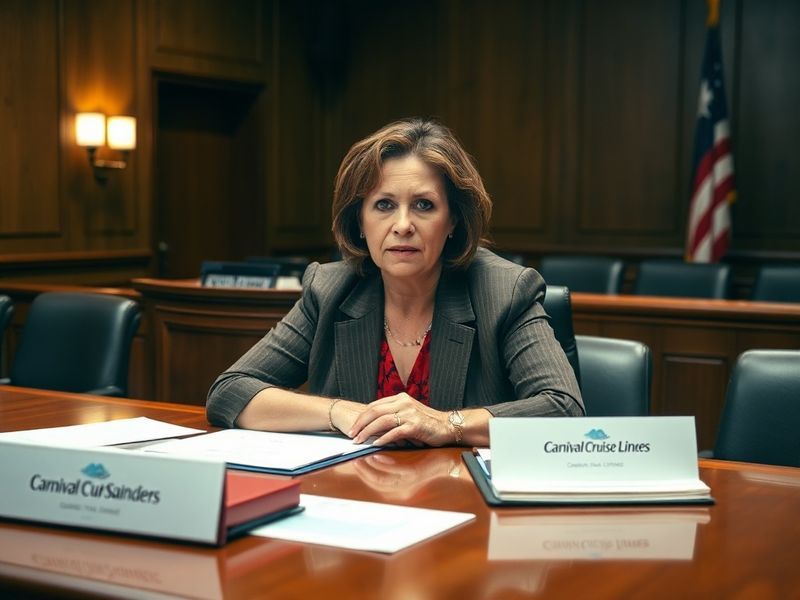
Diana Sanders Lawsuit Against Carnival: Legal Fight Over Cruise Safety
“`html
Diana Sanders Lawsuit Against Carnival: A Legal Battle With Broad Implications
One of the most closely watched maritime lawsuits in recent years involves Diana Sanders and Carnival Cruise Line. The case, which centers on alleged personal injuries sustained during a cruise, has drawn attention not only for its legal arguments but also for what it may reveal about corporate accountability in the cruise industry.
Sanders’ lawsuit, filed in a Florida federal court, claims negligence on the part of Carnival. According to court documents, she suffered injuries during an excursion in Cozumel, Mexico, in 2022. The incident reportedly occurred while boarding a tender boat—small vessels used to transport passengers from large cruise ships to shore. Sanders alleges that inadequate safety measures and improper staff training directly contributed to her injuries.
The Core Allegations in Sanders v. Carnival
The lawsuit outlines several key claims against Carnival Cruise Line. These include:
- Failure to warn passengers about known risks associated with tender boat operations.
- Inadequate training of crew members responsible for managing tender operations.
- Defective equipment, including improperly maintained or unsafe tender boats.
- Violation of maritime safety standards set by the U.S. Coast Guard and international maritime law.
In response, Carnival has denied all allegations. The company asserts that all safety protocols were followed and that the incident was an unfortunate accident. Legal experts suggest that the outcome of this case could influence how cruise lines manage passenger safety during shore excursions—an area with historically limited regulatory oversight.
Why This Case Matters Beyond One Passenger
The Sanders lawsuit is more than a personal injury claim. It highlights systemic issues within the cruise industry, particularly regarding shore excursions. These excursions, often marketed as part of the cruise experience, are frequently operated by third-party vendors rather than the cruise line itself. This creates a legal gray area when accidents occur.
Under maritime law, cruise lines often argue that they are not liable for actions taken by independent contractors. However, Sanders’ legal team is challenging this defense by claiming Carnival maintained control over excursion operations and should therefore be held accountable. If successful, this argument could lead to stricter liability standards for cruise companies.
Additionally, the case has drawn attention from consumer advocacy groups. They argue that cruise passengers are often unaware of the risks involved in shore excursions and lack clear information about liability waivers they sign before participating. Sanders’ lawsuit could prompt regulatory bodies like the U.S. Coast Guard to revisit safety guidelines for tender operations and excursion partnerships.
Legal Precedents and Industry Impact
Past maritime injury cases involving cruise lines have set varying precedents. For example, the 2013 case Franza v. Royal Caribbean established that cruise lines could be held liable for injuries caused by third-party vendors if they exerted control over the activity. Sanders’ legal team is leveraging this precedent to argue that Carnival’s involvement in excursion planning and oversight created a duty of care.
Carnival, however, has cited cases like Bates v. Carnival (2019), where the court ruled in favor of the cruise line, finding that it was not responsible for injuries sustained during a third-party zip-lining excursion. The outcome of Sanders’ case could either reinforce or weaken this defense strategy across the industry.
Industry analysts suggest that a ruling favoring Sanders could lead to increased insurance costs for cruise lines and stricter vetting of excursion partners. Conversely, a verdict in Carnival’s favor might embolden cruise companies to expand their third-party excursion programs without additional oversight.
What’s Next in the Legal Process
As of early 2025, the Sanders lawsuit is in the discovery phase. Both sides are gathering evidence, including medical records, witness testimonies, and Carnival’s internal safety protocols. A trial date has not yet been scheduled, but legal observers anticipate proceedings to begin later this year.
One critical aspect of the case will be the testimony of medical experts. Sanders’ legal team has retained specialists to testify about the severity of her injuries and their long-term impact. Carnival’s defense is expected to challenge these claims, potentially arguing that pre-existing conditions or unrelated incidents caused her injuries.
The cruise industry is watching closely. If Sanders prevails, it could signal a shift toward greater corporate accountability. If Carnival wins, the industry may continue operating under the current framework, where liability is often limited despite the risks faced by passengers.
Broader Implications for Cruise Passengers and the Industry
Regardless of the outcome, the Sanders lawsuit underscores the need for transparency in the cruise industry. Passengers often sign liability waivers without fully understanding the risks or the extent of a cruise line’s responsibility. This case could lead to clearer disclosures about excursion safety and the role of third-party vendors.
For prospective cruise travelers, the lawsuit serves as a reminder to research excursion operators independently and to ask detailed questions about safety measures. It also highlights the importance of purchasing comprehensive travel insurance that covers medical emergencies abroad.
From an industry perspective, the case may accelerate calls for self-regulation or government intervention. The U.S. Senate has previously held hearings on cruise line safety, but no comprehensive federal regulations have been enacted. A high-profile ruling against Carnival could reignite legislative efforts to standardize safety protocols across the industry.
Conclusion: A Watershed Moment for Maritime Law?
The Diana Sanders lawsuit against Carnival Cruise Line is more than a legal dispute—it is a potential turning point for passenger safety and corporate accountability in the cruise industry. Whether it results in a landmark ruling or a settlement, the case will likely influence how cruise lines manage risk, how passengers engage with shore excursions, and how courts interpret liability in maritime settings.
For now, all eyes remain on the courtroom. The outcome could reshape an industry that transports millions of passengers annually while operating in a regulatory landscape that has struggled to keep pace with its growth.
One thing is certain: the Sanders case will be studied in law schools, boardrooms, and cruise terminals for years to come.
For more on maritime legal issues and cruise line policies, visit our Travel and Analysis sections on Dave’s Locker.