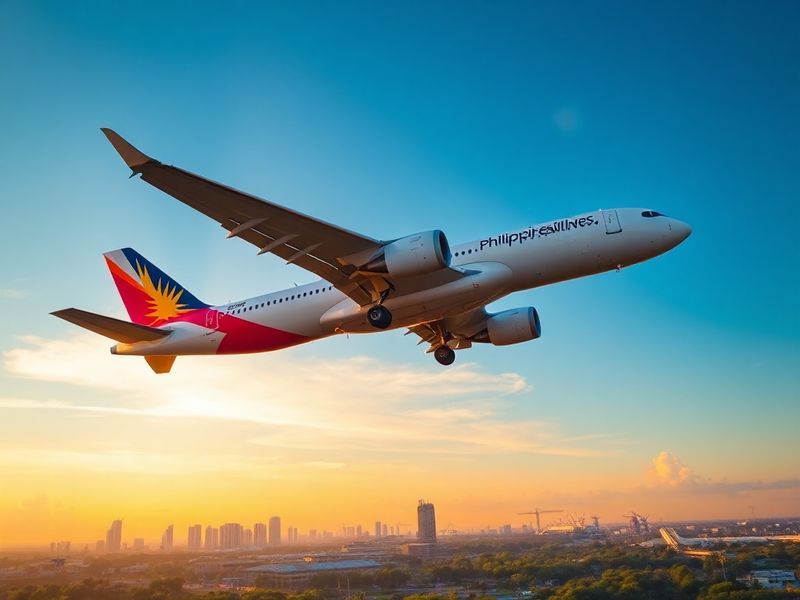
Philippine Airlines (PAL) has quietly transformed from a struggling legacy carrier into one of Southeast Asia’s most promising airlines. Founded in 1941, PAL has weathered financial storms, labor disputes, and global crises to emerge as a regional leader. Today, it operates a modern fleet of over 90 aircraft, serving 36 international destinations across four continents and 31 domestic routes. The airline’s recent investments in new planes and digital upgrades signal a new era of growth and competitiveness.
What sets PAL apart isn’t just its extensive network—it’s the airline’s strategic positioning in a crowded market. While budget carriers dominate short-haul travel in Asia, Philippine Airlines has carved a niche in long-haul premium services. Its partnership with Singapore Airlines for codeshare flights demonstrates its commitment to global connectivity. The airline’s focus on Filipino hospitality, combined with modern amenities, creates a unique passenger experience that blends tradition with innovation.
The Comeback Story: From Bankruptcy to Revival
Philippine Airlines’ journey from near-collapse to resurgence is one of aviation’s most remarkable turnarounds. The airline filed for bankruptcy protection in 1998, emerging in 2007 under new ownership. This period saw massive restructuring, including workforce reductions and route rationalization. The government’s partial privatization in the 2010s brought fresh capital and management expertise.
The airline’s fortunes truly shifted in 2019 when Lucio Tan’s group regained control. They injected $500 million into PAL, allowing for fleet modernization and expansion. The acquisition of 12 Airbus A350s and 10 Boeing 787 Dreamliners positioned PAL as a premium long-haul operator. These new aircraft feature lie-flat seats, larger entertainment screens, and improved cabin environments that rival Singapore Airlines and Cathay Pacific.
Financial recovery has been equally impressive. PAL reported a $150 million profit in 2023, its highest in decades. Passenger numbers reached 18 million in 2023, nearing pre-pandemic levels of 22 million in 2019. The airline’s load factor—the percentage of seats filled—consistently ranks above 80%, outperforming many regional competitors. This performance reflects both pent-up travel demand and PAL’s strengthened market position.
Fleet and Route Strategy: Balancing Premium and Budget
Philippine Airlines operates one of the youngest fleets in Asia, with an average aircraft age of just 6.5 years. The airline’s strategy combines premium long-haul services with cost-effective regional operations. Its wide-body fleet includes:
- Airbus A350-900: 6 aircraft serving long-haul routes like New York, London, and Los Angeles
- Boeing 787-9 Dreamliner: 10 aircraft covering mid to long-haul destinations including Rome, Athens, and Vancouver
- Airbus A330-300: 15 aircraft for regional premium services and cargo operations
- Airbus A321neo: 30 aircraft for domestic and short-haul international routes
- ATR 72-600: 34 turboprops serving remote destinations in the Philippines
This diverse fleet allows PAL to serve both business travelers and leisure tourists efficiently. The airline’s route network reflects this dual focus, with premium services to major financial hubs and budget-friendly connections to popular tourist destinations. PAL’s partnership with travel sites has expanded its reach, making international connections smoother for passengers.
The airline’s recent expansion includes new routes to Milan and Cebu Pacific’s former hub in Clark. These additions complement PAL’s existing strongholds in Manila, Cebu, and Clark. The strategy aims to reduce reliance on Manila’s congested Ninoy Aquino International Airport while tapping into secondary markets.
Technology and Customer Experience: The Digital Transformation
Philippine Airlines has invested heavily in digital infrastructure to compete with tech-savvy rivals. The airline’s mobile app, launched in 2022, allows passengers to book flights, check-in, and access digital boarding passes. Recent upgrades include real-time flight updates and AI-powered customer service chatbots that handle 80% of routine inquiries.
The airline’s website underwent a complete redesign in 2023, featuring a streamlined booking process and personalized travel recommendations. PAL’s loyalty program, Mabuhay Miles, has also been revamped with a new app that integrates with partner hotels and car rental services. Members can now earn and redeem miles across a wider network of airlines and retail partners.
Onboard technology has seen significant improvements. All long-haul aircraft now feature high-speed Wi-Fi, with plans to expand this service to regional flights. The airline’s new Airbus A350s include the latest in-flight entertainment systems with 4K screens and noise-canceling headphones. PAL has also introduced biometric boarding in select airports, reducing wait times for premium passengers.
The airline’s focus on customer experience extends to its training programs. Flight attendants undergo rigorous service excellence training, with particular emphasis on Filipino hospitality. The airline’s “PAL Experience” program includes cultural sensitivity training for international routes, ensuring passengers feel welcome regardless of destination.
The Challenges Ahead: Competition and Sustainability
Despite its progress, Philippine Airlines faces significant challenges. The most immediate is intense competition from both legacy carriers and budget airlines. In the Philippines alone, PAL competes with Cebu Pacific, AirAsia Philippines, and Scoot for domestic and regional market share. Internationally, it battles Singapore Airlines, Thai Airways, and Emirates for premium passengers.
Labor relations remain a persistent concern. The airline has faced multiple flight attendant strikes over the years, most recently in 2022 over wage disputes. While recent agreements have stabilized the workforce, maintaining competitive salaries while controlling costs remains a delicate balance. The airline employs over 8,000 people, making labor negotiations a critical factor in operational stability.
Sustainability presents another hurdle. Like all airlines, PAL faces pressure to reduce its carbon footprint. The airline has committed to achieving net-zero emissions by 2050, with interim goals of 20% sustainable aviation fuel (SAF) usage by 2030. However, SAF remains expensive and in limited supply, particularly in the Philippines. The airline’s older turboprop fleet also presents challenges in meeting newer emission standards.
Infrastructure limitations at Manila’s Ninoy Aquino International Airport (NAIA) further complicate PAL’s growth plans. The airport’s congestion leads to frequent delays, affecting both passenger experience and operational efficiency. While new airports like Bulacan and Sangley Point are under development, their completion remains years away.
Looking to the Future: What’s Next for PAL?
Philippine Airlines stands at a crossroads, with several strategic initiatives on the horizon. The most significant is the delivery of additional Airbus A350s and Boeing 787s, which will expand long-haul capacity. The airline has announced plans to add routes to Australia and the Middle East, targeting Filipino diaspora communities.
Digital innovation continues apace. PAL is testing blockchain technology for ticketing and baggage tracking, which could reduce fraud and improve efficiency. The airline’s partnership with tech platforms aims to enhance data analytics for personalized marketing and operational improvements.
Sustainability efforts are also scaling up. PAL has partnered with local universities to research biofuel production from coconut waste, leveraging the Philippines’ agricultural resources. The airline’s “Green Skies” program includes carbon offset options for passengers and investments in renewable energy for ground operations.
Perhaps most importantly, PAL is focusing on strengthening its brand identity. The airline’s recent “Fly with Pride” campaign emphasizes Filipino excellence in aviation, contrasting with the region’s reputation for budget travel. This positioning aims to attract not just price-sensitive tourists but also business travelers and premium passengers.
As Philippine Airlines enters its ninth decade, it carries both the weight of history and the promise of innovation. From its humble beginnings in 1941 to its current status as a regional powerhouse, the airline has proven resilient in the face of adversity. With a modern fleet, strategic partnerships, and a renewed focus on customer experience, PAL is well-positioned to shape the future of Asian aviation.
The coming years will determine whether this revival is sustainable. Success will require balancing ambitious growth plans with operational stability, premium service with cost efficiency, and global ambitions with local roots. For Philippine Airlines, the journey from recovery to leadership has only just begun.