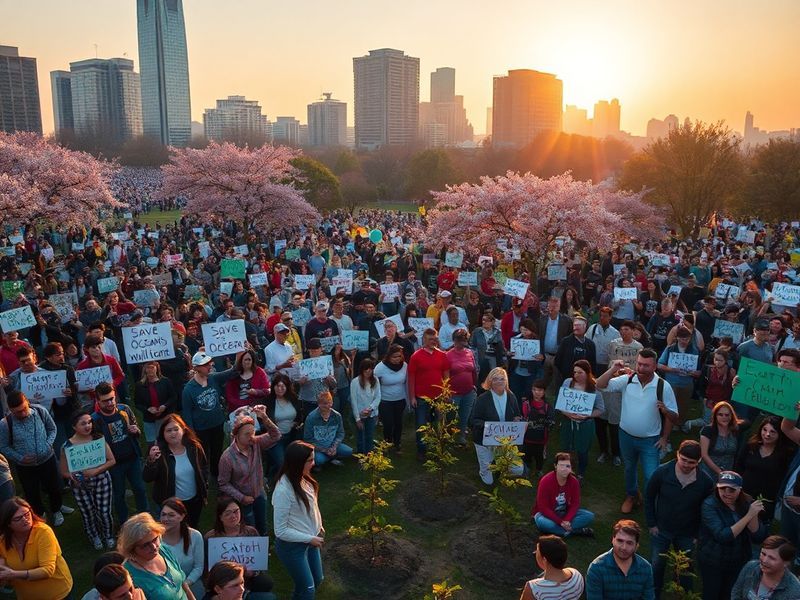
Earth Day 2024: How Global Movements Are Reshaping Environmental Action
“`html
Earth Day 2024: A Global Movement at a Crossroads
Earth Day 2024 arrives at a pivotal moment in environmental history. First celebrated in 1970, the event has evolved from a grassroots protest into a worldwide phenomenon that unites governments, corporations, and individuals under a single banner: planetary preservation. This year’s theme, “Planet vs. Plastics,” underscores a growing frustration with the slow pace of change in combating pollution and climate change. The movement’s evolution reflects broader societal shifts, where environmental consciousness is no longer optional but essential for survival.
Across continents, Earth Day’s significance varies. In the United States, where it began, the day serves as a reminder of the original 1970 demonstrations that led to the creation of the Environmental Protection Agency (EPA) and landmark legislation like the Clean Air Act. Meanwhile, in Europe, where environmental policies are often more progressive, Earth Day has become a platform for pushing beyond existing regulations. In India and parts of Africa, the day highlights the disproportionate impact of climate change on vulnerable communities, where rising temperatures and erratic weather patterns threaten livelihoods.
The Role of Youth in Shaping Modern Environmentalism
The face of Earth Day activism has changed dramatically. While the first Earth Day was led by older generations, today’s movement is dominated by young voices demanding urgent action. The Fridays for Future strikes, spearheaded by figures like Greta Thunberg, have transformed environmentalism into a generational imperative. These young activists are not just protesting; they are redefining the language of environmentalism, framing climate change as a moral crisis rather than a political one.
In countries like Sweden and Germany, youth-led organizations have successfully lobbied for stricter climate laws. In the Philippines, students have taken legal action against their government for failing to address pollution. The global nature of these movements shows how environmentalism has become a unifying force, transcending borders and political ideologies. Schools worldwide now incorporate Earth Day into their curricula, ensuring that the next generation grows up with sustainability as a core value.
Corporate Greenwashing and the Push for Authentic Change
Earth Day’s commercialization has sparked backlash. Companies now release flashy sustainability reports and launch limited-edition eco-friendly products, often with little real commitment to change. This phenomenon, known as greenwashing, has led to skepticism among consumers who demand transparency. The gap between corporate rhetoric and actual environmental impact has never been more scrutinized.
In response, organizations like Greenpeace and the World Wildlife Fund (WWF) have intensified their efforts to hold corporations accountable. Campaigns such as #BreakFreeFromPlastic have pressured brands like Coca-Cola and Nestlé to address their plastic waste. Meanwhile, the European Union’s Corporate Sustainability Reporting Directive (CSRD) now requires companies to disclose their environmental impact in detail, setting a new standard for accountability.
Yet, greenwashing persists. A 2023 report by the Changing Markets Foundation found that 59% of environmental claims by European and UK fashion brands were misleading. This underscores the need for stricter regulations and independent verification of corporate sustainability efforts.
From Local Actions to Global Policies: Earth Day’s Policy Impact
Earth Day’s influence extends beyond protests and social media campaigns. It has played a role in shaping international environmental policies. The 1992 Earth Summit in Rio de Janeiro, held on Earth Day, led to the creation of the United Nations Framework Convention on Climate Change (UNFCCC), the foundation for the Paris Agreement. More recently, Earth Day 2021 saw the launch of the Leaders’ Climate Summit, where 40 world leaders committed to new climate targets.
On a national level, Earth Day has been a catalyst for policy changes. In 2022, the Biden administration designated 30% of U.S. lands and waters for conservation—a goal known as 30×30—on Earth Day. Similarly, Canada announced a ban on single-use plastics in 2021, a move celebrated during Earth Day events. These policies reflect how Earth Day’s annual observance keeps environmental issues at the forefront of political agendas.
However, progress remains uneven. While some nations embrace ambitious climate goals, others lag behind due to economic constraints or political resistance. The challenge now is ensuring that Earth Day’s momentum translates into tangible, worldwide action.
Cultural Perspectives: How Earth Day is Celebrated Around the World
Earth Day’s observance is deeply influenced by local cultures and traditions. In Japan, the day aligns with the ancient concept of mottainai, which emphasizes respect for the environment and the avoidance of waste. Communities organize tree-planting ceremonies and clean-up drives, blending modern activism with traditional values.
In Kenya, Earth Day coincides with the onset of the rainy season, making it an opportune time for reforestation efforts. The Green Belt Movement, founded by Nobel laureate Wangari Maathai, has planted over 50 million trees across Africa, turning Earth Day into a symbol of ecological restoration.
Meanwhile, in Brazil, Earth Day takes on a different tone. The Amazon rainforest, often called the “lungs of the Earth,” faces severe threats from deforestation and mining. Activists use the day to highlight the region’s plight, organizing protests and educational campaigns to protect indigenous lands and biodiversity.
These diverse celebrations illustrate how Earth Day adapts to local contexts while maintaining its global mission. Whether through art installations, film screenings, or community clean-ups, the day fosters a sense of shared responsibility.
Challenges and Criticisms: Is Earth Day Still Relevant?
Despite its widespread observance, Earth Day faces criticism. Some argue that the day has become too commercialized, reducing environmentalism to a single day of performative action. Others question whether the annual observance lulls people into complacency, creating the illusion of progress without sustained effort.
Critics also point out that Earth Day’s origins in the U.S. have led to a predominantly Western-centric approach to environmentalism. This can overshadow the contributions of indigenous communities and developing nations, who often bear the brunt of climate change despite contributing the least to it.
To address these issues, some activists advocate for a shift toward year-round environmental engagement. Movements like the Global Climate Strike and Environmental Justice initiatives encourage continuous action rather than isolated events. The question remains: Can Earth Day evolve beyond its annual observance to drive lasting change?
The Future of Earth Day: What’s Next?
The future of Earth Day hinges on its ability to adapt. As climate change accelerates, the day’s focus must expand beyond awareness to include tangible solutions. Innovations like carbon capture technology, renewable energy advancements, and circular economies offer hope, but they require collective effort.
Looking ahead, Earth Day 2025 may emphasize “climate justice,” highlighting the disproportionate impact of environmental degradation on marginalized communities. The integration of digital tools, such as AI-driven climate modeling and blockchain for supply chain transparency, could also play a larger role in activism.
Ultimately, Earth Day’s legacy will be determined by whether it fosters a culture of sustainability. The day’s greatest strength lies in its ability to unite people under a common cause. Its greatest challenge is ensuring that unity translates into action—not just on April 22, but every day.
How You Can Participate Beyond Earth Day
Participating in Earth Day doesn’t end with a single day of activity. Here are some ways to contribute year-round:
- Reduce waste: Adopt a zero-waste lifestyle by minimizing single-use plastics, composting, and supporting brands with sustainable packaging.
- Support local initiatives: Join or donate to local environmental groups, tree-planting programs, or community gardens in your area.
- Advocate for policy change: Write to your representatives, vote for leaders with strong environmental platforms, and support policies that prioritize climate action.
- Educate others: Share resources about environmental issues on social media, organize workshops, or mentor younger generations on sustainability.
- Invest responsibly: Choose banks and investment funds that divest from fossil fuels and support green technologies.