Israel-Iran Conflict: Causes, Proxy Wars & Global Impact Explained
“`html
The Historical Roots of Israel-Iran Hostilities
The conflict between Israel and Iran is not a recent development but a decades-old struggle rooted in geopolitical, religious, and ideological differences. Tensions first flared in 1979 following the Iranian Revolution, which overthrew the U.S.-backed Shah and established an Islamic Republic under Ayatollah Khomeini. The new regime’s vocal opposition to Israel’s existence, coupled with its support for militant groups like Hezbollah, set the stage for perpetual hostility.
Israel, founded in 1948, has long viewed Iran’s nuclear ambitions and regional proxies as existential threats. The 2005 election of Mahmoud Ahmadinejad, who publicly denied the Holocaust and called for Israel’s destruction, further strained relations. While diplomatic efforts have sporadically emerged, such as the 2015 Joint Comprehensive Plan of Action (JCPOA), the Trump administration’s withdrawal in 2018 and subsequent reinstatement of sanctions reignited hostilities. Today, the conflict extends beyond direct confrontation into cyber warfare, proxy battles in Syria and Lebanon, and covert operations.
The Role of Proxy Groups in the Conflict
Neither Israel nor Iran engages in full-scale war directly, but both rely on proxy forces to project power and avoid direct accountability. Iran’s Islamic Revolutionary Guard Corps (IRGC) funds and arms groups like Hezbollah in Lebanon, Hamas in Gaza, and the Houthis in Yemen. These groups serve as Iran’s extended deterrence, allowing it to challenge Israel without triggering a full-scale retaliation.
Israel, in turn, has targeted Iranian assets in Syria, where IRGC advisors and Hezbollah fighters operate. Airstrikes attributed to Israel have destroyed Iranian military installations, weapons convoys, and even the Damascus International Airport. The strategy aims to degrade Iran’s ability to project power while avoiding a wider conflict that could destabilize the region further.
- Hezbollah: Iran’s most powerful proxy, based in Lebanon, with an estimated 150,000 rockets aimed at Israel.
- Hamas: The Islamist group controlling Gaza, which has fought multiple wars with Israel but also receives limited Iranian support.
- Houthis: The Yemeni rebel group backed by Iran, which has launched drone and missile attacks on Israel and Saudi Arabia.
Recent Escalations and Global Implications
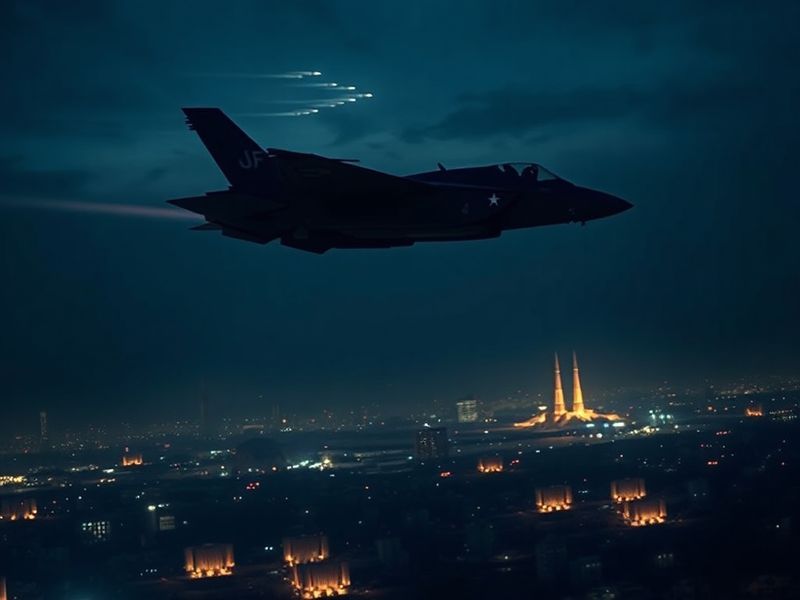
The most dramatic recent escalation occurred in April 2024, when Iran launched a direct missile and drone attack on Israel in retaliation for an Israeli strike on its consulate in Damascus. While Israel’s sophisticated air defenses, aided by the U.S., U.K., and Jordan, intercepted most of the projectiles, the attack marked the first time Iran struck Israel directly rather than through proxies. The event underscored the growing boldness of Iran’s strategy and the risks of miscalculation.
Global powers have responded with cautious diplomacy. The U.S. has reaffirmed its commitment to Israel’s security while urging restraint to prevent a broader regional war. Meanwhile, European nations have called for de-escalation, fearing that a wider conflict could disrupt global oil supplies and trigger a humanitarian crisis. The United Nations has repeatedly warned against further escalation, but its influence remains limited in the face of entrenched hostilities.
Cultural and Economic Reverberations
Beyond the battlefield, the Israel-Iran conflict has profound cultural and economic repercussions. In the Middle East, the rivalry fuels sectarian tensions between Sunni and Shia Muslims, exacerbating conflicts in Iraq, Syria, and Yemen. The rise of anti-Western and anti-Israel sentiment across the Arab world has complicated peace efforts, with many populations viewing Iran as a defender against Israeli aggression.
Economically, the conflict has driven military spending in both countries to unprecedented levels. Israel’s defense budget exceeds $20 billion annually, while Iran allocates significant resources to its ballistic missile program and proxy networks. The sanctions imposed on Iran have crippled its economy, leading to widespread protests and internal unrest, which the regime has suppressed with brutal force.
On the global stage, the conflict has also influenced international alliances. Israel has deepened ties with Arab states like the UAE and Bahrain through the Abraham Accords, while Iran maintains close relationships with Russia and China, which provide diplomatic cover and economic support. The U.S. remains Israel’s primary ally, but its shifting priorities under different administrations have created uncertainty about long-term commitments.
Can Diplomacy Prevail?
The path to peace remains elusive, but diplomatic efforts persist. The JCPOA negotiations, though stalled, offer a potential framework for resuming talks on Iran’s nuclear program. Meanwhile, backchannel discussions between Israel and Saudi Arabia, mediated by the U.S., hint at the possibility of broader regional normalization. However, the mutual distrust between Israel and Iran runs deep, and any agreement would require significant concessions from both sides.
For now, the risk of further escalation looms large. A single miscalculation—a misidentified missile, a misinterpreted airstrike—could spiral into a full-blown war with devastating consequences. The international community must balance deterrence with diplomacy to prevent catastrophe.
As the world watches, the Israel-Iran conflict serves as a stark reminder of how historical grievances and ideological divides can perpetuate violence. Without meaningful dialogue and compromise, the cycle of retaliation will continue, dragging the region—and the world—into deeper instability.