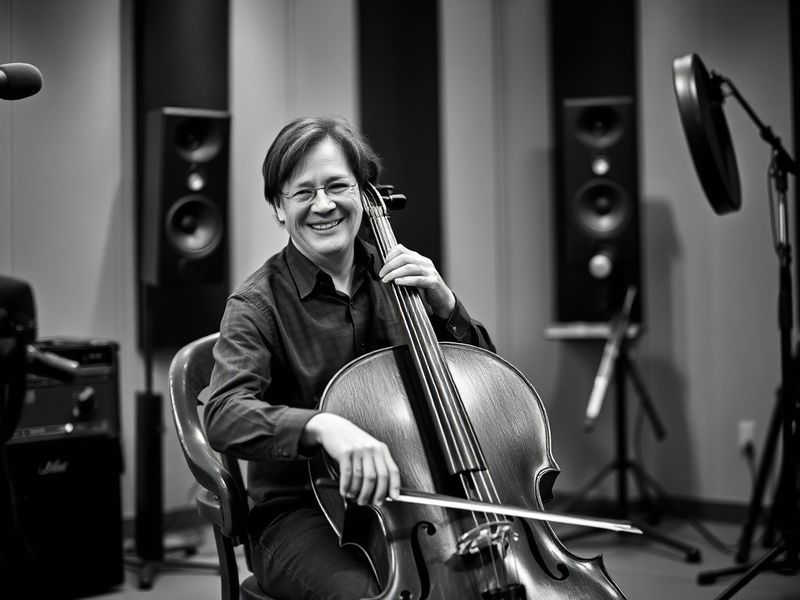
Julian Lloyd Webber is more than a cellist; he is a cultural architect who reshaped how audiences perceive classical music. With a career spanning over four decades, he has not only mastered the technical demands of the cello but also pioneered innovative approaches to programming and performance. From reimagining beloved concertos to collaborating with artists across genres, his influence extends far beyond the concert hall.
Born into a family deeply rooted in music—his father was a composer and his brother Andrew a celebrated musical theatre composer—Lloyd Webber’s path seemed almost predestined. Yet, his success wasn’t merely a product of lineage. It was the result of relentless experimentation, a willingness to break conventions, and an uncanny ability to connect with audiences regardless of their familiarity with classical music.
The Early Years: A Prodigy Takes Shape
Lloyd Webber began his cello studies at the age of six, a decision that would define his life’s work. His early training at the Royal College of Music in London was rigorous, but it was his exposure to diverse musical influences that truly shaped his artistic identity. Unlike many classical musicians of his generation, he wasn’t content with the status quo. He sought out collaborations with jazz musicians, pop artists, and even rock bands, proving that the cello could thrive in unexpected contexts.
One of his most formative experiences came in 1972, when he performed with the London Symphony Orchestra at the age of 22. The concert, which featured a rarely heard cello concerto by Sir Arthur Bliss, catapulted him into the spotlight. Critics praised his technical precision and emotional depth, but it was his subsequent recordings that cemented his reputation. Albums like Julian Lloyd Webber Plays Elgar (1984) and Cello Song (1988) became landmarks in the classical crossover genre, blending traditional repertoire with contemporary arrangements.
Breaking Boundaries: The Cello as a Global Instrument
Lloyd Webber’s career is marked by a series of bold choices that expanded the cello’s role in modern music. In the 1990s, he embarked on a series of high-profile collaborations, including a Grammy-nominated album with guitarist John Williams titled Crossoads. The project reimagined classical and folk melodies for the guitar and cello, appealing to listeners who might not typically attend a classical concert.
His commitment to accessibility didn’t end with recordings. In 2009, he launched the In Harmony program, an initiative inspired by Venezuela’s El Sistema. The project brought free music education to underserved communities in the UK, using the cello as a tool for social change. By teaching children from challenging backgrounds to play and perform, Lloyd Webber demonstrated that classical music could be a force for empowerment, not just elitism.
Here are some key milestones in his career:
- 1972: Debut performance with the London Symphony Orchestra at age 22.
- 1984: Released Julian Lloyd Webber Plays Elgar, a critically acclaimed album.
- 1990s: Collaborated with guitarist John Williams on Crossoads, earning a Grammy nomination.
- 2009: Founded the In Harmony program to provide free music education in the UK.
- 2014: Appointed Principal of the Royal Birmingham Conservatoire, where he continued to advocate for innovative music education.
The Legacy: Why His Work Still Matters Today
Lloyd Webber’s influence is evident in the careers of countless musicians who followed in his footsteps. His willingness to blur genre lines paved the way for artists like Yo-Yo Ma, who has similarly championed cross-disciplinary collaboration. Yet, Lloyd Webber’s impact goes beyond individual achievement. He has fundamentally challenged the notion that classical music must be confined to concert halls or preserved in amber.
In an era where classical music often struggles to retain younger audiences, Lloyd Webber’s approach offers a blueprint for survival. By embracing technology, social media, and unconventional venues, he has made the genre feel relevant to new generations. His performances at festivals like Glastonbury and his viral cello covers on platforms like YouTube have proven that classical music can thrive outside traditional spaces.
Moreover, his advocacy for music education has left an indelible mark on the cultural landscape. Programs like In Harmony have not only provided opportunities for thousands of children but have also influenced government policies on arts funding. His work reminds us that music is not just an art form—it’s a vital component of a thriving society.
The Future: What’s Next for a Living Legend
Now in his seventh decade, Lloyd Webber shows no signs of slowing down. He continues to perform, record, and advocate for the arts, while also mentoring the next generation of musicians. His recent projects include collaborations with electronic artists and explorations of world music, further expanding the cello’s sonic possibilities.
For those interested in exploring his work, Lloyd Webber’s discography offers a rich starting point. From his early recordings of Romantic concertos to his more experimental albums, there is something for every listener. His autobiography, Travels with My Cello, provides an intimate look at his life and career, revealing the passion and perseverance behind the public persona.
As classical music continues to evolve in the 21st century, Julian Lloyd Webber remains a guiding light. His career is a testament to the power of innovation, the importance of accessibility, and the enduring relevance of the cello. In a world often divided by genre and tradition, he has shown that music, at its core, is universal.
For further exploration of classical music and its intersections with modern culture, visit Dave’s Locker Music Section or check out our Entertainment Category for related articles.