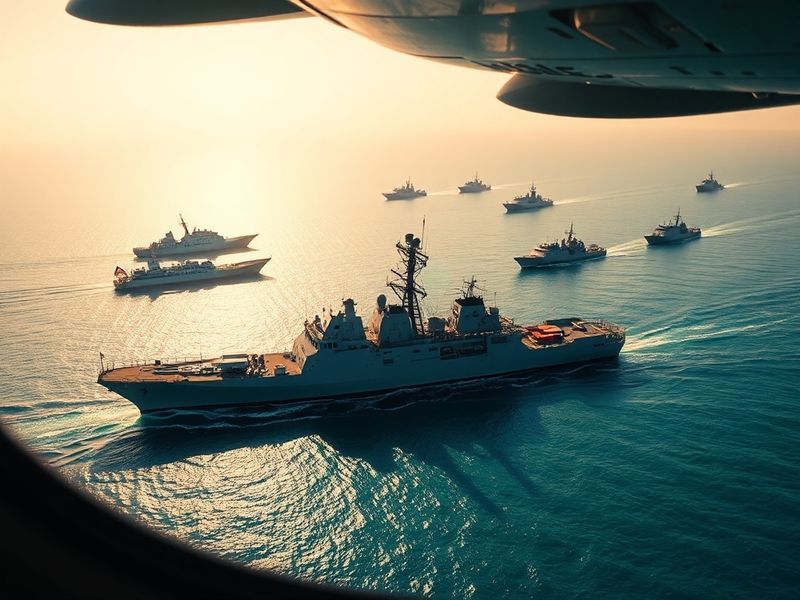
The Strait of Hormuz, a narrow waterway between Oman and Iran, has long been a critical chokepoint for global oil transit. Recently, discussions about a potential U.S. blockade in the region have intensified, raising questions about its feasibility, consequences, and broader implications. While such a move would be a dramatic escalation, it reflects the ongoing tensions between Washington and Tehran over nuclear ambitions, regional influence, and maritime security.
The Historical and Strategic Significance of the Strait
The Strait of Hormuz is more than just a shipping lane—it is the world’s most vital oil transit chokepoint. Approximately 20% of the world’s oil supply passes through this 21-mile-wide passage daily. For decades, the U.S. has relied on naval patrols to ensure freedom of navigation, but recent geopolitical shifts have made this region a flashpoint.
Iran has repeatedly threatened to disrupt shipping in the strait in response to sanctions and perceived provocations. Its military forces, including the Islamic Revolutionary Guard Corps (IRGC), have demonstrated the capability to mine the waterway or target vessels with missiles and drones. A U.S. blockade would represent a direct challenge to this strategy, but it would also risk a catastrophic conflict.
Key Factors Behind the U.S. Blockade Threat
Several factors contribute to the growing consideration of a U.S. blockade:
- Iran’s Nuclear Advancements: Despite international agreements, Iran has resumed uranium enrichment, prompting fears of a nuclear breakout. The U.S. and its allies see a blockade as a means to pressure Tehran.
- Regional Proxy Conflicts: Iran’s support for groups like the Houthis in Yemen and militant factions in Iraq and Syria has led to tit-for-tat attacks on shipping and military outposts.
- Maritime Security Concerns: Recent seizures of commercial vessels, including the 2019 attacks on Saudi oil tankers and the 2023 seizure of a U.S. drone ship, have underscored the fragility of stability in the region.
- U.S. Strategic Objectives: The Biden administration has sought to balance diplomacy with deterrence, but the failure of negotiations has left military options on the table.
The Mechanics and Challenges of a Blockade
A U.S.-led blockade of the Strait of Hormuz would involve a multi-layered naval and aerial operation to intercept and inspect vessels suspected of transporting Iranian oil or weapons. The U.S. Fifth Fleet, based in Bahrain, already conducts patrols to deter aggression, but a full blockade would require unprecedented coordination with allies like Saudi Arabia, the UAE, and Israel.
The logistical hurdles are immense. The strait’s narrow width (just 2 miles at its narrowest point) makes it vulnerable to blockades, but Iran’s asymmetric naval capabilities—fast attack boats, mines, and cruise missiles—pose a significant threat to U.S. and allied ships. A blockade could easily spiral into open conflict, with Iran likely retaliating against Gulf states or global oil markets.
Potential Military and Economic Consequences
If executed, a blockade would have immediate and far-reaching effects:
- Oil Price Volatility: Disruptions in the strait could send global oil prices soaring, impacting economies still recovering from pandemic-era supply chain issues.
- Military Escalation: Iran would likely respond with asymmetric tactics, including cyberattacks, drone strikes, or sabotage of Gulf infrastructure.
- Alliance Strains: U.S. allies in the region may resist full participation due to economic dependencies on Iranian trade or fears of retaliation.
- Legal and Diplomatic Fallout: A blockade could violate international maritime law, leading to condemnation at the UN and further isolation of the U.S. from global consensus.
The economic fallout would extend beyond oil. Container ships rerouting around the Cape of Good Hope would face higher costs, delays, and insurance premiums. Countries like China and India, which rely heavily on Middle Eastern oil, would scramble to secure alternative supplies, potentially reshaping global energy trade.
Broader Geopolitical Implications
A U.S. blockade would not occur in isolation—it would be a symptom of a larger struggle for dominance in the Middle East. Iran’s strategy relies on leveraging its geographic position to deter aggression, while the U.S. seeks to maintain its role as the primary security guarantor in the Gulf. The stakes extend beyond oil; they include nuclear non-proliferation, arms control, and the balance of power between Iran and its Arab neighbors.
For China, the strait is a critical link in its Belt and Road Initiative. Beijing has invested heavily in Iranian oil infrastructure and would likely resist any action that disrupts its supply chains. Meanwhile, Russia, a key ally of Iran, would exploit the crisis to undermine U.S. influence in the region and strengthen its own energy leverage.
The Risk of Miscalculation
The most dangerous aspect of a blockade is the potential for miscalculation. A single incident—a mistaken attack, a downed aircraft, or a cyber intrusion—could trigger a full-scale conflict. The 2020 U.S. drone strike that killed Iranian General Qasem Soleimani nearly led to war, and a blockade would raise those risks exponentially.
Diplomatic channels remain open, but trust is eroded. The 2015 nuclear deal, the Joint Comprehensive Plan of Action (JCPOA), collapsed under U.S. withdrawal in 2018. Renewed talks have stalled, leaving little room for compromise. In this environment, military posturing becomes a tool of coercion, with both sides gambling on the other’s restraint.
Conclusion: A Gamble with Global Stakes
The idea of a U.S. blockade in the Strait of Hormuz is a high-risk strategy with potentially catastrophic consequences. While it may serve as a deterrent against Iranian aggression, the likelihood of escalation is dangerously high. The region’s economic and strategic importance means that any disruption would have ripple effects felt worldwide.
For now, the U.S. appears to be prioritizing economic pressure over military confrontation. Sanctions remain the primary tool, but their effectiveness is limited by circumvention through third countries. Meanwhile, Iran continues to expand its military capabilities, ensuring that the strait remains a powder keg.
The path forward requires de-escalation and renewed diplomacy. The alternative—a blockade—would not only fail to achieve its objectives but could plunge the world into a crisis from which there is no easy exit. The Strait of Hormuz is too vital to become a battleground, and the costs of such a confrontation would far outweigh any potential gains.
For further analysis on regional security and U.S. foreign policy, explore our Politics and News sections.