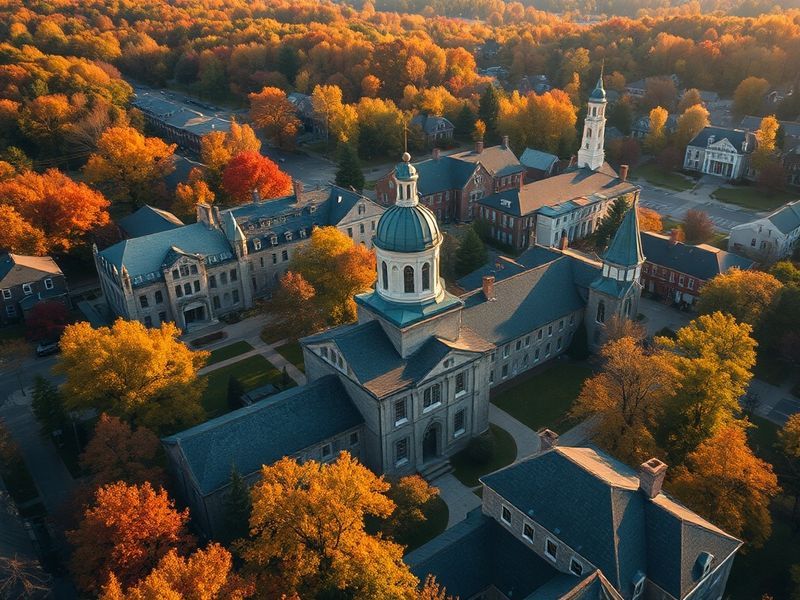
Nestled in the picturesque town of Lewiston, Maine, Bates College stands as one of the oldest and most respected liberal arts institutions in the United States. Founded in 1855 by abolitionists, the college has long been a beacon of progressive education, blending rigorous academic standards with a commitment to social justice. Its historic campus, characterized by brick buildings and tree-lined quads, offers a timeless backdrop for a community dedicated to intellectual curiosity and civic responsibility.
The college’s origins trace back to a time when higher education was largely inaccessible to women and marginalized groups. From its inception, Bates broke barriers by admitting women on equal footing with men—a radical decision for the era. Today, it continues to uphold those values, fostering an environment where diversity and inclusion are not just ideals but lived experiences. With a student body of around 1,800 undergraduates, Bates maintains a student-to-faculty ratio of 10:1, ensuring personalized attention and mentorship.
A Tradition of Academic Rigor and Innovation
Bates College is renowned for its distinctive academic calendar, the “Short Term,” which allows students to immerse themselves in a single course or pursue internships, research, or study abroad opportunities. This structure, unique among top liberal arts colleges, enables deep exploration of subjects without the distraction of multiple concurrent classes. Whether dissecting the ethical implications of artificial intelligence or conducting fieldwork in marine biology, students at Bates are encouraged to think critically and creatively.
The college’s academic programs span 36 majors, with strengths in the sciences, humanities, and social sciences. Notably, Bates has gained recognition for its environmental studies program, reflecting Maine’s natural landscape and the college’s commitment to sustainability. The curriculum emphasizes interdisciplinary learning, preparing graduates for careers in an increasingly complex world where traditional boundaries between disciplines are blurring.
Research is a cornerstone of the Bates experience. Undergraduates collaborate with faculty on cutting-edge projects, from analyzing the impact of climate change on local ecosystems to studying the social determinants of health in underserved communities. This hands-on approach not only enhances learning but also equips students with the skills to tackle real-world challenges.
Beyond the Classroom: A Culture of Engagement
Life at Bates extends far beyond textbooks and lecture halls. The college’s 100+ student organizations cater to a wide range of interests, from the Outing Club—one of the oldest in the country—to cultural groups like the Asian Student Program and the Black Student Union. These organizations provide spaces for students to explore identities, advocate for causes, and build lifelong friendships.
Athletics also play a significant role in campus life. Bates competes in NCAA Division III as a member of the New England Small College Athletic Conference (NESCAC), fielding teams in 31 varsity sports. The Bobcats have earned national acclaim in sports like rowing, swimming, and squash, underscoring the college’s balance between academic and athletic excellence.
Community engagement is another defining feature of Bates. Through programs like the Bonner Leader Program and the Bates-Morse Mountain Conservation Area, students contribute to local and global initiatives. Whether tutoring Lewiston public school students or restoring coastal habitats, Bates graduates leave with a sense of purpose and a commitment to service.
The Broader Implications of Bates’ Model
In an era where higher education is often scrutinized for its rising costs and perceived disconnect from the workforce, Bates College offers a compelling alternative. Its model demonstrates that a liberal arts education can be both affordable and directly applicable to modern challenges. The college’s commitment to financial aid—meeting 100% of demonstrated need—ensures that socioeconomic status does not hinder access to a world-class education.
Moreover, Bates’ emphasis on experiential learning aligns with the evolving demands of the job market. Employers increasingly seek graduates who can adapt to change, think critically, and collaborate across cultures. By prioritizing internships, research, and global study, Bates equips students with the agility to thrive in diverse professional landscapes.
The college’s influence extends beyond its campus. Alumni occupy leadership roles in fields as varied as law, medicine, business, and the arts. Their success underscores the enduring value of a Bates education—one that fosters not just career readiness but also a lifelong commitment to learning and civic engagement.
Why Bates Stands Out Among Liberal Arts Colleges
To better understand what sets Bates apart, consider the following key points:
- Historic Commitment to Access: Bates was one of the first colleges in the U.S. to admit women and students of color on equal terms, a legacy that continues today through robust financial aid and support programs.
- Unique Academic Structure: The Short Term allows for unparalleled depth in learning, whether through intensive courses, internships, or international study.
- Emphasis on Social Responsibility: From sustainability initiatives to community partnerships, Bates instills a sense of duty to address societal challenges.
- Strong Alumni Network: Graduates join a global community of leaders who are making an impact in their fields and communities.
For those interested in exploring similar institutions, Dave’s Locker’s Education section offers insights into other top liberal arts colleges and their unique offerings. Additionally, the Culture section delves into broader trends in higher education and their societal implications.
Looking Ahead: Bates’ Role in Shaping the Future
As Bates College approaches its 170th anniversary, it remains steadfast in its mission to provide an education that is both rigorous and humane. In a world where technology and globalization are reshaping the nature of work and citizenship, Bates’ focus on critical thinking, ethical reasoning, and civic engagement has never been more relevant.
The college’s recent strategic initiatives reflect this forward-looking perspective. Plans to expand sustainability efforts, enhance digital literacy programs, and deepen global partnerships signal Bates’ commitment to evolving without losing sight of its core values. By staying true to its roots while embracing innovation, Bates College continues to set a standard for what liberal arts education can—and should—be.
For prospective students, parents, and educators, Bates serves as a reminder that higher education is not merely a stepping stone to a career but a transformative journey. It is a place where young minds are challenged, ideals are tested, and futures are shaped—not just for personal success, but for the betterment of society.
In an age of uncertainty, Bates College offers a compelling vision of what education can achieve: a more just, equitable, and thoughtful world.