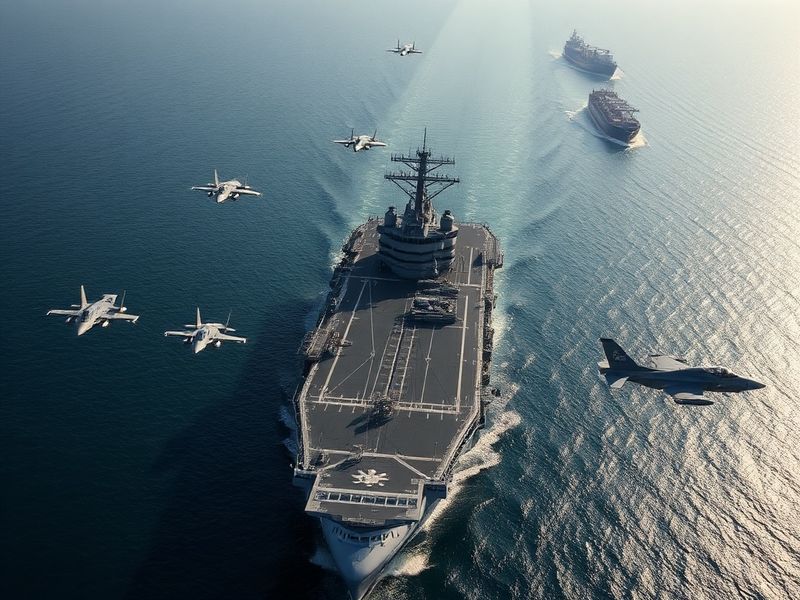
strait of hormuz us blockade
“`html
The Strait of Hormuz: How U.S. Blockade Tactics Reshape Global Oil Flows
The Strait of Hormuz remains one of the world’s most strategically critical maritime chokepoints. Connecting the Persian Gulf to the Gulf of Oman, it serves as a vital transit route for nearly one-third of the world’s seaborne oil. However, tensions surrounding this narrow waterway have intensified in recent years, particularly due to U.S. efforts to enforce a de facto blockade aimed at curbing Iranian oil exports. These actions have not only disrupted regional stability but have also sent ripples across global energy markets.
This article examines the motivations behind U.S. blockade strategies, their geopolitical implications, the responses from regional actors, and the broader consequences for international oil trade. By analyzing recent developments and historical context, we can better understand how this maritime dispute continues to define the balance of power in the Middle East.
The Geopolitical Significance of the Strait of Hormuz
The Strait of Hormuz spans just 21 miles at its narrowest point, yet it carries immense economic and military importance. Approximately 21 million barrels of oil pass through the strait daily, making it indispensable to energy-dependent nations. Disruptions here can trigger price spikes, supply shortages, and geopolitical crises.
Iran, which shares a coastline along the strait, has long viewed its control as a strategic leverage point. The Islamic Republic has repeatedly threatened to close the waterway in response to sanctions or perceived threats from the U.S. and its allies. Such a move would not only cut off oil flows but could also trigger military confrontation.
For the U.S., maintaining free navigation through the strait is a cornerstone of its Middle East policy. Washington has invested heavily in naval patrols, including the Fifth Fleet based in Bahrain, to deter Iranian aggression. However, the U.S. has also employed more aggressive tactics, such as seizing Iranian oil tankers and imposing sanctions on countries importing Iranian crude.
Key Players and Their Interests
- United States: Aims to prevent Iranian oil exports to weaken Tehran’s economy and influence. Uses naval patrols, sanctions, and interdiction operations to enforce compliance.
- Iran: Views the strait as a bargaining chip. Has threatened to block it in past crises and retaliates against U.S. pressure by targeting oil tankers or detaining foreign personnel.
- Saudi Arabia and UAE: Heavily reliant on Hormuz oil exports. Have diversified export routes but remain vulnerable to disruptions.
- China and India: Major importers of Iranian oil before U.S. sanctions. Have sought waivers or alternative suppliers to avoid penalties.
The U.S. strategy has evolved from passive deterrence to active interdiction, reflecting a broader shift in how Washington approaches maritime security in the Persian Gulf.
The Mechanics of the U.S. Blockade Strategy
The U.S. blockade of the Strait of Hormuz is not a formal declaration but a series of coordinated actions designed to restrict Iranian oil exports. These include:
- Sanctions Enforcement: The U.S. has imposed secondary sanctions on countries and companies purchasing Iranian oil, effectively cutting off Tehran’s primary revenue source.
- Naval Interdiction: The U.S. Navy has intercepted and seized several Iranian oil tankers in international waters, citing violations of sanctions.
- Alliance Building: Washington has strengthened ties with Gulf states to counter Iranian influence, including arms sales, joint military exercises, and intelligence sharing.
- Technological Surveillance: The U.S. employs drones, satellites, and AI-driven tracking to monitor tanker movements and identify potential sanctions evaders.
These measures have significantly reduced Iran’s oil exports, which plummeted from over 2.5 million barrels per day in 2018 to under 500,000 barrels by 2020. However, Iran has adapted by using covert shipping networks, falsifying documentation, and relying on allies like China and Syria to bypass restrictions.
Critics argue that the U.S. blockade violates international law by extending sanctions beyond its borders. The European Union, for instance, has opposed secondary sanctions, viewing them as an infringement on sovereign trade rights. This legal gray area has fueled diplomatic tensions and complicated efforts to revive the Iran nuclear deal.
Regional Responses and the Risk of Escalation
The U.S. blockade has provoked strong reactions from Iran and its regional allies. Tehran has responded with a mix of military posturing, proxy attacks, and diplomatic maneuvers:
- Military Drills: Iran has conducted large-scale naval exercises, simulating the closure of the strait and testing anti-ship missiles.
- Tanker Attacks: Since 2019, several oil tankers have been sabotaged or seized in the Gulf, with Iran widely believed to be behind some incidents.
- Proxy Conflicts: Iran-backed groups in Yemen, Iraq, and Lebanon have launched rockets and drones at U.S. and allied targets, raising the risk of broader conflict.
Gulf states, while supportive of U.S. efforts to counter Iran, have grown increasingly uneasy about the potential for miscalculation. A single incident—such as a mistaken attack on a civilian vessel or a downed aircraft—could spiral into a full-blown crisis. Saudi Arabia and the UAE have invested in alternative export routes, including pipelines that bypass the strait, but these options are limited and costly.
For its part, China has continued to purchase Iranian oil despite U.S. sanctions, albeit at reduced volumes. Beijing’s defiance reflects its broader strategy to reduce reliance on U.S.-dominated financial systems and secure energy supplies. However, this approach risks drawing China into direct confrontation with Washington, particularly if it expands its involvement in Iranian military projects.
The Broader Impact on Global Oil Markets
The U.S. blockade has had a profound effect on global oil markets, creating volatility and reshaping trade flows. Key consequences include:
- Price Fluctuations: Disruptions in Hormuz transit have led to sudden oil price spikes, particularly during periods of heightened tension. For example, attacks on tankers in 2019 caused Brent crude prices to surge by nearly 20% in a single month.
- Shifted Trade Routes: Countries like India and South Korea have reduced purchases of Iranian oil, turning instead to suppliers in Saudi Arabia, Iraq, and the U.S. itself. This shift has strengthened U.S. influence in Asian energy markets.
- Rise of Sanctions Evasion: The oil trade has become more opaque, with ship-to-ship transfers and falsified cargo manifests becoming common. This has complicated enforcement efforts and increased the risk of environmental disasters.
- Energy Security Concerns: Nations dependent on Middle Eastern oil are reassessing their supply chains. Europe, for instance, has accelerated plans to diversify its energy sources, including liquefied natural gas imports from the U.S.
Despite these disruptions, the global oil market has shown remarkable resilience. OPEC and non-OPEC producers have adjusted production levels to compensate for lost Iranian exports, while strategic petroleum reserves have acted as a buffer against shortages. However, the long-term stability of these arrangements remains uncertain, particularly if tensions in the Gulf escalate further.
For U.S. policymakers, the blockade strategy presents a paradox. While it has weakened Iran’s economy and reduced its regional influence, it has also heightened the risk of conflict and strained alliances. The Biden administration has sought to balance pressure on Iran with diplomatic overtures, but the path to de-escalation remains fraught with challenges.
Looking Ahead: Can Diplomacy Break the Stalemate?
Several factors could influence the future of the U.S. blockade strategy:
- Nuclear Negotiations: Reviving the Iran nuclear deal could ease sanctions and reduce tensions in the Gulf. However, stalled talks and Iran’s nuclear advancements have dimmed prospects for a breakthrough.
- China’s Role: Beijing’s growing ties with Tehran complicate U.S. efforts to isolate Iran. If China increases its oil imports or military cooperation with Iran, the U.S. may face tougher choices between sanctions enforcement and avoiding direct conflict.
- Regional Alliances: Gulf states are increasingly pursuing independent security strategies, including rapprochement with Iran’s rivals like Turkey and Qatar. These shifts could dilute U.S. influence in the region.
- Technological Advances: The use of blockchain and AI in tracking oil shipments could improve sanctions compliance but may also lead to more sophisticated evasion tactics.
The Strait of Hormuz remains a powder keg, where economic pressure and military posturing intersect. While the U.S. blockade has achieved some of its goals, it has also created a fragile equilibrium that could shatter at any moment. The challenge for policymakers is to find a balance between deterring Iran and avoiding unintended consequences that could destabilize the entire region.
As global energy demand continues to rise, the importance of the Strait of Hormuz will only grow. The choices made today—by Washington, Tehran, and their allies—will shape the geopolitical landscape for decades to come.
Conclusion
The U.S. blockade of the Strait of Hormuz is more than a regional dispute; it is a defining feature of 21st-century geopolitics. By leveraging sanctions, naval power, and technological surveillance, Washington has sought to reshape the energy landscape in its favor. Yet, the strategy carries significant risks, from military escalation to strained alliances and volatile oil markets.
For Iran, the blockade represents an existential threat, prompting a mix of defiance and adaptation. Meanwhile, global powers like China and Russia are increasingly challenging U.S. dominance in the region, adding layers of complexity to an already volatile situation.
As the world grapples with energy transitions and shifting power dynamics, the Strait of Hormuz will remain a flashpoint. The question is not whether the blockade will endure, but how its consequences will ripple across economies, militaries, and diplomatic corridors worldwide.