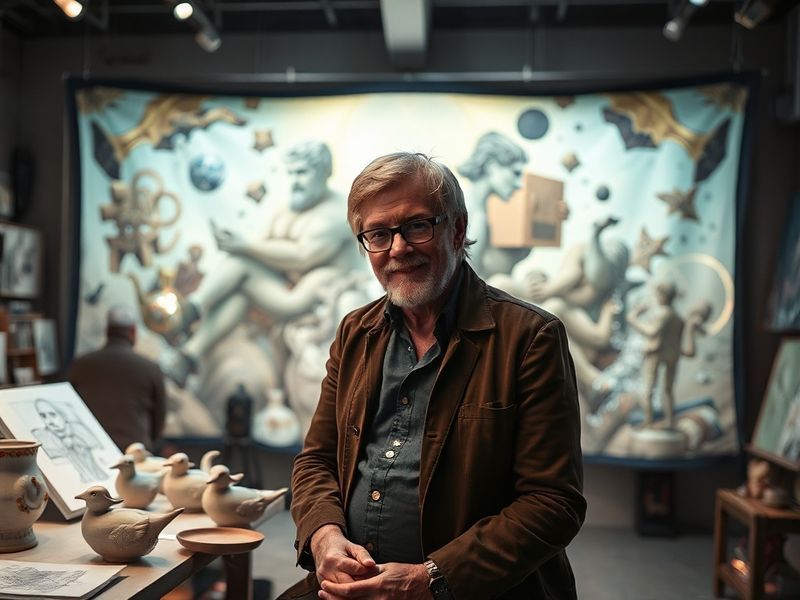
British artist Grayson Perry has spent decades probing the contradictions of contemporary society through ceramics, tapestries, and television. But in recent years, his work has taken on an almost prophetic quality. Perry doesn’t just reflect the present; he seems to anticipate where culture is headed. His exhibitions and documentaries increasingly feel like roadmaps to a future that’s already here—just unevenly distributed.
The Turner Prize winner’s latest project, The Tomb of the Unknown Craftsman, a 2011 exhibition that explored the blurred lines between art and craft, feels more relevant than ever in today’s maker-culture boom. Meanwhile, his 2022 BBC series Grayson’s Art Club revealed how art has become a vital form of communication during crises. These aren’t just artworks; they’re cultural artifacts that hint at broader societal shifts.
Perry’s Obsession with Identity and Its Digital Afterlife
One of Perry’s most persistent themes is identity—how we construct it, perform it, and weaponize it. In his 2016 documentary Divided Britain, he examined the fractures in modern society, from Brexit to gender politics. But what makes Perry’s work prophetic isn’t just his focus on division; it’s his recognition that identity is increasingly fluid, malleable, and, above all, digital.
Consider his 2021 exhibition Lost in Thought, which featured a series of vases adorned with phrases like “I am not what I am” and “Selfie.” The works feel like a commentary on how social media distorts self-perception. Perry’s art isn’t just about the self; it’s about the curated self—the version of ourselves we project online, often at the expense of authenticity.
This fixation on digital identity aligns with what sociologists call the “presentation of self in the digital age.” Platforms like Instagram and TikTok have turned identity into a performance, where likes and followers dictate self-worth. Perry’s work warns that this performance isn’t just harmless fun; it’s reshaping how we see ourselves and each other.
Art as a Mirror for Societal Anxiety
Perry’s documentaries often serve as time capsules of collective anxiety. In All Man (2016), he explored masculinity in crisis, a theme that’s only grown more urgent with the rise of incel culture and debates over toxic masculinity. Similarly, his 2020 series Grayson’s Art Club captured the art world’s response to the pandemic, revealing how creativity becomes a lifeline in times of isolation.
What’s striking about Perry’s approach is his ability to turn personal stories into universal metaphors. His tapestries, for example, are often dense with symbolism, weaving together personal and political narratives. This technique mirrors how modern discourse operates—fragmented yet interconnected, where a single tweet can spark a global conversation.
Perry’s work suggests that art isn’t just a reflection of society; it’s a diagnostic tool. By examining his exhibitions and documentaries, we can trace the anxieties of the present and anticipate those of the future. His art doesn’t predict the future so much as it reveals the patterns already embedded in our culture.
The Future According to Grayson Perry: Key Insights
Perry’s career offers a unique lens into the cultural shifts of the 21st century. Below are some of the most striking themes in his work that feel eerily prescient:
- Identity as Performance: Perry’s focus on self-presentation foreshadowed the rise of influencer culture and the commodification of personal branding.
- Art as Therapy: His emphasis on art as a form of emotional expression aligns with the growing mental health awareness and the use of creativity in healing.
- Political Polarization: Perry’s exploration of societal divides in works like Divided Britain feels like a blueprint for today’s fractured political landscape.
- Craft in the Digital Age: His celebration of traditional crafts in a digital world highlights the tension between handmade and algorithmic creation.
- Gender and Fluidity: Perry’s exploration of gender norms in pieces like My Pretty Little Art Career anticipates today’s conversations around non-binary identities.
Why Perry’s Vision Matters Now
In an era where algorithms dictate taste and social media dictates truth, Perry’s work serves as a counterbalance. His art reminds us that culture isn’t just something to be consumed; it’s something to be interrogated. His documentaries, in particular, offer a rare space for reflection in a media landscape dominated by outrage and spectacle.
Perry’s ability to see the future isn’t about predicting specific events; it’s about recognizing the underlying currents of change. His focus on identity, anxiety, and the role of art in society feels more relevant than ever in a world where our digital and physical lives are increasingly intertwined.
For artists, cultural critics, and everyday observers alike, Perry’s work is a reminder that the future isn’t something that happens to us—it’s something we collectively create. The question isn’t whether Perry has seen the future; it’s whether we’re paying attention to the signs he’s already given us.
A Call to Engage
Perry’s art isn’t just for passive consumption; it’s an invitation to think critically about the world we’re building. Whether through his provocative tapestries or his thought-provoking documentaries, he challenges us to question the narratives we’re fed and the identities we perform.
In a time when culture feels increasingly fragmented, Perry’s work offers a rare thread of coherence. His vision isn’t just a warning; it’s a roadmap. The future he envisions isn’t inevitable—it’s a choice. And if we’re willing to look closely, his art might just show us how to make the right one.
For those interested in exploring more about contemporary art and culture, check out our Culture and Analysis categories on Dave’s Locker.