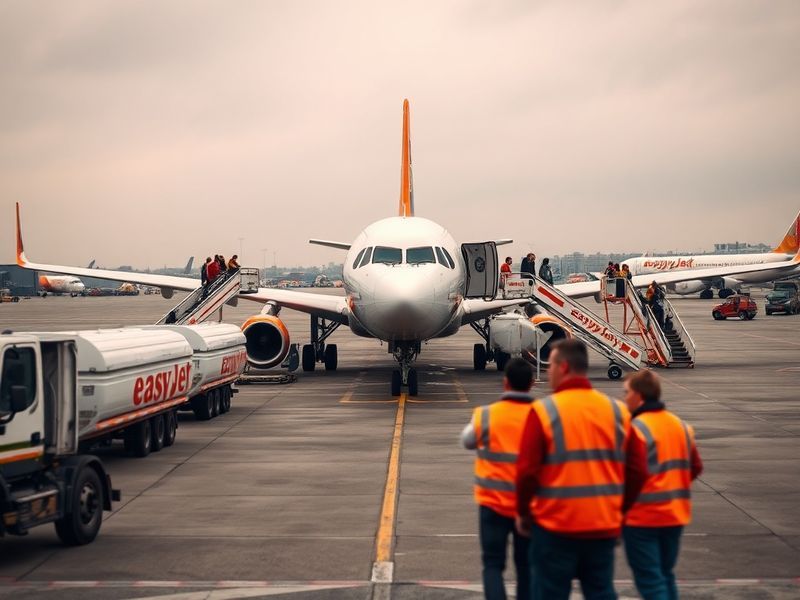
EasyJet Fuel Shortage Disrupts Travel: What You Need to Know
“`html
EasyJet Fuel Shortage: What Travelers Need to Know
EasyJet, one of Europe’s largest budget airlines, has faced significant operational challenges in recent weeks due to a fuel shortage affecting multiple airports across the continent. The disruption has led to delayed and canceled flights, leaving thousands of passengers stranded and forcing the airline to rethink its logistics strategy. While the immediate cause appears to be a temporary supply issue, the incident highlights broader vulnerabilities in the aviation industry’s fuel supply chain.
The shortage first came to public attention after passengers reported long queues at check-in counters and boarding gates at London Gatwick, Amsterdam Schiphol, and Berlin Brandenburg airports. These airports, major hubs for EasyJet’s operations, rely on just-in-time fuel deliveries to maintain tight schedules. When those deliveries lagged, the airline had to ground aircraft, leading to cascading delays throughout its network.
The Immediate Impact on Travelers
Passengers caught in the disruption described chaotic scenes at affected airports. Many arrived to find their flights canceled without prior notice, while others waited for hours to speak with customer service representatives. The situation was particularly stressful for families traveling with children and elderly passengers who had connecting flights they couldn’t afford to miss.
EasyJet’s response included offering refunds or rebooking options, but many travelers reported difficulty getting through to customer service lines. The airline activated its contingency plans, including increased staffing at call centers and airport desks, but the volume of affected passengers overwhelmed systems designed for normal operations.
For those who did manage to rebook, options were limited, especially on popular routes. Some passengers ended up booking last-minute tickets on competing airlines, often at significantly higher prices. One traveler from Manchester to Barcelona told us, “I ended up paying £400 for a flight that should have cost £50. The airline offered me a refund, but I had to get to Barcelona for a wedding.”
Why the Fuel Shortage Happened
The root causes of the fuel shortage appear to be a combination of logistical and geopolitical factors. Reports indicate that a key fuel supplier in the Netherlands experienced technical difficulties at one of its refineries, reducing output by nearly 30% for several days. This came at a time when several European airports were already operating near capacity, leaving little buffer for supply chain disruptions.
Additionally, the incident occurred during a period of increased demand for aviation fuel. Summer travel season was in full swing, and many airlines were operating near full capacity to meet pent-up post-pandemic demand. This created a perfect storm where reduced supply met heightened demand, leaving airlines like EasyJet particularly vulnerable.
Industry analysts also point to broader trends in the aviation fuel market. The war in Ukraine has disrupted traditional supply routes, forcing European airlines to source more fuel from alternative suppliers at higher costs. While EasyJet has not confirmed whether price was a factor in the shortage, the airline has been vocal about the rising cost of aviation fuel over the past year, which has already forced it to implement fuel surcharges on many routes.
Key Factors Contributing to the Fuel Shortage
- Refinery technical issues: A major fuel supplier in the Netherlands experienced equipment failure, reducing output by nearly 30%.
- Increased summer demand: Airlines are operating near full capacity to meet post-pandemic travel demand.
- Geopolitical disruptions: The war in Ukraine has altered traditional supply chains, forcing airlines to seek alternative fuel sources.
- Airport capacity constraints: Major hubs like Gatwick and Schiphol were already operating at near-full capacity, leaving little room for error.
EasyJet’s Response and Long-Term Strategies
EasyJet moved quickly to mitigate the damage, but the incident exposed vulnerabilities in its operational model. The airline’s CEO, Johan Lundgren, issued a statement acknowledging the “unprecedented operational challenges” and apologized to affected customers. In response, EasyJet implemented several measures:
- Increased fuel inventory: The airline is reviewing its fuel procurement strategy to ensure higher buffer stocks at key airports.
- Diversified suppliers: EasyJet is exploring relationships with multiple fuel suppliers to reduce dependency on any single source.
- Enhanced contingency planning: The airline is working with airports to develop more robust backup plans for fuel supply disruptions.
- Customer compensation: EasyJet has committed to compensating passengers for additional expenses incurred due to the disruptions, including meals and accommodation.
While these measures may help prevent similar incidents in the future, they come at a cost. Fuel inventory management is expensive, and diversifying suppliers may lead to higher procurement costs. For a budget airline like EasyJet, these additional expenses could put pressure on an already tight profit margin.
Some industry observers have questioned whether EasyJet’s focus on cost-cutting has made it more vulnerable to supply chain disruptions. The airline has long prided itself on operating a lean model, but critics argue that this approach leaves little room for error when unexpected challenges arise.
The Broader Implications for the Aviation Industry
The EasyJet fuel shortage is a reminder of the fragility of global supply chains, particularly in the aviation industry. Airlines operate on razor-thin margins, and even minor disruptions can have outsized consequences. The incident also highlights the growing importance of fuel security in an era of geopolitical uncertainty and climate change.
For travelers, the disruption serves as a cautionary tale about the risks of relying on budget airlines for critical travel plans. While EasyJet’s fares are attractive, the potential for delays and cancellations means passengers should build in extra time and consider travel insurance that covers such eventualities.
The situation also raises questions about the sustainability of the aviation industry’s current fuel model. With airlines under pressure to reduce carbon emissions, many are exploring alternative fuels and more efficient aircraft. However, these transitions take time, and in the short term, the industry remains heavily dependent on traditional jet fuel.
As Europe heads into the peak of summer travel, the EasyJet incident serves as a wake-up call for both airlines and passengers. For airlines, it’s a reminder to invest in resilience and redundancy. For travelers, it’s a reminder to plan carefully and expect the unexpected.
Lessons for Travelers
If you’re planning to fly with EasyJet or any budget airline this summer, consider these tips:
- Check your flight status 48 hours before departure and sign up for airline notifications.
- Arrive at the airport at least 3 hours before departure to allow time for rebooking if needed.
- Purchase travel insurance that covers delays, cancellations, and additional expenses.
- Have a backup plan, such as alternative flight options or accommodation arrangements.
- Consider booking directly with the airline rather than through third-party sites, which may have less flexible rebooking policies.
Ultimately, the EasyJet fuel shortage is a reminder that even in the best of times, travel plans can go awry. The key to navigating these challenges is preparation and flexibility. By understanding the risks and planning accordingly, travelers can minimize the impact of unexpected disruptions.
As the aviation industry continues to evolve, incidents like this will likely become more common. Airlines, airports, and passengers must adapt to a new reality where supply chain disruptions and operational challenges are part of the landscape. For EasyJet, the focus now is on rebuilding customer trust and ensuring that the next disruption doesn’t catch them—and their passengers—off guard.